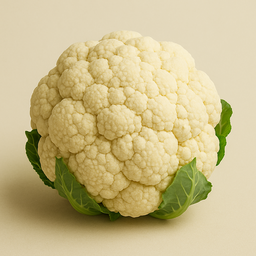
Cauliflower
The White Cruciferous
What is this ingredient?
Cauliflower (Brassica oleracea var. botrytis) belongs to the cruciferous family, along with broccoli and cabbage. What makes cauliflower unique is its high choline content - essential for the brain and liver cleansing. Like other cruciferous vegetables, cauliflower contains glucosinolates that are converted to sulforaphane, a powerful activator of the body's own cleansing system. The white color comes from leaves blocking light during growth. Purple and orange varieties contain extra antioxidants (anthocyanins and beta-carotene). Cauliflower is extremely versatile: rice it as 'rice', puree it as 'potato', or bake it as 'steak'.
How does it taste?
Mild, slightly nutty and subtly sweet. Roasted, it develops deep caramelized notes.
Pairs well with:
Pairs well with cuminturmericcheddartahini and brown butter.
Varieties
White Cauliflower
Most common, mild flavor
Purple Cauliflower
Extra anthocyanins (antioxidants), turns pink when cooking
Romanesco
Fractal structure, nutty, more vitamin C
Did you know...?
- Cauliflower consists of undeveloped flower buds packed tightly together.
- Mark Twain once called cauliflower 'cabbage with a college education'.
Nutritional Value & Energy
Per 100g
Cauliflower is low in calories thanks to natural nutrients .
Per 100g
Minerals
Vitamins
Omega-3 fatty acids
More nutrients
B-Vitamins
Trace Minerals
What's in a serving?
1 serving
Cauliflower naturally contains folate (57 mcg per 100 g).
Cauliflower naturally contains vitamin c (77 mg per 100 g).
Cauliflower naturally contains vitamin k (20 mcg per 100 g).
% of daily reference intake (DRI)
EU-approved nutrition claims
This ingredient contains nutrients for which EFSA-authorized health claims exist (at nutrient level, not ingredient-specific).
Approved health claims (EU)
Vitamin_c EU 432/2012
Vitamin C contributes to the normal function of the immune system
Contains 77mg/100g (threshold: ≥12mg/100g)
Vitamin_c EU 432/2012
Vitamin C contributes to the reduction of tiredness and fatigue
Contains 77mg/100g (threshold: ≥12mg/100g)
Vitamin_c EU 432/2012
Vitamin C contributes to normal collagen formation for the normal function of skin
Contains 77mg/100g (threshold: ≥12mg/100g)
Folate EU 432/2012
Folate contributes to normal blood formation
Contains 57mcg/100g (threshold: ≥30mcg/100g)
Folate EU 432/2012
Folate contributes to normal amino acid synthesis
Contains 57mcg/100g (threshold: ≥30mcg/100g)
Folate EU 432/2012
Folate contributes to normal homocysteine metabolism
Contains 57mcg/100g (threshold: ≥30mcg/100g)
Folate EU 432/2012
Folate contributes to normal psychological function
Contains 57mcg/100g (threshold: ≥30mcg/100g)
Folate EU 432/2012
Folate contributes to the normal function of the immune system
Contains 57mcg/100g (threshold: ≥30mcg/100g)
Folate EU 432/2012
Folate has a role in the process of cell division
Contains 57mcg/100g (threshold: ≥30mcg/100g)
Folate EU 432/2012
Folate contributes to maternal tissue growth during pregnancy
Contains 57mcg/100g (threshold: ≥30mcg/100g)
Vitamin_c EU 432/2012
Vitamin C contributes to normal collagen formation for the normal function of blood vessels
Contains 77mg/100g (threshold: ≥12mg/100g)
Vitamin_c EU 432/2012
Vitamin C contributes to normal collagen formation for the normal function of bones
Contains 77mg/100g (threshold: ≥12mg/100g)
Vitamin_c EU 432/2012
Vitamin C contributes to normal collagen formation for the normal function of cartilage
Contains 77mg/100g (threshold: ≥12mg/100g)
Vitamin_c EU 432/2012
Vitamin C contributes to normal collagen formation for the normal function of gums
Contains 77mg/100g (threshold: ≥12mg/100g)
Vitamin_c EU 432/2012
Vitamin C contributes to normal collagen formation for the normal function of teeth
Contains 77mg/100g (threshold: ≥12mg/100g)
Vitamin_c EU 432/2012
Vitamin C contributes to normal energy-yielding metabolism
Contains 77mg/100g (threshold: ≥12mg/100g)
Vitamin_c EU 432/2012
Vitamin C contributes to normal functioning of the nervous system
Contains 77mg/100g (threshold: ≥12mg/100g)
Vitamin_c EU 432/2012
Vitamin C contributes to normal psychological function
Contains 77mg/100g (threshold: ≥12mg/100g)
Vitamin_c EU 432/2012
Vitamin C contributes to the protection of cells from oxidative stress
Contains 77mg/100g (threshold: ≥12mg/100g)
Vitamin_c EU 432/2012
Vitamin C contributes to the regeneration of the reduced form of vitamin E
Contains 77mg/100g (threshold: ≥12mg/100g)
Vitamin_c EU 432/2012
Vitamin C increases iron absorption
Contains 77mg/100g (threshold: ≥12mg/100g)
Vitamin_c EU 432/2012
Vitamin C contributes to maintain the normal function of the immune system during and after intense physical exercise
Contains 77mg/100g (threshold: ≥12mg/100g)
Vitamin_k EU 432/2012
Vitamin K contributes to normal blood clotting
Contains 20mcg/100g (threshold: ≥11.25mcg/100g)
Vitamin_k EU 432/2012
Vitamin K contributes to the maintenance of normal bones
Contains 20mcg/100g (threshold: ≥11.25mcg/100g)
What's being researched?
Sulforaphane and cell research
Sulforaphane in cauliflower and other cruciferous vegetables is being studied for potential protective effects at the cellular level. Laboratory studies are promising, but translation to clinical applications requires more research.
Supported by: [3] Ullah MF (2015) , [1] Higdon (2007)
Indole-3-carbinol and inflammatory processes
Indole-3-carbinol in cauliflower is being researched for potential effects on inflammatory processes. Preclinical evidence suggests modulation of cellular signaling pathways.
Supported by: [1] Higdon (2007) , [3] Ullah MF (2015)
Good Combinations (Synergy)
Combine cauliflower smartly to enhance the effect:
Cauliflower 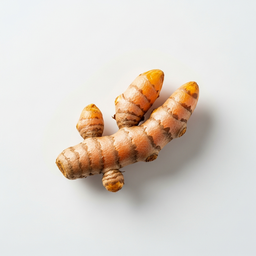 Turmeric
 Sulforaphane + curcumin: double NF-κB modulation
Technical: Cauliflower's sulforaphane activates the Nrf2 pathway for phase-II enzyme production. Sulforaphane and curcumin from turmeric are studied in research in connection with NF-κB and COX-2 signaling, each via its own route (IKK and IκBα respectively).
What does this mean for you? Cauliflower-turmeric curry (Gobi Masala) is an Indian classic. It combines two intensively studied plant compounds — sulforaphane and curcumin. Add black pepper for 2000% better curcumin absorption.
Cauliflower 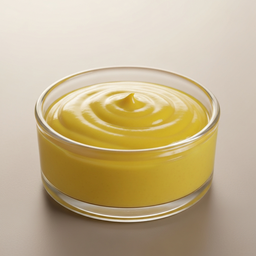 Mustard
 Activates sulforaphane — up to 4x more bioactive compound
Cramer & Jeffery (2011) in Nutrition and Cancer showed that adding mustard to cooked broccoli increased sulforaphane absorption by a factor of 4.
Technical: Cauliflower contains glucoraphanin, a precursor to sulforaphane. The enzyme myrosinase converts this, but is destroyed by heat. Mustard (seed) contains active myrosinase that enables this conversion.
What does this mean for you? Cooked cauliflower loses most of its enzymatic conversion to sulforaphane. Add a teaspoon of mustard after cooking, and you still get up to 4x more sulforaphane — a bioactive compound intensively studied in science. Sprinkle mustard seeds over your cauliflower mash or stir-fry!
Cauliflower 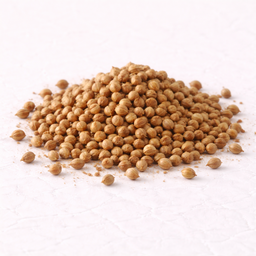 Mustard Seeds
 Activates sulforaphane — up to 4x more bioactive compound
Cramer & Jeffery (2011) in Nutrition and Cancer showed that adding mustard to cooked broccoli increased sulforaphane absorption by a factor of 4.
Technical: Cauliflower contains glucoraphanin, a precursor to sulforaphane. The enzyme myrosinase converts this, but is destroyed by heat. Mustard (seed) contains active myrosinase that enables this conversion.
What does this mean for you? Cooked cauliflower loses most of its enzymatic conversion to sulforaphane. Add a teaspoon of mustard after cooking, and you still get up to 4x more sulforaphane — a bioactive compound intensively studied in science. Sprinkle mustard seeds over your cauliflower mash or stir-fry!
Cauliflower  Olive Oil
 Olive oil improves absorption of cauliflower's vitamin K and sulforaphane
Technical: Cauliflower contains vitamin K and glucosinolates converted to sulforaphane. Olive oil's fats improve absorption of fat-soluble vitamin K, while light roasting in olive oil optimizes glucosinolate conversion to sulforaphane.
What does this mean for you? Roast cauliflower with olive oil — this is the best way to maximize the bioactive compounds from cauliflower.
Recipes with Cauliflower
Discover delicious recipes featuring cauliflower:
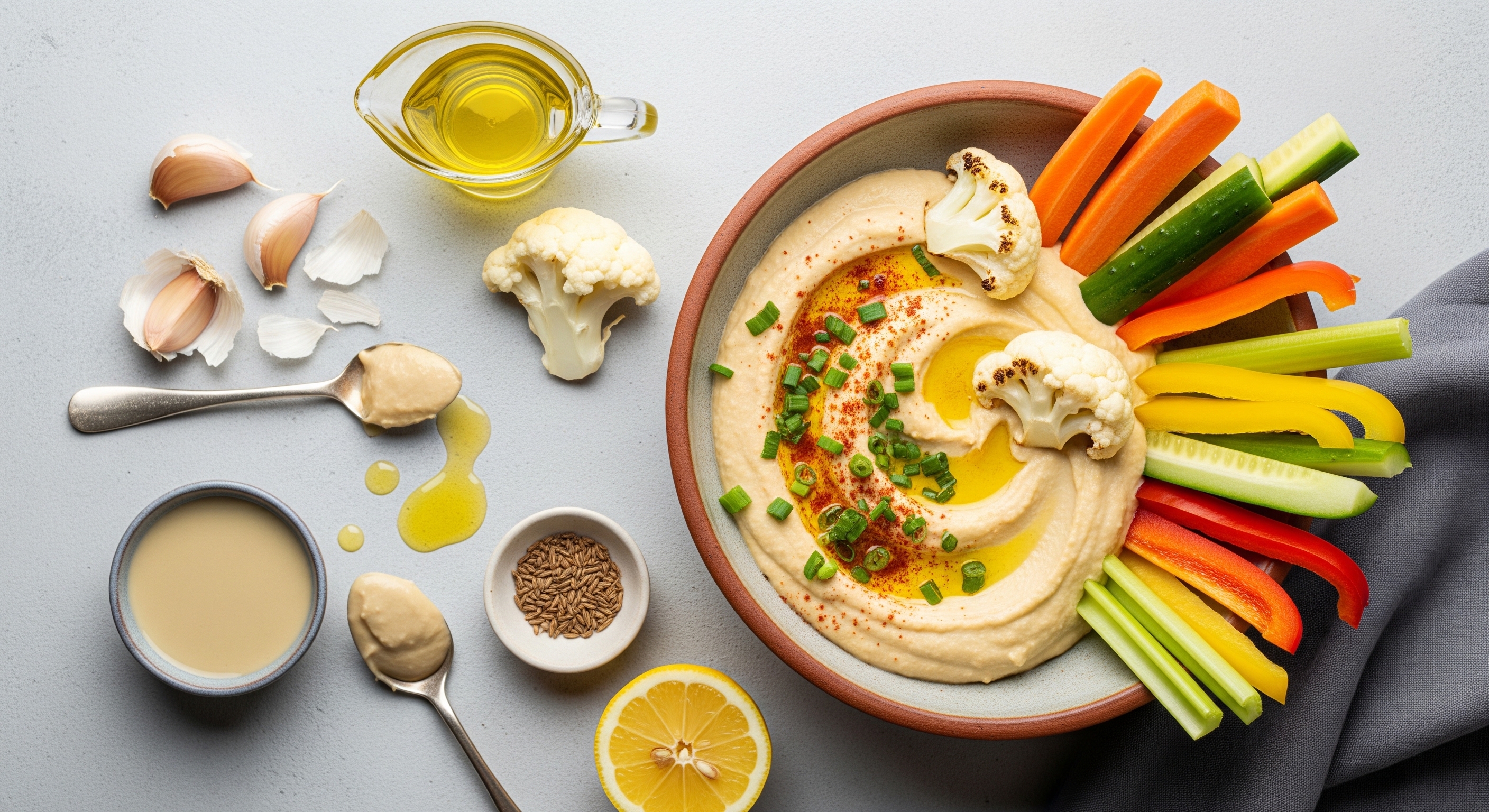 Cauliflower Hummus with Veggie Sticks 25 min Creamy low-carb dip with crunchy vegetables
  105 kcal
  3g protein 1 synergies
 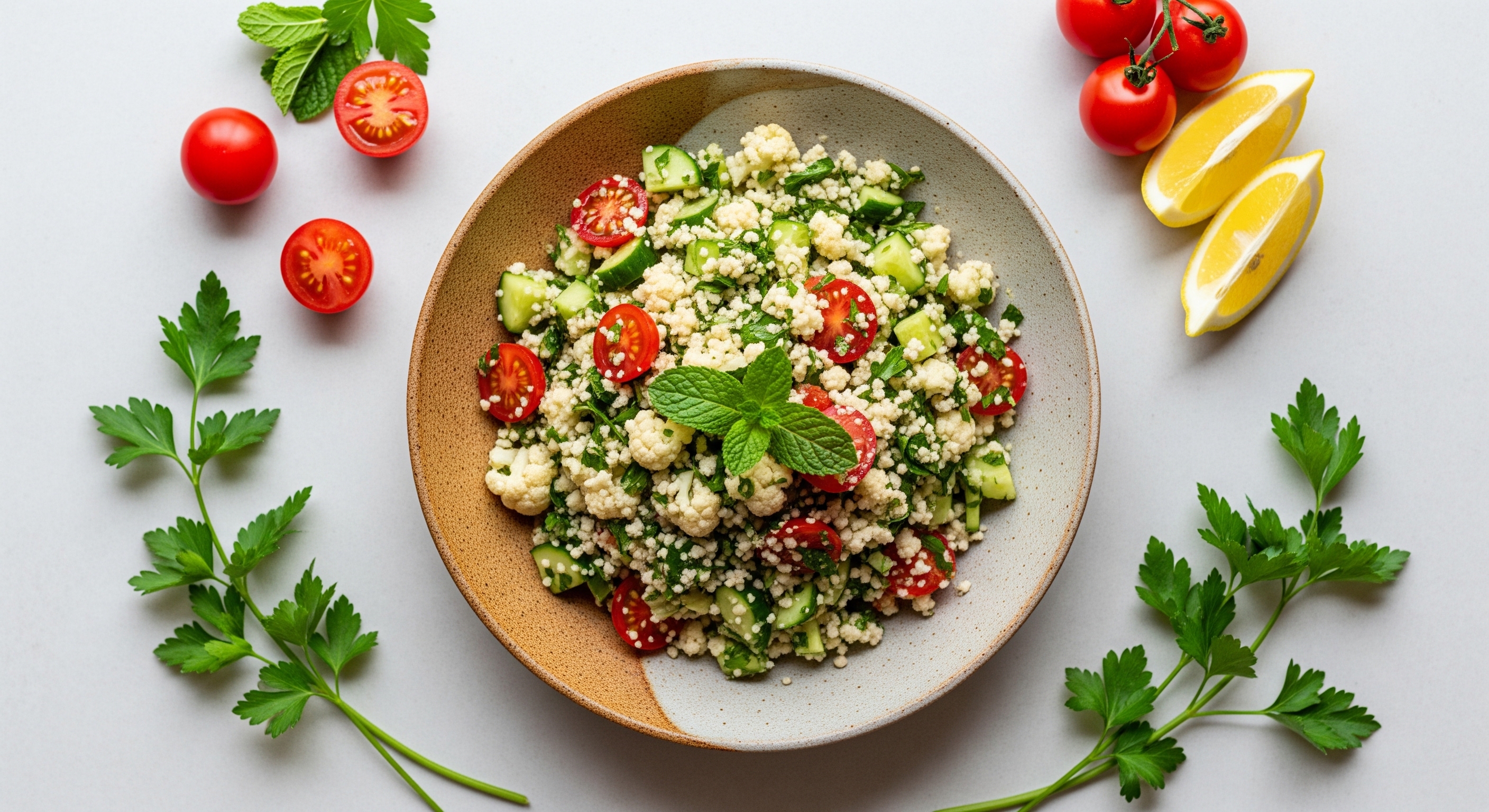 Cauliflower Tabbouleh with Parsley and Mint 20 min Fresh, herby and light 130 kcal 2.5g protein 3 synergies
 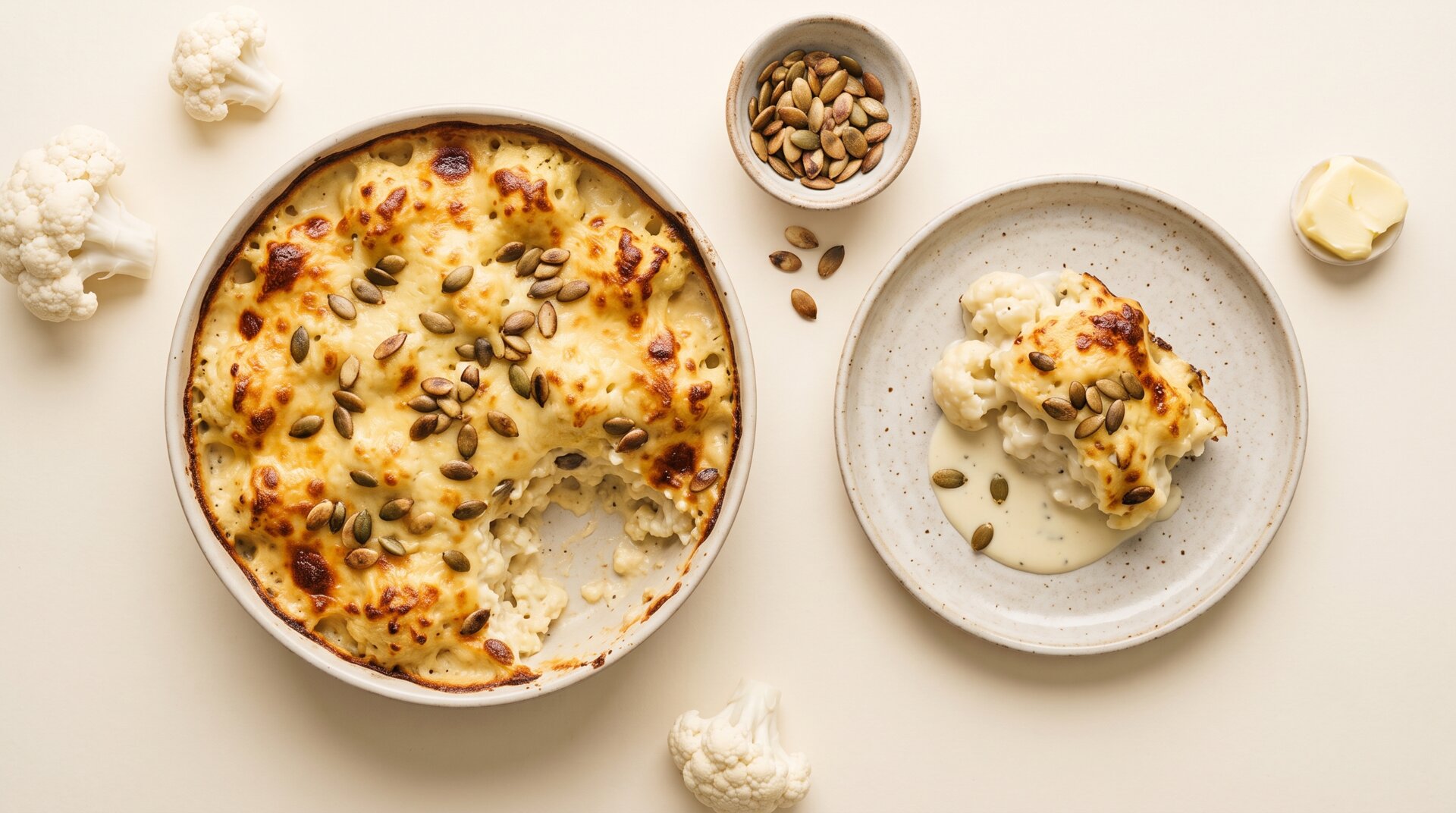 Cauliflower Cheese Gratin with Pumpkin Seeds 45 min Creamy oven bake with a crunchy seed topping 425 kcal 19g protein 2 synergies
 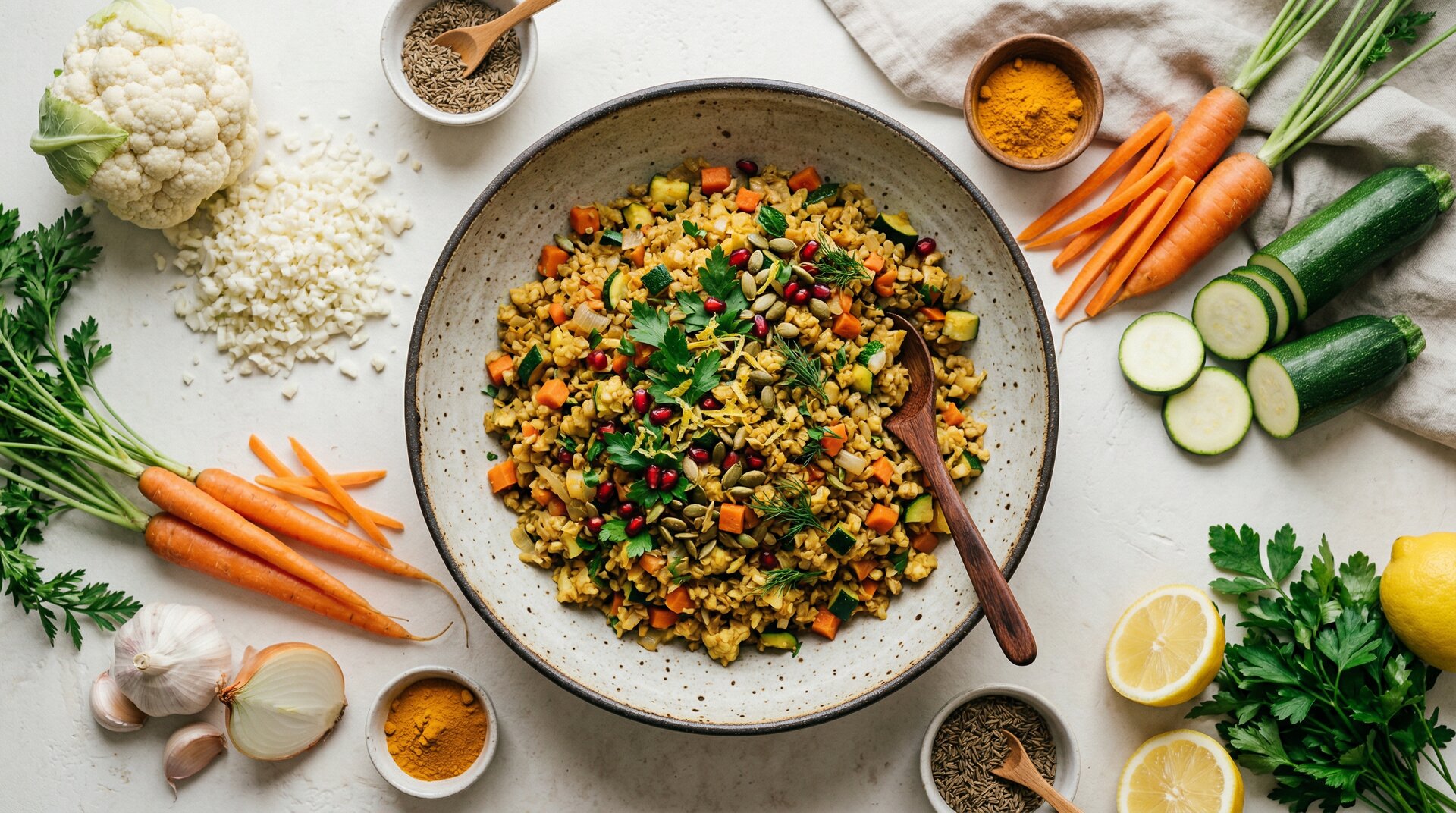 Cauliflower Rice Pilaf with Turmeric and Lemon 25 min Fragrant, golden and bright 165 kcal 6g protein 3 synergies
 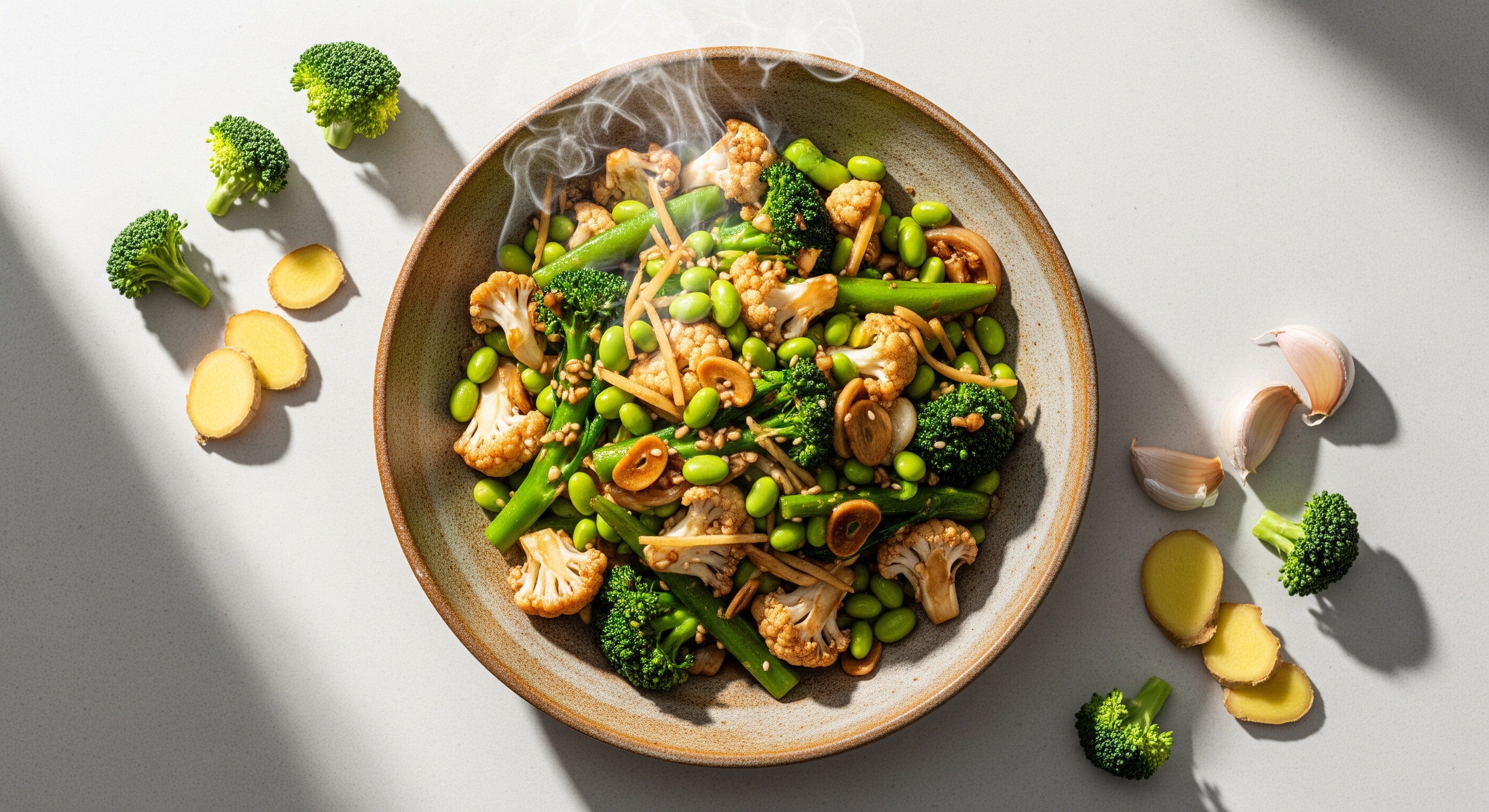 Edamame Cauliflower Stir-Fry with Sesame 25 min Quick, green and savoury with a sesame note 250 kcal 18g protein 2 synergies
 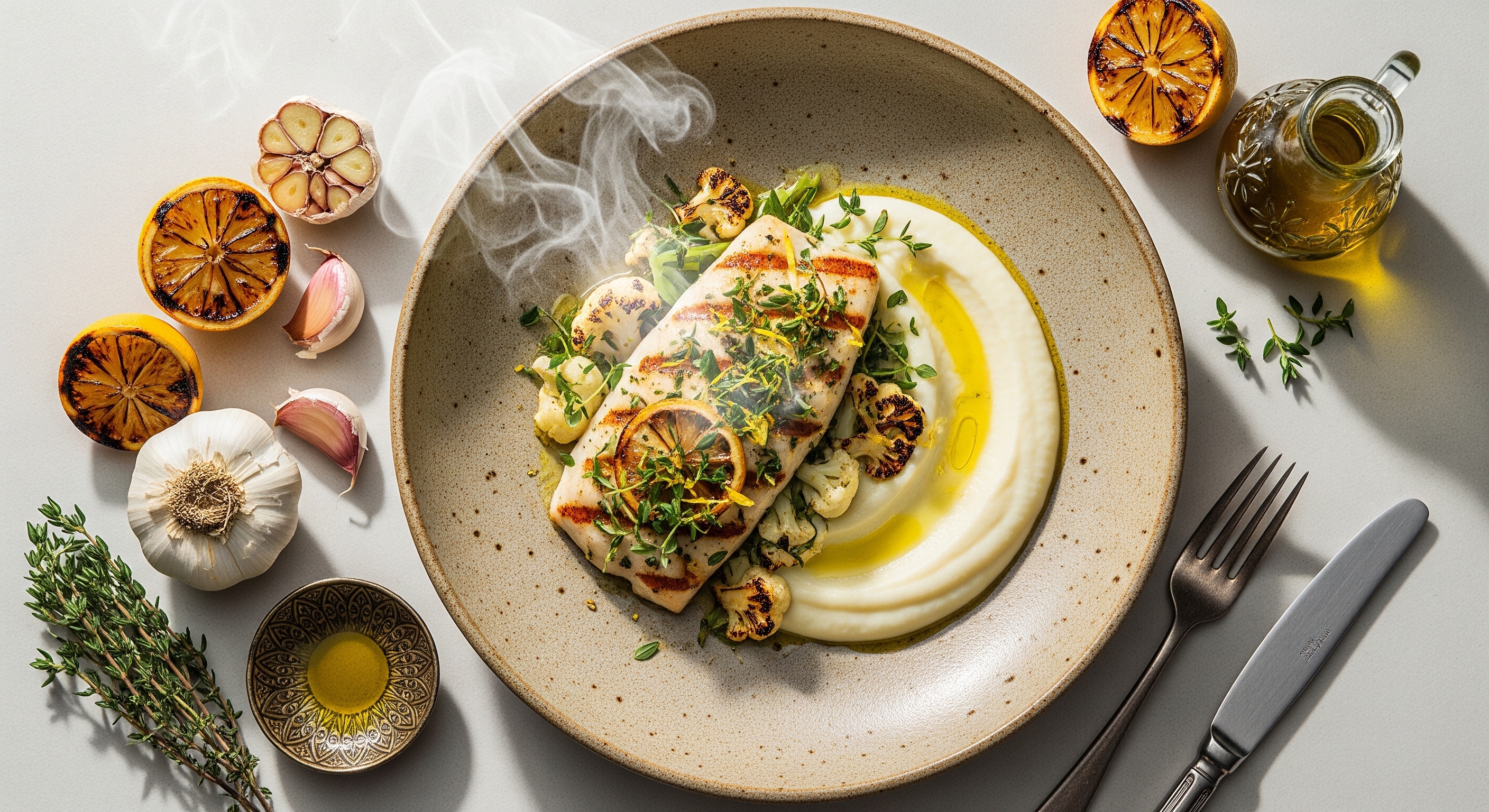 Grilled Fish with Cauliflower Purée and Herbs (Paleo) 35 min Light paleo dinner of grilled fish on creamy cauliflower purée 620 kcal 42g protein 2 synergies
  In the Kitchen
Storage
Location:Refrigerator
Shelf life:1-2 weken in plastic wrap
Store stem down in plastic to retain moisture. Brown spots indicate oxidation but are not dangerous.
Preparation
Roast for caramelization, steam for nutrient retention, grate for 'rice'. CRUCIAL: cut 40 min before cooking to activate sulforaphane. BEST SYNERGY: turmeric + cauliflower = enhanced anti-cancer effect.
Conversions
Substitutes
Smart preparation
1Break cauliflower into equal florets for even cooking time.
2Roast cauliflower at high temperature for caramelization and nutty flavor.
3Add a splash of milk to the cooking water to keep the white color.
Caution / Warnings
Cauliflower is very safe, but there are scientific considerations:
Thyroid Problems Moderate
Cruciferous vegetables contain goitrogens that may interfere with iodine uptake
Advice:
Cooking reduces goitrogens by 90%. With thyroid issues: eat cooked and not large amounts daily
IBS / Irritable Bowel Moderate
Cauliflower contains FODMAPs that can cause gas formation
Advice:
Start with small portions and build up slowly. Cooking well makes it more digestible
Summary
Cauliflower is the perfect low-carb alternative: make 'rice' or 'mash' without the carbs. Rich in choline for your brain and sulforaphane for cleansing. Tip: cut or grate 40 min before cooking to activate sulforaphane, or combine with turmeric for synergy.