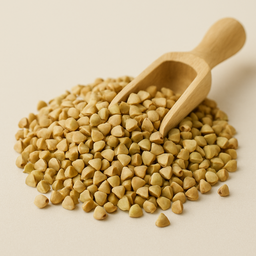
Buckwheat
Gluten-free pseudo-cereal with a nutty flavour
What is this ingredient?
Buckwheat (Fagopyrum esculentum) does not belong to the grass family and is therefore not a true grain; botanically, it is closer to plants such as rhubarb and sorrel. The seeds are used as groats, roasted kasha, flour or soba noodles and fit well into both Eastern European and Japanese culinary traditions.
Buckwheat is naturally gluten-free, but ready-made products such as soba can also contain wheat; always check the label if you follow a gluten-free diet or have coeliac disease. Its nutty, slightly bitter flavour becomes rounder after brief dry-toasting and pairs nicely with mushrooms, onion, butter, citrus and leafy greens.
Nutritionally, buckwheat provides carbohydrates, fibre, plant protein, magnesium, potassium, zinc, iron, folate and small amounts of bioactive plant compounds such as rutin. Rutin is a flavonoid also found in other plants and is widely used as a topic in food and plant research. The exact amount can vary by variety, origin, processing and preparation.
How does it taste?
Earthy and robust with a slightly bitter, nutty flavour.
Pairs well with:
Pairs well with mushroomsbutterhoneyblueberries and kale.
Varieties
Buckwheat groats (whole kernels)
Whole seeds with a full, earthy flavour; suitable for kasha, bowls and warm side dishes.
Kasha (roasted)
Roasted buckwheat groats with a deeper, nutty flavour; popular in Eastern European dishes.
Soba noodles
Japanese noodles made with buckwheat flour; check the label, as many varieties also contain wheat.
Did you know...?
- Despite its name, buckwheat is not wheat but a relative of rhubarb and sorrel.
- Buckwheat was one of the early crops cultivated by humans, thousands of years ago in Asia.
Nutritional Value & Energy
Per 100g
Buckwheat provides energy thanks to natural nutrients , buffered by fiber.
Per 100g
Minerals
Vitamins
Omega-3 fatty acids
More nutrients
B-Vitamins
Trace Minerals
Low GI means blood sugar doesn't spike quickly.
What's in a serving?
1 serving (dry)
Buckwheat naturally contains iron (2.2 mg per 100 g).
Buckwheat naturally contains zinc (2.4 mg per 100 g).
Buckwheat naturally contains magnesium (231 mg per 100 g).
Buckwheat naturally contains potassium (460 mg per 100 g).
Buckwheat naturally contains selenium (8.3 mcg per 100 g).
Buckwheat naturally contains folate (30 mcg per 100 g).
% of daily reference intake (DRI)
EU-approved nutrition claims
This ingredient contains nutrients for which EFSA-authorized health claims exist (at nutrient level, not ingredient-specific).
Approved health claims (EU)
Magnesium EU 432/2012
Magnesium contributes to normal muscle function
Contains 231mg/100g (threshold: ≥56.25mg/100g)
Magnesium EU 432/2012
Magnesium contributes to the reduction of tiredness and fatigue
Contains 231mg/100g (threshold: ≥56.25mg/100g)
Magnesium EU 432/2012
Magnesium contributes to normal functioning of the nervous system
Contains 231mg/100g (threshold: ≥56.25mg/100g)
Zinc EU 432/2012
Zinc contributes to the normal function of the immune system
Contains 2.4mg/100g (threshold: ≥1.5mg/100g)
Zinc EU 432/2012
Zinc contributes to the maintenance of normal skin
Contains 2.4mg/100g (threshold: ≥1.5mg/100g)
Iron EU 432/2012
Iron contributes to normal energy-yielding metabolism
Contains 2.2mg/100g (threshold: ≥2.1mg/100g)
Iron EU 432/2012
Iron contributes to the reduction of tiredness and fatigue
Contains 2.2mg/100g (threshold: ≥2.1mg/100g)
Potassium EU 432/2012
Potassium contributes to the maintenance of normal blood pressure
Contains 460mg/100g (threshold: ≥300mg/100g)
Folate EU 432/2012
Folate contributes to normal blood formation
Contains 30mcg/100g (threshold: ≥30mcg/100g)
Folate EU 432/2012
Folate contributes to normal amino acid synthesis
Contains 30mcg/100g (threshold: ≥30mcg/100g)
Folate EU 432/2012
Folate contributes to normal homocysteine metabolism
Contains 30mcg/100g (threshold: ≥30mcg/100g)
Folate EU 432/2012
Folate contributes to normal psychological function
Contains 30mcg/100g (threshold: ≥30mcg/100g)
Folate EU 432/2012
Folate contributes to the normal function of the immune system
Contains 30mcg/100g (threshold: ≥30mcg/100g)
Folate EU 432/2012
Folate has a role in the process of cell division
Contains 30mcg/100g (threshold: ≥30mcg/100g)
Folate EU 432/2012
Folate contributes to maternal tissue growth during pregnancy
Contains 30mcg/100g (threshold: ≥30mcg/100g)
Magnesium EU 432/2012
Magnesium contributes to normal energy-yielding metabolism
Contains 231mg/100g (threshold: ≥56.25mg/100g)
Magnesium EU 432/2012
Magnesium contributes to electrolyte balance
Contains 231mg/100g (threshold: ≥56.25mg/100g)
Magnesium EU 432/2012
Magnesium contributes to normal protein synthesis
Contains 231mg/100g (threshold: ≥56.25mg/100g)
Magnesium EU 432/2012
Magnesium contributes to normal psychological function
Contains 231mg/100g (threshold: ≥56.25mg/100g)
Magnesium EU 432/2012
Magnesium contributes to the maintenance of normal bones
Contains 231mg/100g (threshold: ≥56.25mg/100g)
Magnesium EU 432/2012
Magnesium contributes to the maintenance of normal teeth
Contains 231mg/100g (threshold: ≥56.25mg/100g)
Magnesium EU 432/2012
Magnesium has a role in the process of cell division
Contains 231mg/100g (threshold: ≥56.25mg/100g)
Iron EU 432/2012
Iron contributes to normal cognitive function
Contains 2.2mg/100g (threshold: ≥2.1mg/100g)
Iron EU 432/2012
Iron contributes to normal formation of red blood cells and haemoglobin
Contains 2.2mg/100g (threshold: ≥2.1mg/100g)
Iron EU 432/2012
Iron contributes to normal oxygen transport in the body
Contains 2.2mg/100g (threshold: ≥2.1mg/100g)
Iron EU 432/2012
Iron contributes to the normal function of the immune system
Contains 2.2mg/100g (threshold: ≥2.1mg/100g)
Iron EU 432/2012
Iron has a role in the process of cell division
Contains 2.2mg/100g (threshold: ≥2.1mg/100g)
Zinc EU 432/2012
Zinc contributes to normal acid-base metabolism
Contains 2.4mg/100g (threshold: ≥1.5mg/100g)
Zinc EU 432/2012
Zinc contributes to normal carbohydrate metabolism
Contains 2.4mg/100g (threshold: ≥1.5mg/100g)
Zinc EU 432/2012
Zinc contributes to normal cognitive function
Contains 2.4mg/100g (threshold: ≥1.5mg/100g)
Zinc EU 432/2012
Zinc contributes to normal DNA synthesis
Contains 2.4mg/100g (threshold: ≥1.5mg/100g)
Zinc EU 432/2012
Zinc contributes to normal fertility and reproduction
Contains 2.4mg/100g (threshold: ≥1.5mg/100g)
Zinc EU 432/2012
Zinc contributes to normal macronutrient metabolism
Contains 2.4mg/100g (threshold: ≥1.5mg/100g)
Zinc EU 432/2012
Zinc contributes to normal metabolism of fatty acids
Contains 2.4mg/100g (threshold: ≥1.5mg/100g)
Zinc EU 432/2012
Zinc contributes to normal metabolism of vitamin A
Contains 2.4mg/100g (threshold: ≥1.5mg/100g)
Zinc EU 432/2012
Zinc contributes to normal protein synthesis
Contains 2.4mg/100g (threshold: ≥1.5mg/100g)
Zinc EU 432/2012
Zinc contributes to the maintenance of normal bones
Contains 2.4mg/100g (threshold: ≥1.5mg/100g)
Zinc EU 432/2012
Zinc contributes to the maintenance of normal hair
Contains 2.4mg/100g (threshold: ≥1.5mg/100g)
Zinc EU 432/2012
Zinc contributes to the maintenance of normal nails
Contains 2.4mg/100g (threshold: ≥1.5mg/100g)
Zinc EU 432/2012
Zinc contributes to the maintenance of normal testosterone levels in the blood
Contains 2.4mg/100g (threshold: ≥1.5mg/100g)
Zinc EU 432/2012
Zinc contributes to the maintenance of normal vision
Contains 2.4mg/100g (threshold: ≥1.5mg/100g)
Zinc EU 432/2012
Zinc contributes to the protection of cells from oxidative stress
Contains 2.4mg/100g (threshold: ≥1.5mg/100g)
Zinc EU 432/2012
Zinc has a role in the process of cell division
Contains 2.4mg/100g (threshold: ≥1.5mg/100g)
Selenium EU 432/2012
Selenium contributes to the maintenance of normal hair
Contains 8.3mcg/100g (threshold: ≥8.25mcg/100g)
Selenium EU 432/2012
Selenium contributes to the maintenance of normal nails
Contains 8.3mcg/100g (threshold: ≥8.25mcg/100g)
Selenium EU 432/2012
Selenium contributes to the normal function of the immune system
Contains 8.3mcg/100g (threshold: ≥8.25mcg/100g)
Selenium EU 432/2012
Selenium contributes to normal thyroid function
Contains 8.3mcg/100g (threshold: ≥8.25mcg/100g)
Selenium EU 432/2012
Selenium contributes to normal spermatogenesis
Contains 8.3mcg/100g (threshold: ≥8.25mcg/100g)
Selenium EU 432/2012
Selenium contributes to the protection of cells from oxidative stress
Contains 8.3mcg/100g (threshold: ≥8.25mcg/100g)
Potassium EU 432/2012
Potassium contributes to normal functioning of the nervous system
Contains 460mg/100g (threshold: ≥300mg/100g)
Potassium EU 432/2012
Potassium contributes to normal muscle function
Contains 460mg/100g (threshold: ≥300mg/100g)
What's being researched?
Rutin and buckwheat in nutrition research
Buckwheat contains the flavonoid rutin. Research looks at buckwheat composition, variation between varieties and the role of rutin within broader dietary patterns; the findings are not intended as ingredient-specific health claims.
Supported by: [3] Su R (2022)
Buckwheat and carbohydrate research
D-chiro-inositol and other buckwheat components are being examined in nutrition and metabolism research. Part of the evidence comes from laboratory and animal models; controlled human studies remain limited.
Supported by: [2] Kowalski S (2022) , [1] Luthar Z (2020)
Good Combinations (Synergy)
Combine buckwheat smartly to enhance the effect:
Buckwheat  Apple
Apple Rutin + quercetin: double flavonoid boost for capillary support
Technical: Buckwheat is the richest food source of rutin (25-100mg per 100g), a flavonoid that strengthens capillaries. Apple contains quercetin (4-13mg per apple) with similar capillary support. Together they offer synergistic flavonoid support.
What does this mean for you? Buckwheat pancakes with apple or applesauce — a combination rich in flavonoids. Buckwheat is the best rutin source, the apple completes with quercetin.
Buckwheat  Lemon
Lemon Rutin + vitamin C reinforce each other's antioxidant action
Technical: Buckwheat is the richest food source of rutin (25-100mg per 100g), a flavonoid glycoside. Rutin protects vitamin C (ascorbic acid) from oxidative degradation by chelating copper ions that would otherwise oxidize vitamin C. Vitamin C in turn is essential for collagen synthesis in blood vessel walls. Rutin also strengthens capillaries by stabilizing endothelial cells.
What does this mean for you? Serve buckwheat pancakes with a squeeze of lemon or make a buckwheat salad with lemon dressing. The rutin in buckwheat keeps vitamin C active longer in your body, which benefits your blood vessels and skin.
Buckwheat 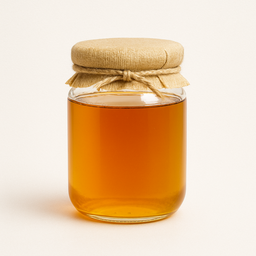 Honey
Honey Rutin from buckwheat + antioxidants from honey for capillary support
Technical: Buckwheat is uniquely rich in rutin (36mg/100g), a flavonoid that reduces capillary fragility and improves venous insufficiency. Buckwheat honey has the highest antioxidant activity of all honey types (ORAC 3x higher than light honey). Together rutin + honey polyphenols offer synergistic vascular protection: rutin strengthens capillary walls while honey antioxidants protect endothelial cells from oxidative damage.
What does this mean for you? Buckwheat pancakes with (preferably buckwheat) honey is a traditional Russian combination with proven vascular protective action. Extra benefit: buckwheat is gluten-free despite its name.
Recipes with Buckwheat
Discover delicious recipes featuring buckwheat:
 Buckwheat Pancakes with Berries 30 min Gluten-free pancakes with blueberries and yogurt
  420 kcal
  18g protein 1 synergies
 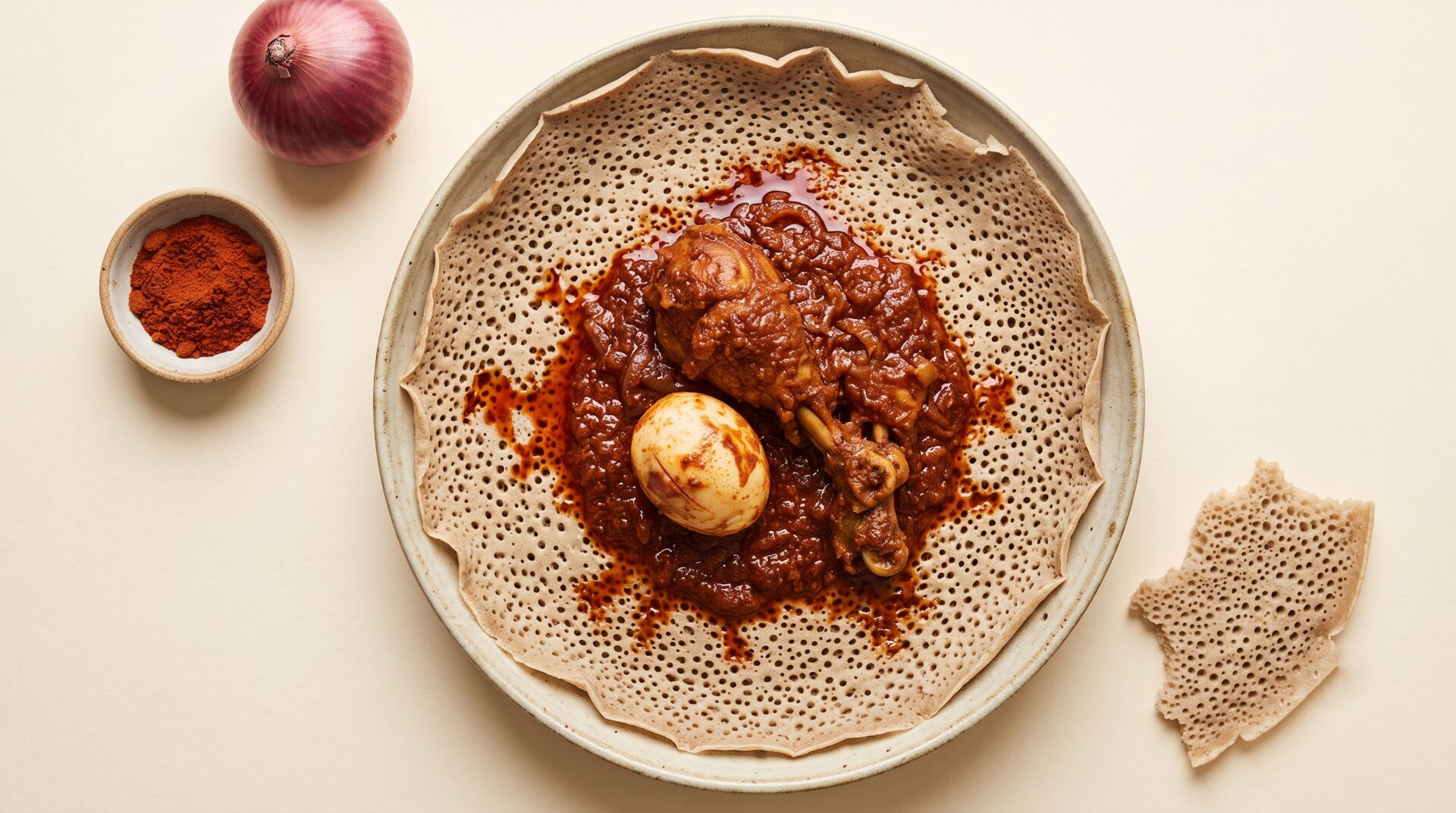 Ethiopian Doro Wat with Injera-Style Flatbread 80 min Festive chicken stew with berbere and homemade buckwheat flatbread 712 kcal 44g protein 2 synergies
  In the Kitchen
Storage
Location:Pantry
Shelf life:6-12 maanden in luchtdichte container
Store cool, dry and airtight. Buckwheat flour turns stale faster than whole groats; preferably use it within 3 months after opening.
Preparation
Buckwheat groats: cook like rice with 1 part buckwheat to 2 parts water, about 15-20 minutes. Buckwheat flour: use for galettes, pancakes, blini and soba. Briefly dry-toast groats for a deeper nutty flavour. Pair culinarily with bell pepper, lemon, mushrooms, onion or leafy greens for freshness and contrast.
Conversions
Substitutes
Smart preparation
1Briefly dry-toast buckwheat in a pan for a nutty flavour.
Why?
Toasting deepens the flavour and helps prevent a mushy texture.
2Rinse buckwheat before cooking to reduce loose starch residue and bitterness.
3Cook buckwheat with 1 part groats to 2 parts water, for about 15 minutes.
Caution / Warnings
Buckwheat is very safe, but there are scientific considerations:
Buckwheat allergy Severe
An allergic reaction to buckwheat is relatively rare, but it can be serious in sensitive individuals.
Advice:
Avoid buckwheat completely if you have a known allergy. Cross-reactions with latex have been described in the literature.
Use of anticoagulants Mild
Concentrated rutin products may be relevant with medication that affects blood clotting; normal culinary servings of buckwheat are not the same as those products.
Advice:
Use buckwheat as a food in normal amounts, but discuss supplements or high-concentration products with your doctor or pharmacist.
Traditional use
Other
Eastern European and Russian staple food
In Russia and Eastern Europe, buckwheat (kasha) has been a familiar staple food for over 1000 years. It is eaten as warm porridge, a side dish or a filling, often with butter, onion, mushrooms or broth.
Southeast Asian
Japanese soba tradition
In Japan, buckwheat noodles (soba) have been eaten for over 400 years. Eating soba on New Year’s Eve (toshikoshi soba) is a culinary tradition that symbolizes transition, simplicity and a long thread of life.
Summary
Buckwheat is a gluten-free pseudo-cereal with a distinct earthy, nutty flavour. Use the groats as kasha, bake the flour into pancakes, or choose soba noodles while checking the label for wheat. It mainly provides fibre, plant protein, magnesium, zinc, iron, potassium, folate and the plant compound rutin.