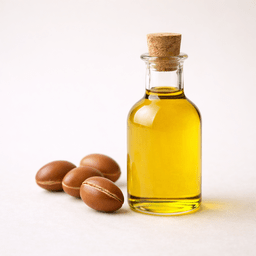
Argan Oil
Moroccan 'Liquid Gold'
What is this ingredient?
Argan oil has been used for centuries by Berber tribes in Morocco, both culinarily and medicinally. The oil is manually pressed from the nuts of Argania spinosa, a tree that grows only in southwestern Morocco. The production process is labor-intensive: women crack the hard shell, roast the kernels, and press the oil. Culinary argan oil has a nutty flavor and is used in traditional dishes like amlou (a nut-honey spread). Cosmetic argan oil, the unroasted variant, is prized for its hydrating and cellular research properties for skin and hair.
How does it taste?
Nutty and lightly toasted with a subtle, buttery sweetness.
Pairs well with:
Pairs well with couscoushoneyalmondslemon and goat cheese.
Did you know...?
- Argan oil comes from the argan tree, which only grows in a small area in Morocco.
- One liter of argan oil requires the fruits of approximately 30 kilograms of argan nuts.
Nutritional Value & Energy
Per 100ml
Argan Oil provides energy thanks to natural nutrients .
Per 100g
Minerals
Vitamins
What's in a serving?
1 tablespoon
Argan Oil naturally contains vitamin E (8.3 mg per 100 g as tocopherol equivalents).
% of daily reference intake (DRI)
EU-approved nutrition claims
This ingredient contains nutrients for which EFSA-authorized health claims exist (at nutrient level, not ingredient-specific).
Approved health claims (EU)
Vitamin_e EU 432/2012
Vitamin E contributes to the protection of cells from oxidative stress
Contains 8.3mg/100g (threshold: ≥1.8mg/100g)
What's being researched?
Argan oil and lipid profile
Argan oil is studied for effects on cholesterol and lipid profile due to high oleic acid and tocopherol content. Clinical studies show promising results.
Supported by: [5] Berrougui (2006) , [3] El Monfalouti (2010) , [1] Cherki (2006)
Argan oil in cosmetic research
Argan oil is researched for skin hydration and skin elasticity. Clinical studies examine its effects on the skin with topical use.
Supported by: [4] Boucetta (2015) , [2] El Abbassi (2014)
Recipes with Argan Oil
Discover delicious recipes featuring argan oil:
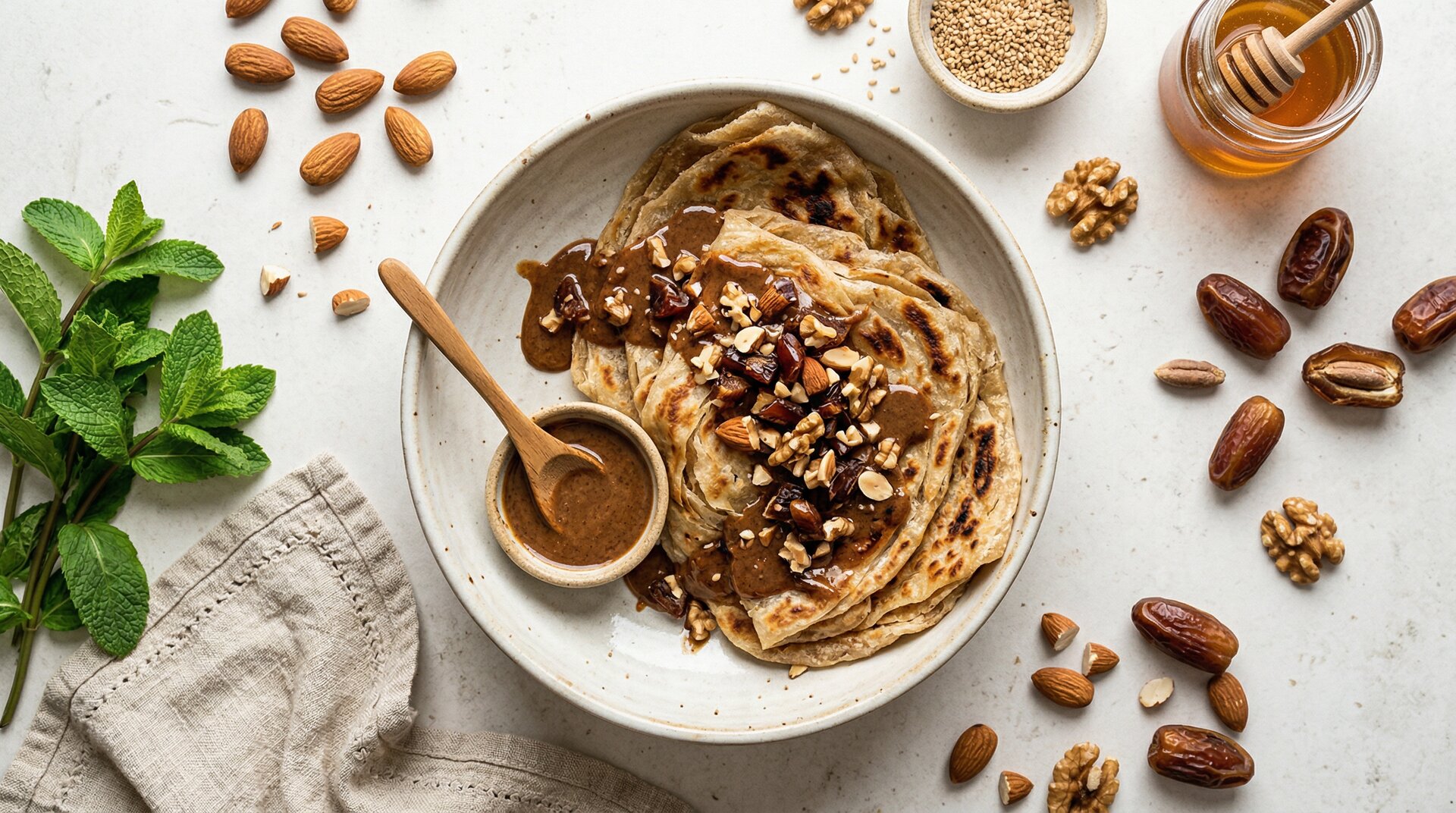 Moroccan Msemen with Amlou & Dates 40 min Crispy layered Moroccan flatbread with sweet almond-argan oil dip
  802 kcal
  19g protein 2 synergies
  In the Kitchen
Storage
Location:Pantry
Shelf life:12-18 maanden ongeopend, 3-6 maanden geopend
Store in a cool, dark place in a well-sealed bottle. Refrigeration extends shelf life.
Preparation
Culinary argan oil (roasted) for dressings, dips and finishing. Not suitable for high temperatures. Use raw for optimal benefits.
Conversions
Substitutes
Smart preparation
1Use argan oil only raw as a finishing oil; do not heat.
Why?
Heating destroys the delicate nutty flavor.
2Drizzle argan oil over couscous, salads, or grilled vegetables.
3Store argan oil cool and dark; it goes rancid quickly.
Caution / Warnings
Argan Oil is very safe, but there are scientific considerations:
Nut Allergy Severe
Argan oil is pressed from the nuts of the argan tree and may cause allergic reactions in people with nut allergies
Advice:
With known nut allergy, perform patch test first or avoid
Surgeries Mild
Argan oil may theoretically affect blood clotting due to vitamin E content
Advice:
With high doses (supplements): consult doctor before planned surgery
Traditional use
African
Argan Oil Among the Berbers
Argan oil has been pressed from the fruits of the argan tree by the Berbers in Morocco for centuries, used in both cuisine and skincare.
Summary
Argan oil is a unique oil from Morocco with proven benefits for skin, hair and heart. The high levels of vitamin E and favorable fatty acids make it valuable, both in the kitchen and for cosmetic purposes. Pay attention to quality: genuine, cold-pressed argan oil is golden yellow and has a subtle nutty aroma.