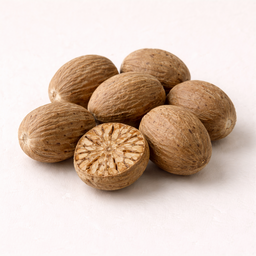
Nutmeg
Warm aromatic spice seed with sweet, woody notes
What is this ingredient?
Nutmeg was once more expensive than gold and played a major role in the global spice trade, especially around the Banda Islands and among European trading powers. It contains myristicin, an aromatic compound in the volatile oil that mainly contributes aroma and flavor at normal culinary doses, while larger amounts can be unsafe and may cause hallucinogenic or toxic effects. A small pinch in warm milk, béchamel sauce, mashed potatoes, or vegetables such as cauliflower and green beans adds depth without overpowering the dish.
How does it taste?
Warm-sweet with woody, slightly nutty, and subtly tingling notes.
Pairs well with:
Pairs well with béchamel saucespinachpumpkincinnamonpotatocreamy saucesand spiced baking.
Did you know...?
- Nutmeg and mace come from the same fruit: the nut is the seed, mace is the seed covering.
- In the 17th century, nutmeg was so valuable that the Dutch traded Manhattan for the island of Run.
Nutritional Value & Energy
Per 100g
Nutmeg provides energy thanks to natural nutrients , buffered by fiber.
Per 100g
Minerals
Vitamins
Omega-3 fatty acids
More nutrients
B-Vitamins
Trace Minerals
What's in a serving?
Nutmeg naturally contains manganese (2.9 mg per 100 g dried powder). At typical spice usage (3–9 g), the contribution is limited.
Nutmeg naturally contains copper (1 mg per 100 g dried powder). At typical spice usage (3–9 g), the contribution is limited.
Nutmeg naturally contains manganese (2.9 mg per 100 g dried powder). At typical spice usage (3–9 g), the contribution is limited.
Nutmeg naturally contains copper (1 mg per 100 g dried powder). At typical spice usage (3–9 g), the contribution is limited.
Nutmeg naturally contains magnesium (183 mg per 100 g dried powder). At typical spice usage (3–9 g), the contribution is limited.
Nutmeg naturally contains phosphorus (213 mg per 100 g dried powder). At typical spice usage (3–9 g), the contribution is limited.
Nutmeg naturally contains folate (76 mcg per 100 g dried powder). At typical spice usage (3–9 g), the contribution is limited.
% of daily reference intake (DRI)
EU-approved nutrition claims
There are currently no EFSA-authorized health claims specific to nutmeg. Various applications for herbs and spices have been submitted but not yet assessed (botanical 'on hold' list).
What's being researched?
Nutmeg compounds in preclinical research
Myristicin and other compounds from nutmeg are being examined in early laboratory and preclinical models. These studies describe possible biological pathways, but they are not dietary advice and do not speak to normal culinary portions.
Supported by: [1] Truitt EB Jr (1967) , [2] Chung JY (2006)
Good Combinations (Synergy)
Combine nutmeg smartly to enhance the effect:
Nutmeg 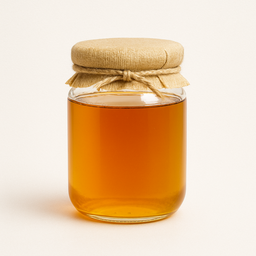 Honey
Honey Myristicin + honey for sleep and relaxation
Technical: Nutmeg contains myristicin (4-12%) that after liver metabolism exhibits MAO-inhibiting properties, increasing serotonin and melatonin levels. Trimyristin in nutmeg induces sleep via GABA-A receptor modulation. Honey's tryptophan (amino acid) is the precursor of serotonin and melatonin. The combination stimulates melatonin production via two routes: MAO inhibition (nutmeg) + precursor delivery (honey). Traditional Indian sleep recipe.
What does this mean for you? A pinch of nutmeg in warm milk with honey is a proven sleep aid. Use just a small pinch — nutmeg is powerful and should be used in small quantities.
Nutmeg 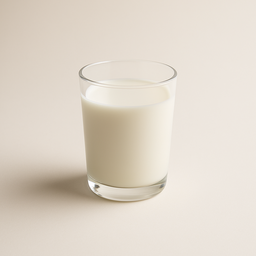 Milk
Milk Myristicin + tryptophan for sleep promotion and relaxation
Technical: Nutmeg's myristicin has mild sedative properties via MAO inhibition. Milk's tryptophan is converted to serotonin and melatonin. Milk's casein slows absorption, keeping nutmeg's bioactive compounds active longer.
What does this mean for you? Warm milk with nutmeg before bed is an age-old sleep recipe — and it really works through two complementary mechanisms.
Nutmeg 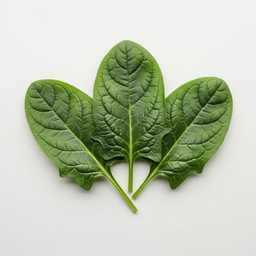 Spinach
 Classic combination supporting iron absorption
Technical: Spinach contains oxalates giving a bitter taste that can bind calcium/iron. Nutmeg's myristicin and macelignan mask this bitterness via flavor interaction. Nutmeg also promotes bile flow, improving fat absorption — important for spinach's fat-soluble vitamins (K, A, E).
What does this mean for you? Add a pinch of nutmeg to spinach dishes. It masks the bitterness and improves vitamin absorption from spinach — a classic combination for good reason.
Recipes with Nutmeg
Discover delicious recipes featuring nutmeg:
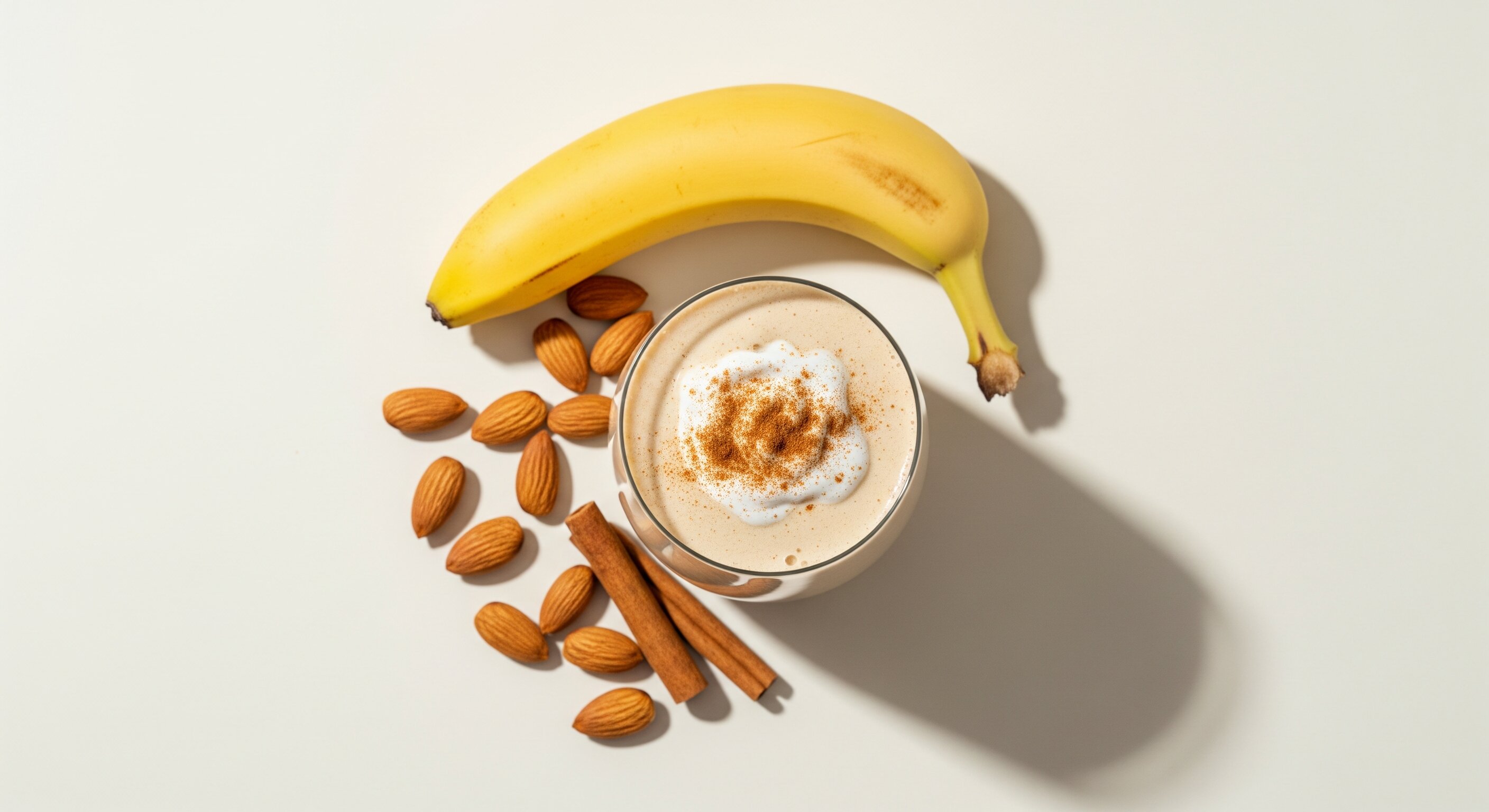 Banana-Almond Evening Shake 5 min Creamy shake with almond butter, yogurt and warm cinnamon
  420 kcal
  16g protein 2 synergies
 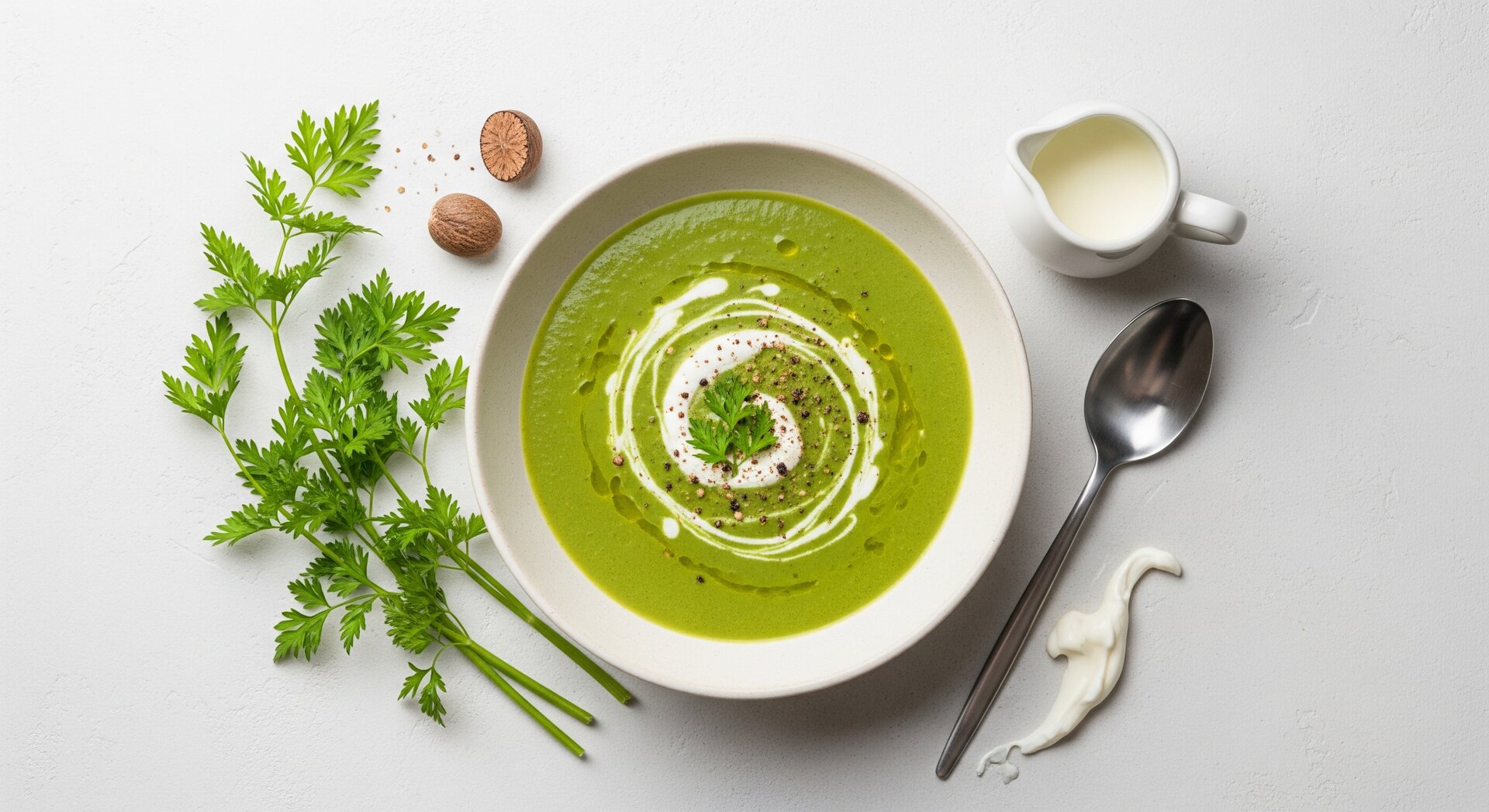 Belgian Chervil Soup with Cream 40 min Classic spring soup with fresh chervil, potato and a hint of nutmeg 265 kcal 5g protein 2 synergies
 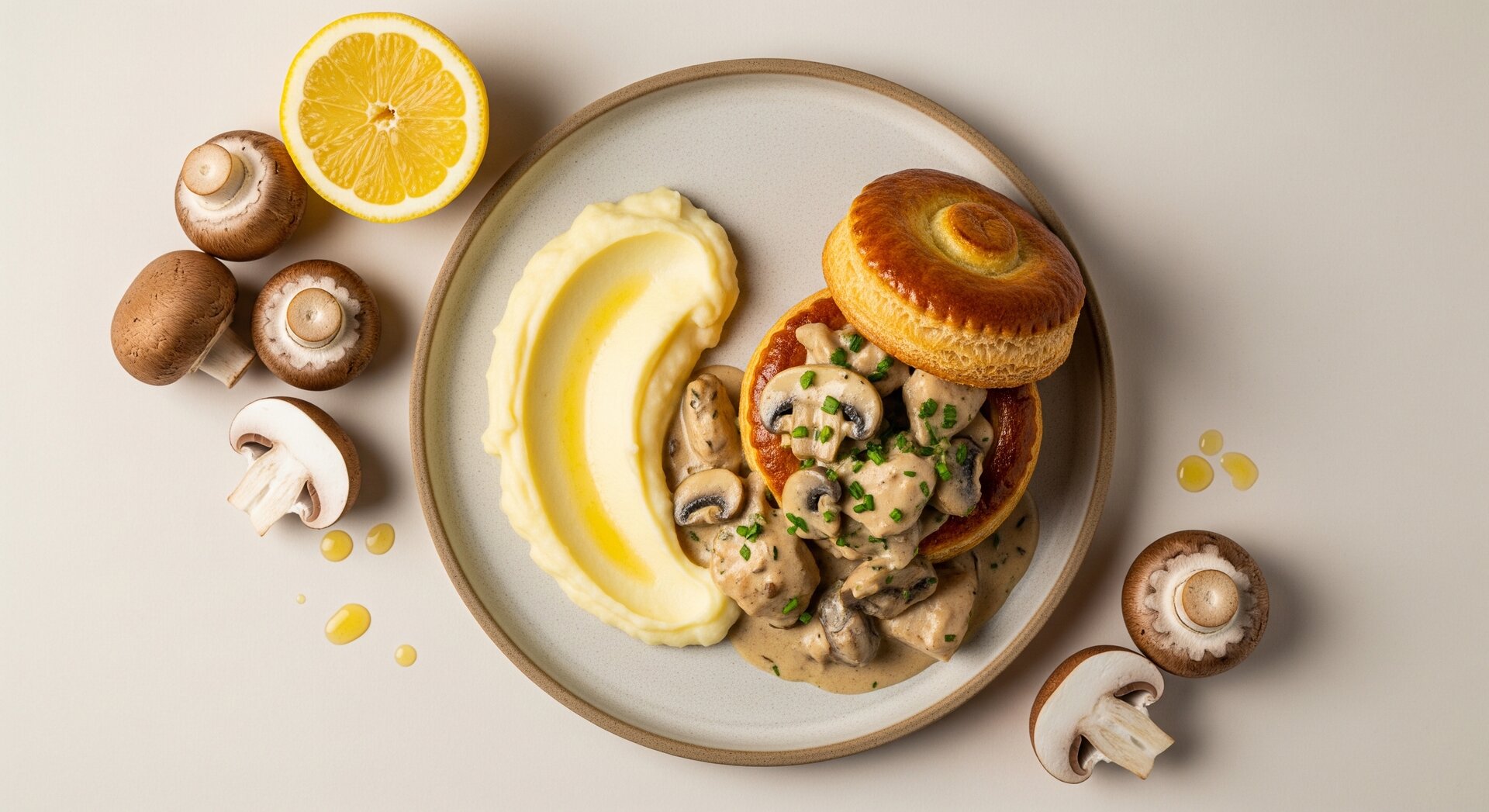 Belgian Vol-au-Vent with Mashed Potatoes 70 min Creamy chicken ragout with mushrooms, leek and soft mash 735 kcal 43g protein 2 synergies
 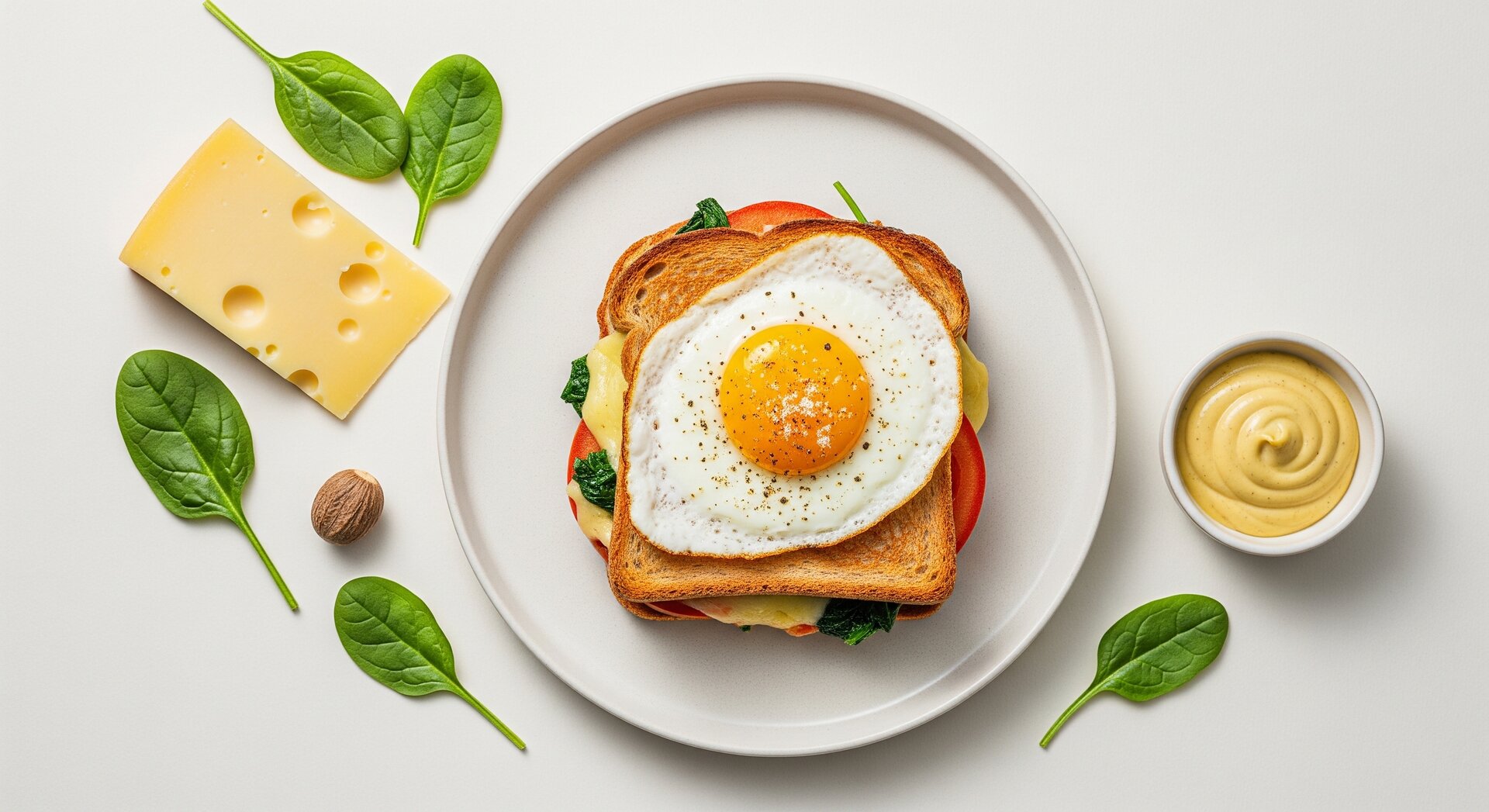 Belgian Whole Wheat Croque with Egg and Vegetables 17 min Belgian croque-madame with spinach and tomato 410 kcal 25g protein 1 synergies
 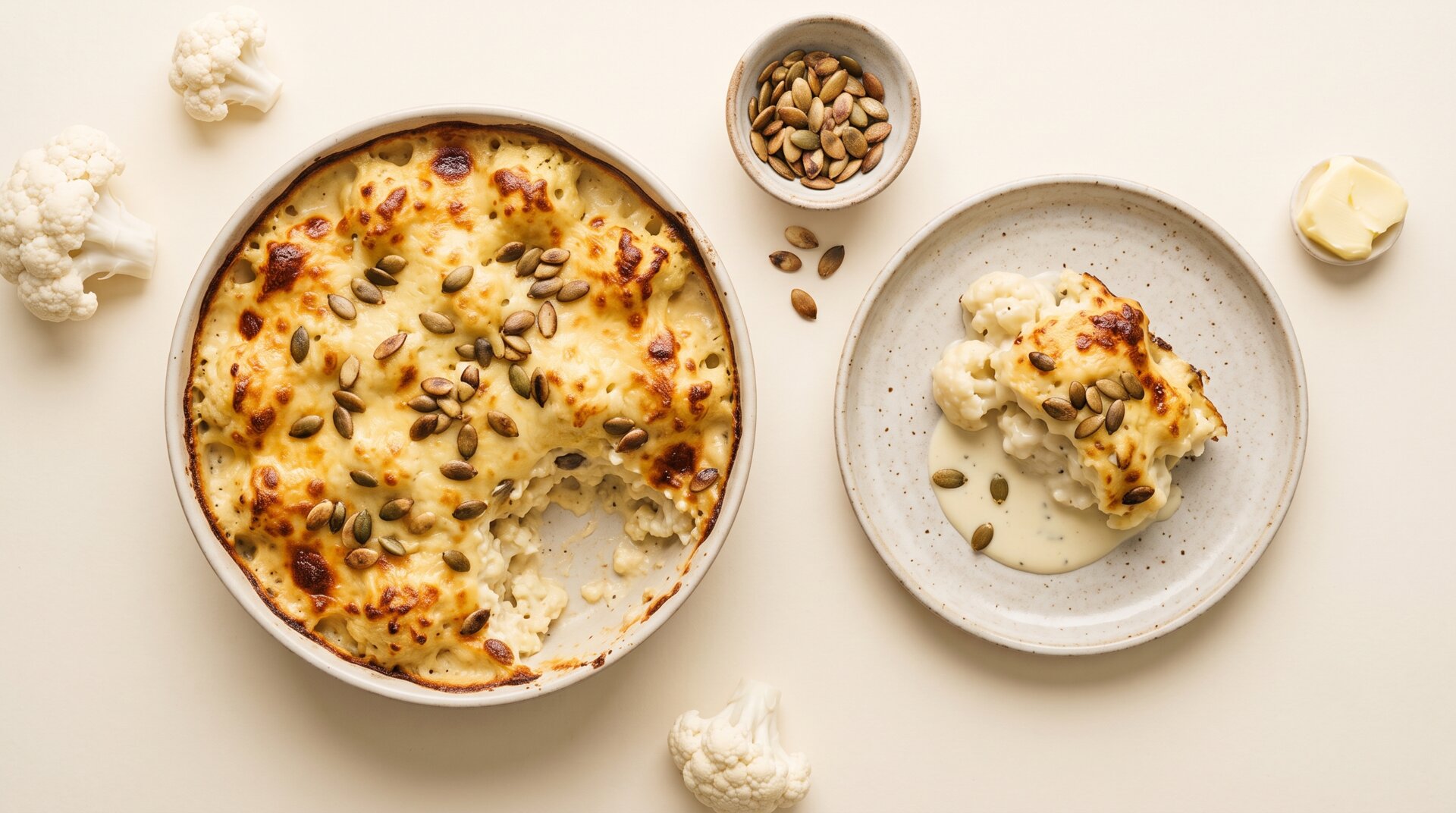 Cauliflower Cheese Gratin with Pumpkin Seeds 45 min Creamy oven bake with a crunchy seed topping 425 kcal 19g protein 2 synergies
 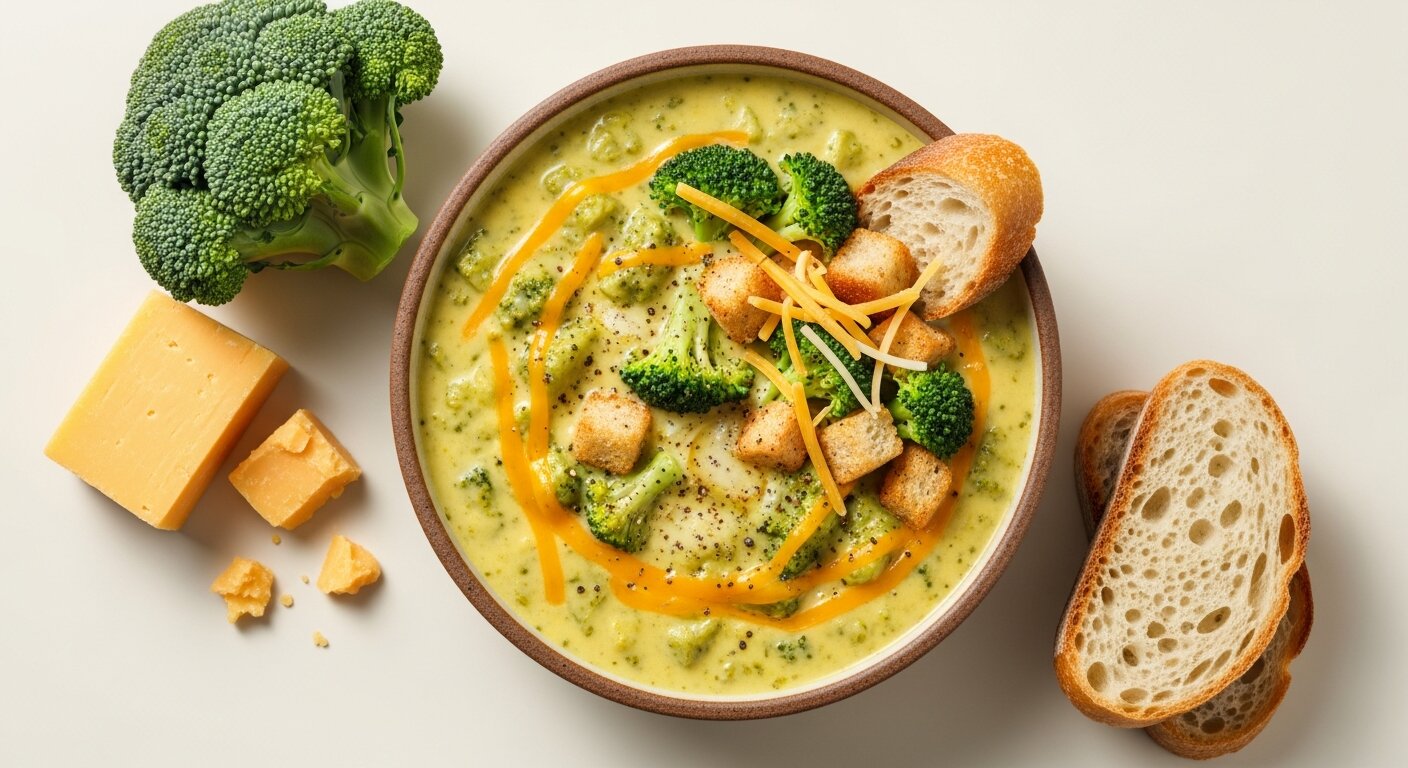 Broccoli Cheddar Soup 40 min Creamy soup with broccoli, aged cheddar and a hint of nutmeg 430 kcal 20g protein 2 synergies
  In the Kitchen
Storage
Location:Pantry
Shelf life:3-4 jaar (hele noot)
Whole nuts keep well for years when stored dry, dark, and sealed. Ground powder loses much of its aroma within a few months.
Preparation
Grate nutmeg fresh at the very last moment over mashed potatoes, cauliflower, or into béchamel sauce. Avoid long cooking, as heat makes the volatile aromas fade faster.
Substitutes
Smart preparation
1Always grate nutmeg fresh; ground nutmeg quickly loses flavor.
Why?
The volatile oils evaporate within weeks of grinding.
2Use a fine grater or nutmeg mill for the best result.
3Add nutmeg in small amounts; the flavor is very intense.
Caution / Warnings
Nutmeg is very safe, but there are scientific considerations:
Toxicity Severe
Doses above approximately 5 grams (about one whole nut) can cause hallucinations, nausea, and palpitations
Advice:
Use nutmeg only in small culinary amounts. Keep whole nuts out of reach of children.
Traditional use
Southeast Asian
Bandanese spice trade
Nutmeg originates from the Banda Islands in Indonesia, where it has held a special place in kitchens and trade for centuries. Because of its distinctive aroma and rare growing region, it became central to the global spice trade.
Ayurveda
Jatiphala in Ayurveda
In Ayurveda, nutmeg is known as jatiphala. In small amounts, it appears in warm milk drinks, rice dishes, and sweet preparations, where it is mainly valued for its warming aroma and spiced depth.
Summary
An intensely aromatic spice that should be used with care. A pinch adds warmth, roundness, and depth; too much can be dangerous. Buy whole nuts and grate them fresh for the best flavor.