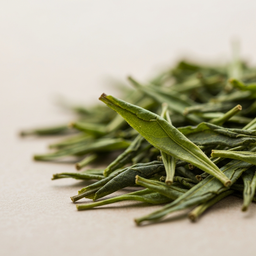
Green Tea
Steamed or pan-fired tea with a fresh, grassy taste
What is this ingredient?
Green tea is made from the leaves of the tea plant (Camellia sinensis). The main difference from black tea lies in processing: black tea is oxidized, while green tea is heated shortly after harvest by steaming or pan-firing. This helps preserve the green color, light vegetal aroma and many of the original tea polyphenols.
## Green tea and matcha
With regular green tea, you drink an infusion of the leaves. With matcha, the whole tea leaves are ground into a fine powder and whisked with water. Because matcha includes the leaf itself, a serving typically contains more tea compounds than a classic cup of steeped green tea.
## Taste and brewing
Green tea has a fresher, lighter taste than black tea. Japanese steamed tea is often grassy and umami, while Chinese pan-fired green tea can be more nutty and mellow. Brewing temperature matters: water around 70–80°C usually gives a softer taste, while boiling water can quickly make the tea bitter.
## Natural compounds
Green tea naturally contains catechins such as EGCG, small amounts of caffeine and the amino acid L-theanine. This combination explains why green tea is often studied in relation to attention, sensory experience and tea culture. The exact composition varies by origin, harvest season, leaf quality, steeping time and whether you use loose tea, bags or matcha.
How does it taste?
Mildly grassy and slightly bitter with a fresh, vegetal sweetness.
Pairs well with:
Pairs well with lemonhoneymintginger and jasmine.
Varieties
Green tea (loose leaf or bags)
Classic green tea where you drink the infusion of the leaves.
Matcha
Whole tea leaves are ground into a fine powder, so you also consume the leaf itself.
Did you know...?
- Green and black tea come from the exact same plant: Camellia sinensis.
- China produces a large share of the world’s green tea.
Nutritional Value & Energy
Per 100ml
Green Tea is low in calories thanks to natural nutrients .
Per 100g
Minerals
Vitamins
Omega-3 fatty acids
More nutrients
B-Vitamins
Trace Minerals
EU-approved nutrition claims
There are currently no EFSA-authorized health claims specific to green tea.
What's being researched?
EGCG in green tea
Epigallocatechin gallate (EGCG) in green tea is widely studied as a tea polyphenol. Studies look at composition, stability, absorption and metabolic markers, among other topics.
Supported by: [3] Venables (2008) , [4] Dietz (2017) , [1] Capasso L (2025)
L-theanine and attention
L-theanine in green tea is studied in research on attention, relaxation markers and its combination with caffeine. Outcomes depend on dose, tea type and study design.
Supported by: [2] Kelly (2008) , [4] Dietz (2017) , [1] Capasso L (2025)
Good Combinations (Synergy)
Combine green tea smartly to enhance the effect:
Green Tea 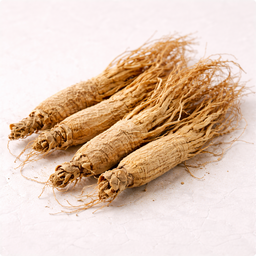 Ginseng
 Ginsenosides + L-theanine for mental sharpness without jitters
Technical: Ginseng contains ginsenosides (Rb1, Rg1) that are studied in relation to cognitive performance. Green tea contains L-theanine that increases GABA and calms. Together they provide focus without the jitters of caffeine.
What does this mean for you? Add ginseng extract to your green tea or drink traditional Korean insam-cha. Perfect for studying or working.
Green Tea 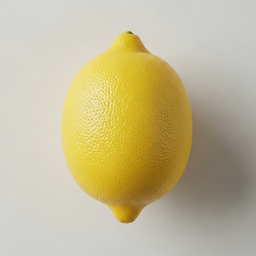 Lemon
Lemon Up to 5x more antioxidants absorbed (the 'Lemon Hack')
Technical: Green tea's catechins (EGCG) are unstable at the alkaline pH of the small intestine — up to 80% degrades before absorption. Lemon juice (pH 2-3) lowers stomach pH and stabilizes catechins, allowing them to reach the small intestine intact. Studies show up to 5x higher catechin absorption with lemon juice.
What does this mean for you? Always squeeze a slice of lemon in your green tea. Without lemon 80% of antioxidants are lost in your gut — with lemon you absorb up to 5x more.
Green Tea 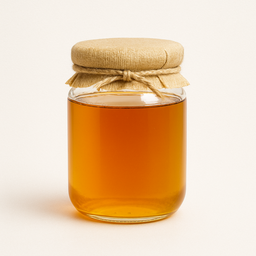 Honey
Honey Honey stabilizes catechins and extends antioxidant action
Technical: Green tea's EGCG (epigallocatechin gallate) is unstable at higher pH and degrades quickly. Honey's slightly acidic pH (3.2-4.5) and natural antioxidants stabilize the catechins, keeping them active longer in the stomach.
What does this mean for you? Add a spoon of honey to your green tea (let it cool to ~70°C first) — the honey protects the healthy compounds so you absorb more.
Green Tea 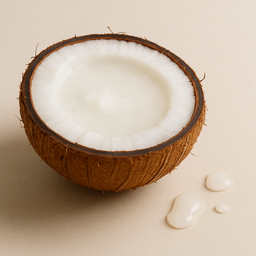 Coconut Oil
 Ketones + catechins: two complementary energy sources
Technical: MCTs from coconut oil are quickly converted to ketones (alternative cellular fuel). Green tea contains L-theanine and EGCG (catechin). The combination provides: glucose-independent cellular energy via ketones + L-theanine stimulating alpha brain waves + EGCG as polyphenol antioxidant.
What does this mean for you? Add a teaspoon of coconut oil to your green tea (blend for emulsion) or drink them together. The MCTs provide a quick energy source while L-theanine provides calm alertness.
Green Tea 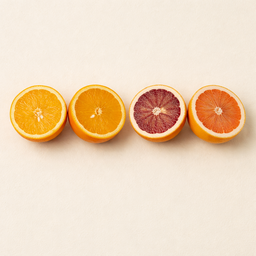 Orange
 Vitamin C stabilizes catechins and increases antioxidant action
Citrus fruit additives significantly increase catechin bioavailability (PMID: 17710970)
Technical: Green tea contains EGCG (epigallocatechin gallate), a potent antioxidant. EGCG is unstable and quickly breaks down in the gut. Vitamin C from orange (53mg/100g) stabilizes EGCG by preventing oxidation, allowing up to 5x more to reach the bloodstream. The acidic environment (citric acid) enhances this effect. Citrus juice significantly increases the bioavailability of tea polyphenols.
What does this mean for you? Add a slice of orange or splash of orange juice to your green tea. Or drink a glass of orange juice with your tea. The vitamin C ensures you benefit much more from the antioxidants in the tea. A simple trick that significantly boosts the nutritional value.
Green Tea 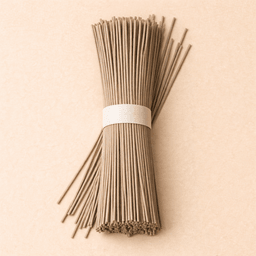 Soba Noodles (Buckwheat)
 Complementary flavonoid-catechin antioxidant protection
Rutin strengthens capillaries and reduces permeability, EGCG neutralizes reactive oxygen species
Technical: Buckwheat in soba contains rutin (100mg/100g), a flavonoid strengthening capillaries. Green tea provides EGCG catechins neutralizing ROS. Together they give complementary antioxidant protection: rutin for vessel walls, EGCG at cellular level. Traditional Japanese combination.
What does this mean for you? Drink green tea with soba noodles like the Japanese do. Both enhance each other for strong blood vessels and cellular protection.
Green Tea 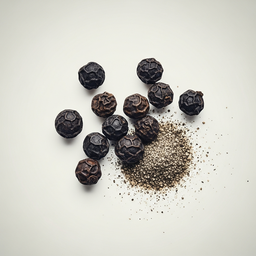 Black Pepper
 Keeps antioxidants (EGCG) in bloodstream longer
Technical: Piperine from black pepper inhibits CYP3A4 and glucuronidation — enzymes that break down EGCG (green tea's main antioxidant) in the liver. This extends EGCG's blood half-life, keeping it active longer. A different mechanism than lemon (which stabilizes EGCG in the stomach).
What does this mean for you? Add a pinch of black pepper to your green tea. The pepper slows liver breakdown of EGCG, keeping antioxidants circulating in your blood longer.
Recipes with Green Tea
Discover delicious recipes featuring green tea:
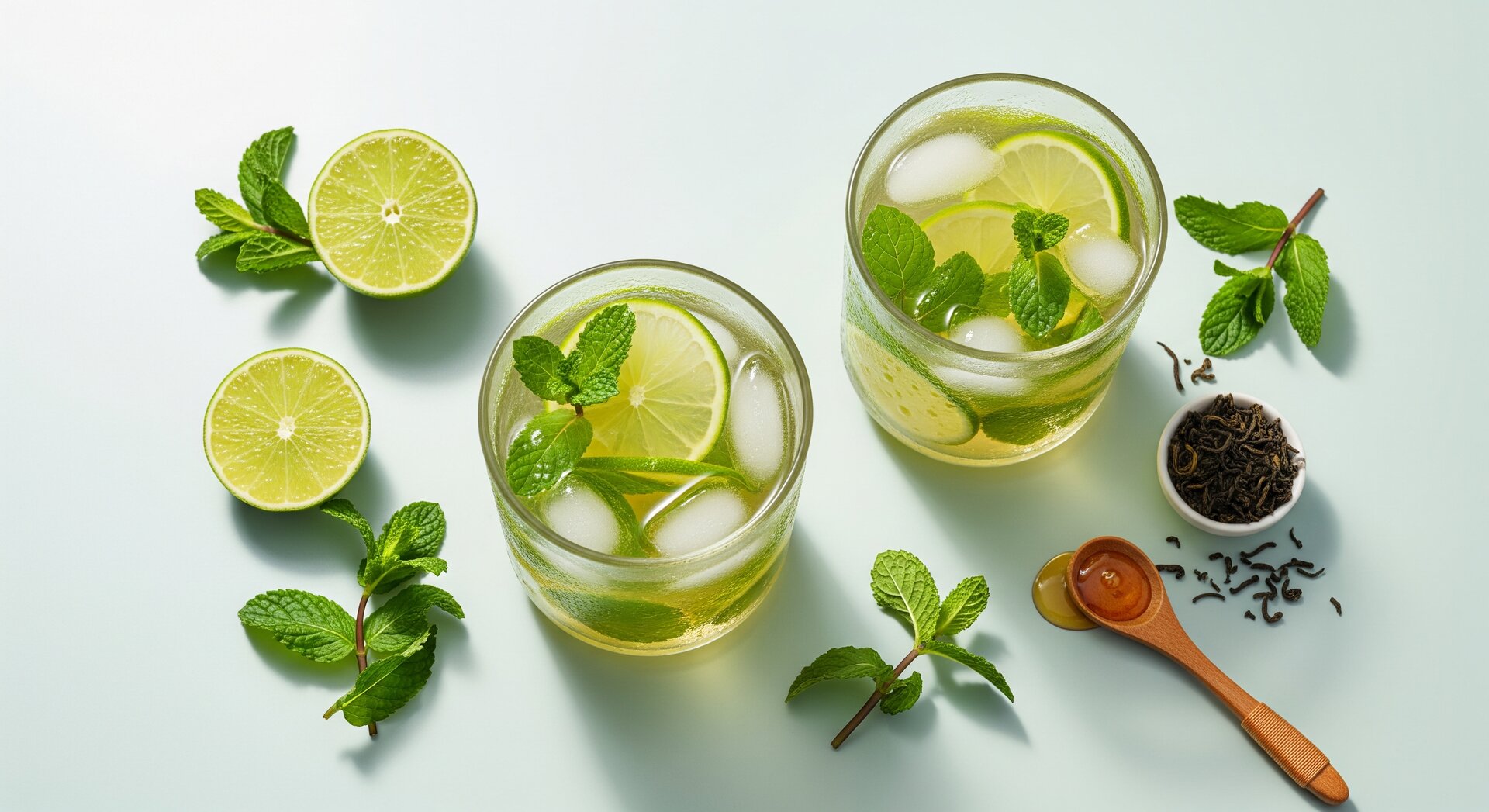 Green Tea with Lime & Mint 8 min Refreshing iced tea with lime and fresh mint
  40 kcal
  0g protein 1 synergies
  In the Kitchen
Storage
Location:Pantry
Shelf life:6-12 maanden (luchtdicht, weg van licht)
Store green tea airtight, dark and cool. Matcha keeps better in the fridge after opening. Older tea mainly loses aroma and freshness.
Preparation
Use water at 70–80°C, not boiling. Steep for 2–3 minutes for a fresh taste without too much bitterness. Add lemon, mint or ginger if desired.
Conversions
Substitutes
Smart preparation
1Use water at 70–80 degrees, never boiling water.
Why?
Water that is too hot makes green tea bitter through over-extraction of tannins.
2Steep green tea for a maximum of 2–3 minutes for the best flavor.
3Good green tea can be re-steeped multiple times.
Caution / Warnings
Green Tea is very safe, but there are scientific considerations:
Iron deficiency Moderate
Tannins in green tea can bind to plant-based iron, especially when tea is drunk directly with a meal.
Advice:
Drink green tea between meals when you need to pay attention to iron intake.
Blood thinners and beta blockers Moderate
High intakes of green tea or matcha can be relevant with some medicines, including blood thinners and certain beta blockers.
Advice:
Consult your doctor or pharmacist if you use large amounts of green tea or matcha daily alongside this medication.
Concentrated green tea extracts Severe
Drinking regular tea is very different from highly concentrated extract capsules, which can contain much higher amounts of catechins.
Advice:
Prefer regular tea. Use concentrated supplements only with professional guidance, especially with existing liver issues or medication use.
Sensitive stomach Mild
Tannins may cause nausea or a burning sensation in some people when green tea is drunk on a completely empty stomach.
Advice:
Drink green tea after a small meal or snack if you are sensitive to this.
Traditional use
Traditional Chinese Medicine
Green tea in Chinese tea culture
Green tea has been consumed in China for centuries and plays a central role in tea culture, hospitality, rituals and everyday eating moments.
Other
Green tea in the Japanese tea ceremony
Green tea was brought to Japan by Buddhist monks in the 9th century and developed into chanoyu, a refined tea ceremony centered on attention, simplicity and hospitality.
Summary
Green tea is a light, aromatic Camellia sinensis drink with natural catechins, caffeine and L-theanine. For the best taste, use water at 70–80°C and steep for 2–3 minutes. Lemon, mint, ginger or jasmine pair well with its fresh, slightly grassy character.