
Gochugaru (Korean Red Pepper Flakes)
The heart of kimchi
What is this ingredient?
Gochugaru is not just chili powder. The peppers are traditionally dried in full sun—taeyangcho, “sun chili”—which makes them sweeter and fruitier than machine-dried versions. The seeds are usually removed, giving a cleaner, less harsh heat than cayenne or ordinary pepper flakes. What remains is a deep-red, coarse flake that does two things at once: color and flavor. That crimson hue is exactly why kimchi looks so vivid. The grind determines the use: coarse (gulge) for kimchi, where you want to see the flakes, and fine (gomge) for gochujang and sauces. Bloom it briefly in warm oil and the flavor deepens and rounds out. Without gochugaru, authentic Korean cooking simply isn’t possible.
How does it taste?
Moderately spicy with a fruity, slightly sweet and subtly smoky flavor.
Pairs well with:
Pairs well with Chinese cabbagegarlicgingerspring onion and fish sauce.
Did you know...?
- The best gochugaru is dried in full sun (taeyangcho), which makes the peppers sweeter and fruitier.
- Unlike ordinary pepper flakes, gochugaru is usually deseeded, giving a cleaner, less harsh heat.
- The grind determines its use: coarse for kimchi, fine for gochujang and sauces.
Nutritional Value & Energy
Per 100g
Gochugaru (Korean Red Pepper Flakes) provides energy thanks to natural nutrients , buffered by fiber.
Per 100g
Minerals
Vitamins
Omega-3 fatty acids
More nutrients
B-Vitamins
Trace Minerals
What's in a serving?
Gochugaru naturally contains vitamin A (2081 mcg per 100 g). At typical spice usage (3–10 g), the contribution is limited.
Gochugaru naturally contains vitamin E (29.8 mg per 100 g). At typical spice usage (3–10 g), the contribution is limited.
Gochugaru naturally contains vitamin B6 (2.45 mg per 100 g). At typical spice usage (3–10 g), the contribution is limited.
Gochugaru naturally contains vitamin C (76 mg per 100 g). At typical spice usage (3–10 g), the contribution is limited.
Gochugaru naturally contains potassium (2014 mg per 100 g). At typical spice usage (3–10 g), the contribution is limited.
Gochugaru naturally contains manganese (2 mg per 100 g). At typical spice usage (3–10 g), the contribution is limited.
Gochugaru naturally contains vitamin A (2081 mcg per 100 g). At typical spice usage (3–10 g), the contribution is limited.
Gochugaru naturally contains vitamin E (29.8 mg per 100 g). At typical spice usage (3–10 g), the contribution is limited.
Gochugaru naturally contains vitamin B6 (2.45 mg per 100 g). At typical spice usage (3–10 g), the contribution is limited.
Gochugaru naturally contains vitamin C (76 mg per 100 g). At typical spice usage (3–10 g), the contribution is limited.
Gochugaru naturally contains potassium (2014 mg per 100 g). At typical spice usage (3–10 g), the contribution is limited.
Gochugaru naturally contains manganese (2 mg per 100 g). At typical spice usage (3–10 g), the contribution is limited.
Gochugaru naturally contains iron (7.8 mg per 100 g). At typical spice usage (3–10 g), the contribution is limited.
Gochugaru naturally contains folate (106 mcg per 100 g). At typical spice usage (3–10 g), the contribution is limited.
Gochugaru naturally contains magnesium (152 mg per 100 g). At typical spice usage (3–10 g), the contribution is limited.
Gochugaru naturally contains phosphorus (293 mg per 100 g). At typical spice usage (3–10 g), the contribution is limited.
Gochugaru naturally contains copper (0.37 mg per 100 g). At typical spice usage (3–10 g), the contribution is limited.
% of daily reference intake (DRI)
EU-approved nutrition claims
This ingredient contains nutrients for which EFSA-authorized health claims exist at nutrient level, not ingredient-specific level.
Approved health claims (EU)
Vitamin_a EU 432/2012
Vitamin A contributes to the normal function of the immune system
Contains 2081mcg/100g (threshold: ≥120mcg/100g)
Vitamin_a EU 432/2012
Vitamin A contributes to the maintenance of normal skin
Contains 2081mcg/100g (threshold: ≥120mcg/100g)
Vitamin_a EU 432/2012
Vitamin A contributes to the maintenance of normal mucous membranes
Contains 2081mcg/100g (threshold: ≥120mcg/100g)
Vitamin_a EU 432/2012
Vitamin A contributes to the maintenance of normal vision
Contains 2081mcg/100g (threshold: ≥120mcg/100g)
Vitamin_a EU 432/2012
Vitamin A contributes to normal iron metabolism
Contains 2081mcg/100g (threshold: ≥120mcg/100g)
Vitamin_a EU 432/2012
Vitamin A has a role in the process of cell specialisation
Contains 2081mcg/100g (threshold: ≥120mcg/100g)
Vitamin_b6 EU 432/2012
Vitamin B6 contributes to normal cysteine synthesis
Contains 2.5mg/100g (threshold: ≥0.21mg/100g)
Vitamin_b6 EU 432/2012
Vitamin B6 contributes to normal energy-yielding metabolism
Contains 2.5mg/100g (threshold: ≥0.21mg/100g)
Vitamin_b6 EU 432/2012
Vitamin B6 contributes to normal functioning of the nervous system
Contains 2.5mg/100g (threshold: ≥0.21mg/100g)
Vitamin_b6 EU 432/2012
Vitamin B6 contributes to normal homocysteine metabolism
Contains 2.5mg/100g (threshold: ≥0.21mg/100g)
Vitamin_b6 EU 432/2012
Vitamin B6 contributes to normal protein and glycogen metabolism
Contains 2.5mg/100g (threshold: ≥0.21mg/100g)
Vitamin_b6 EU 432/2012
Vitamin B6 contributes to normal psychological function
Contains 2.5mg/100g (threshold: ≥0.21mg/100g)
Vitamin_b6 EU 432/2012
Vitamin B6 contributes to normal red blood cell formation
Contains 2.5mg/100g (threshold: ≥0.21mg/100g)
Vitamin_b6 EU 432/2012
Vitamin B6 contributes to the normal function of the immune system
Contains 2.5mg/100g (threshold: ≥0.21mg/100g)
Vitamin_b6 EU 432/2012
Vitamin B6 contributes to the regulation of hormonal activity
Contains 2.5mg/100g (threshold: ≥0.21mg/100g)
Vitamin_b6 EU 432/2012
Vitamin B6 contributes to the reduction of tiredness and fatigue
Contains 2.5mg/100g (threshold: ≥0.21mg/100g)
Vitamin_e EU 432/2012
Vitamin E contributes to the protection of cells from oxidative stress
Contains 29.8mg/100g (threshold: ≥1.8mg/100g)
Comparison
vscayennepeper
Gochugaru is noticeably milder than cayenne pepper and usually deseeded, with a fruitier, slightly sweet flavor rather than pure heat.
vsbanaan
Gochugaru contains about 6× more potassium per 100 g than a banana — but you use much less per serving.
What's being researched?
Capsaicin, metabolism and weight management
The capsaicin in gochugaru is studied in meta-analyses of human trials in relation to resting metabolic rate, fat oxidation and appetite. The reported effects are small.
Supported by: [1] Ludy (2012) , [2] Irandoost (2021) , [5] Reinbach (2009)
Chili pepper in population research
Large cohort studies examine the association between regular chili pepper consumption and cardiovascular outcomes. These are observational links, not proven cause and effect.
Supported by: [3] Bonaccio (2019) , [4] Hashemian (2019)
Capsanthin and antioxidant research
Capsanthin, the red carotenoid that gives gochugaru its color, is studied in preclinical research in relation to oxidative processes in cells.
Supported by: [6] Shanmugham (2022)
Recipes with Gochugaru (Korean Red Pepper Flakes)
Discover delicious recipes featuring gochugaru (korean red pepper flakes):
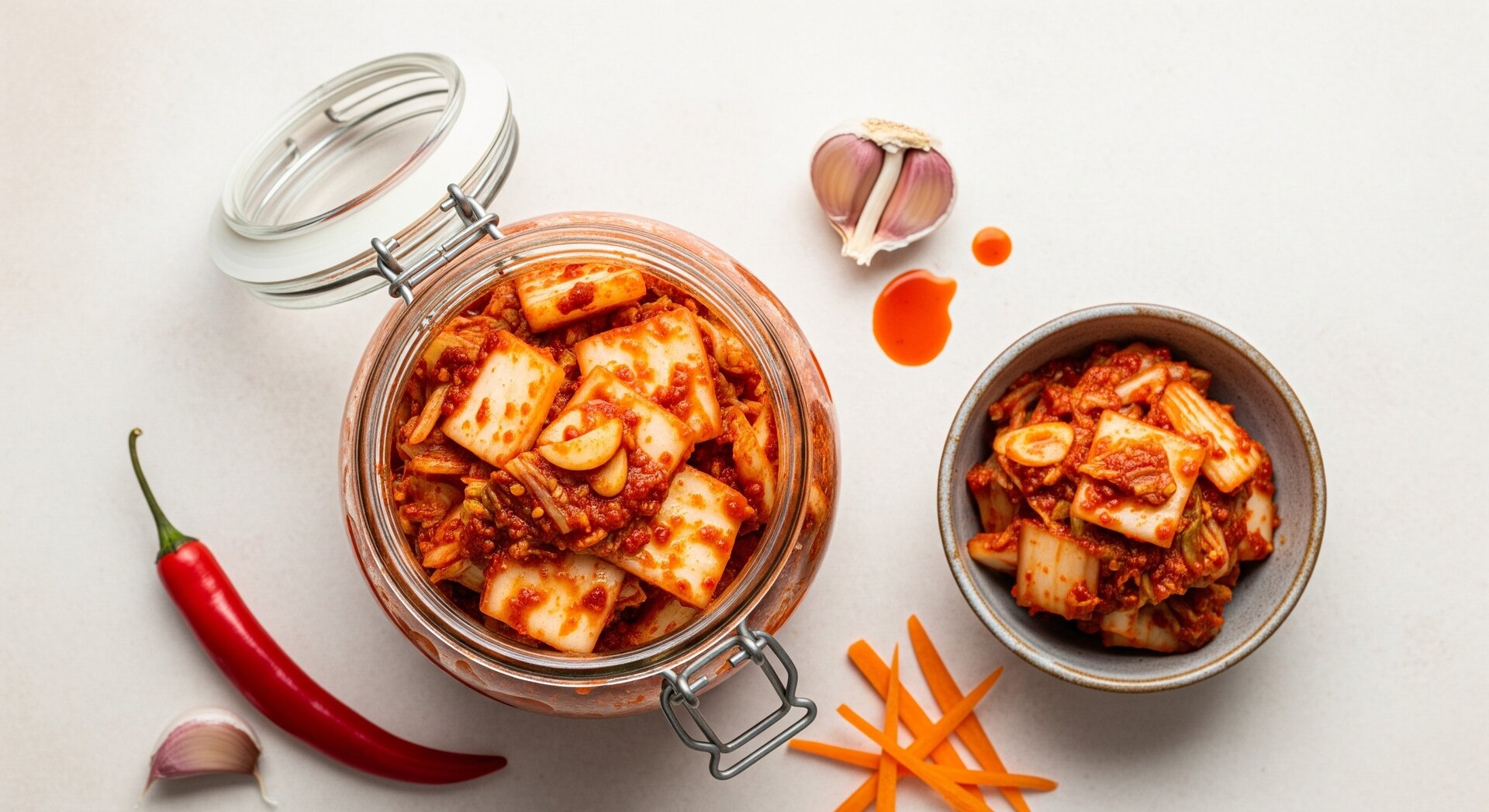 Korean Fermented Kimchi 30 min Chinese cabbage fermented with garlic paste, carrot and spring onion — ready after 3-5 days
  65 kcal
  3g protein 1 synergies
  In the Kitchen
Storage
Location:Pantry
Shelf life:1-2 jaar
Store airtight, cool and dark. To preserve the red color long-term, keep gochugaru in the fridge or freezer.
Preparation
Use coarse-ground gochugaru for kimchi and fine-ground for gochujang and sauces. Bloom briefly in warm oil for a deeper, rounder flavor without burning.
Conversions
Substitutes
Smart preparation
1Choose coarse-ground gochugaru for kimchi and fine-ground for gochujang or sauces.
Why?
The coarseness determines both the texture and how quickly the flavor and color release.
2Bloom gochugaru briefly in warm oil before adding it to a dish.
Why?
Capsaicin and carotenoids dissolve in oil, distributing flavor and color evenly.
3Store gochugaru cool and dark, or in the fridge for long-term color retention.
Why?
Light and heat break down the red carotenoids, fading color and aroma.
Caution / Warnings
Gochugaru (Korean Red Pepper Flakes) is very safe, but there are scientific considerations:
Heartburn / Reflux Moderate
Spicy foods can trigger symptoms in sensitive individuals
Advice:
Use small amounts or bloom briefly in oil for a gentler, more even heat
Skin/Eye Irritation Mild
Capsaicin can sting on contact, especially if you rub your eyes
Advice:
Wash your hands after use and avoid touching your eyes
Traditional use
Other
Korean culinary tradition
Since the chili pepper arrived in Korea (around the 17th century), gochugaru has become a cornerstone of the cuisine. It forms the base of kimchi, gochujang, tteokbokki, and countless side dishes (banchan).
Summary
Essential for kimchi, gochujang, and tteokbokki. Choose coarse-ground for kimchi, fine for sauces. Milder than cayenne, so you can use it more generously. Store cool and dark—the red color fades in light.