Dandelion Tea
Bitter herbal tea from root and leaf
What is this ingredient?
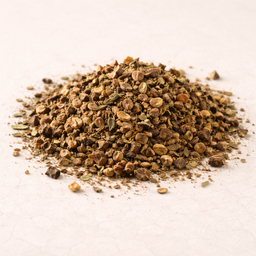
Dandelion (Taraxacum officinale) is a widespread plant whose leaf and root are both used for herbal tea. The leaf gives a greener, lighter bitter profile; roasted root brings a darker, earthy aroma reminiscent of chicory or mild coffee.
## Leaf, root and flavor
The characteristic bitterness comes partly from sesquiterpene lactones such as taraxacin. Dandelion also contains plant phenols, flavonoids and potassium. Root tea is usually simmered briefly, while leaf tea is prepared more like an infusion. Because of its bitter character, it pairs well with lemon, honey, ginger or cinnamon.
## Research in context
Dandelion extracts have been examined in small human studies, animal models and cell research. The literature discusses topics such as urination patterns after leaf extract, plant antioxidants and bioactive compounds from leaf and root. For everyday tea, exact amounts depend on the plant part, dosage, steeping time and quality.
## Practical use
Use dandelion tea as a bitter herbal drink, especially when you want a caffeine-free alternative with a pronounced earthy taste. Steep leaf for 5-8 minutes; gently simmer root for 5-10 minutes. Seek professional advice first if you have bile duct issues, gallstones, kidney disease, use lithium or take water tablets.
How does it taste?
Mildly bitter and earthy, with a chicory-like coffee note in roasted root.
Pairs well with:
Pairs well with honeylemongingercinnamon and chamomile.
Did you know...?
- Each dandelion can form thousands of seeds; the fluffy seed heads spread easily by wind and open landscape.
- Roasted dandelion root was used in Europe as a coffee substitute, especially when real coffee was scarce or expensive.
Nutritional Value & Energy
Per 100ml
Dandelion Tea is low in calories thanks to natural nutrients .
Per 100g
Minerals
Vitamins
More nutrients
B-Vitamins
What's in a serving?
1 cup prepared tea
Dandelion tea naturally contains vitamin K (77 mcg per 100 g).
% of daily reference intake (DRI)
EU-approved nutrition claims
This ingredient contains nutrients for which EFSA-authorized health claims exist (at nutrient level, not ingredient-specific).
Approved health claims (EU)
Vitamin_k EU 432/2012
Vitamin K contributes to normal blood clotting
Contains 77mcg/100g (threshold: ≥11.25mcg/100g)
Vitamin_k EU 432/2012
Vitamin K contributes to the maintenance of normal bones
Contains 77mcg/100g (threshold: ≥11.25mcg/100g)
What's being researched?
Dandelion extracts in research
Dandelion leaf and root are studied in human, animal and cellular models. Findings mainly concern extracts; for regular tea, composition depends on plant part, steeping time and dosage.
Supported by: [2] Davaatseren (2013)
Good Combinations (Synergy)
Combine dandelion tea smartly to enhance the effect:
Dandelion Tea 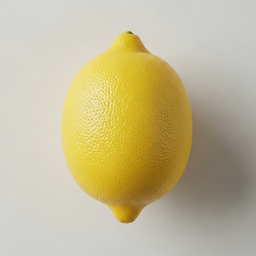 Lemon
Lemon Diuretic + liver-supporting combination
Technical: Dandelion contains taraxacin and sesquiterpene lactones with mild diuretic action (fluid drainage) and cholagogue properties (bile production stimulating). Lemon's citric acid and D-limonene support biotransformation. Honey adds prebiotic oligosaccharides and enzymes. The result is a traditional herbal drink: dandelion supports bile, lemon contributes to biotransformation.
What does this mean for you? Dandelion-lemon tea with honey is a traditional herbal drink. The dandelion supports your bile, the lemon your biotransformation, the honey makes it delicious.
Dandelion Tea 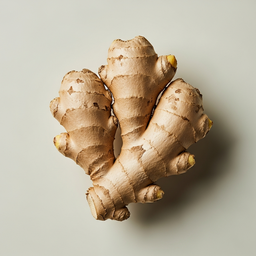 Ginger
 Taraxacin + gingerols for liver support and bile flow
Technical: Dandelion (Taraxacum officinale) contains taraxacin and taraxasterol that support bile production via farnesoid X receptor (FXR) activation and activate liver enzymes (GST, SOD) for Phase II biotransformation. Ginger's gingerols promote gallbladder contraction via cholecystokinin (CCK) release. Together they support the entire bile cascade: production (dandelion) + release (ginger).
What does this mean for you? Dandelion-ginger tea is a traditional herbal drink that supports your liver and bile flow. Drink it in the morning on an empty stomach for maximum effect.
Dandelion Tea 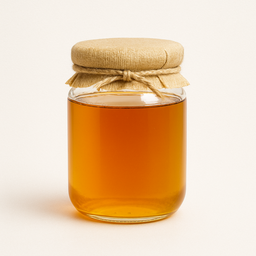 Honey
Honey Diuretic dandelion + prebiotic honey for kidney support
Technical: Dandelion acts as a natural diuretic (nickname: 'pissenlit') by increasing kidney filtration without potassium loss — unique compared to pharmaceutical diuretics. Honey contains fructo-oligosaccharides (FOS) that are prebiotic and support gut flora. Honey's enzymes (glucose oxidase) also offer mild bioactive support.
What does this mean for you? Dandelion tea with honey is a traditional herbal drink for fluid retention. The dandelion supports kidney filtration, the honey feeds your gut.
Recipes with Dandelion Tea
Discover delicious recipes featuring dandelion tea:
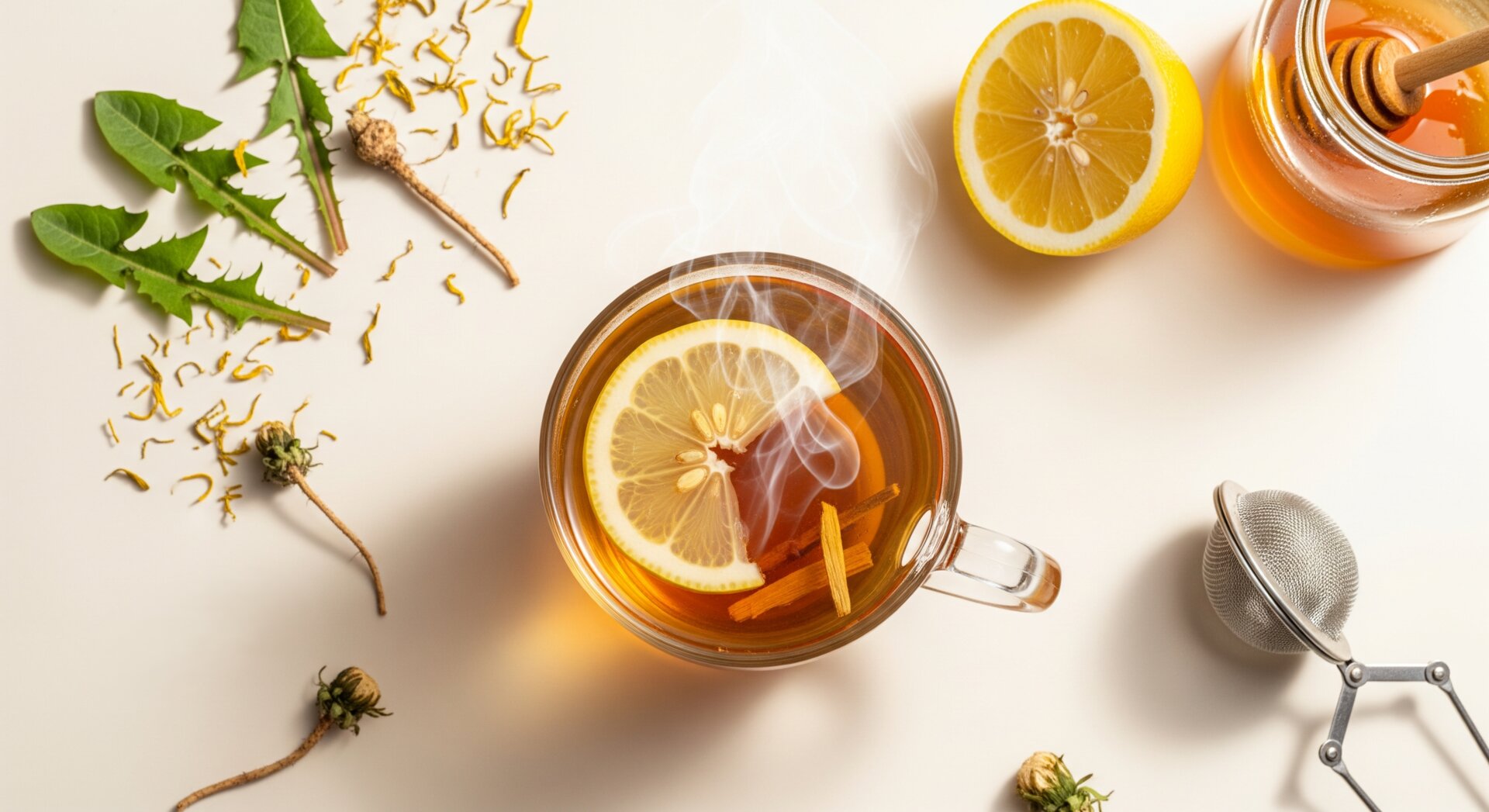 Dandelion Tea with Lemon and Ginger 15 min A bitter herbal tea from old tradition
  15 kcal
  0g protein 1 synergies
  In the Kitchen
Storage
Location:Pantry
Shelf life:12-18 maanden (gedroogd)
Store airtight, dark and dry. Root tea tastes deeper and roasted; leaf tea is greener and more lightly bitter.
Preparation
Root: simmer gently for 5-10 minutes. Leaf: steep for 5-8 minutes. Combine with lemon, honey, ginger or cinnamon to balance the bitterness.
Conversions
Substitutes
Smart preparation
1Steep dried dandelion leaf in hot water for 5-8 minutes.
2Combine dandelion tea with honey or lemon to soften the bitter taste.
3Briefly simmer roasted dandelion root for a deeper, coffee-like flavor.
Why?
Gentle simmering draws more roasted aromas from the firm root pieces.
Caution / Warnings
Dandelion Tea is very safe, but there are scientific considerations:
Bile duct issues or gallstones Severe
Bitter dandelion preparations are traditionally associated with bile stimulation. With existing gallstones or bile duct issues, this may be unsuitable without professional advice.
Asteraceae allergy Moderate
Cross-reactions are possible with sensitivity to plants such as ragweed, chrysanthemum or marigold. Start carefully with a small amount.
Water tablets (diuretics) Moderate
Dandelion tea may be unsuitable together with medication that affects fluid balance. Have fluid balance and electrolytes monitored when combining them.
Lithium Moderate
Changes in fluid balance can be relevant when using lithium. Consult your doctor before using dandelion tea regularly.
Traditional use
Traditional Chinese Medicine
Dandelion in Chinese herbal traditions
Dandelion, known as pu gong ying, is valued in Chinese herbal traditions for its bitter, green character and is often described as an infusion or plant preparation.
Other
Dandelion in European herbal traditions
In European herbal traditions, dandelion was used as a bitter spring plant. The root was roasted for drinks and young leaves appeared in simple salads.
Summary
Dandelion tea is a bitter herbal drink made from leaf or root. Leaf tastes greener and lighter; roasted root is earthier and coffee-like. The plant contains potassium, vitamin K, phenols and flavonoids. Prepare leaf as an infusion and simmer root briefly. Use caution with gallstones, kidney disease, lithium use or water tablets.