
Brazil Nuts
The Thyroid Protector
What is this ingredient?
Brazil nuts are the seeds of the Bertholletia excelsa, a giant tree from the Amazon region. They are unique because they (virtually) cannot be cultivated; they grow almost only in the wild.
Expert Tip: The soil determines everything. The selenium content in the nut depends on the soil where the tree grows. Nuts from the western Amazon (Peru/Brazil) contain less selenium than those from the eastern part. Since you often can't see this on the packaging, the safety margin of maximum 2-3 nuts per day is so important. You never know if you've got a 'super-nut'.
How does it taste?
Creamy, buttery and rich with an earthy, full nut flavor.
Pairs well with:
Pairs well with chocolatecoconutbananahoney and dates.
Did you know...?
- Brazil nuts only grow wild in the Amazon rainforest and cannot be cultivated on plantations.
- Brazil nut pods weigh up to 2 kilograms and fall with great force from the trees.
- Only the agouti (a rodent) can gnaw open the rock-hard shell of the Brazil nut pod.
Nutritional Value & Energy
Per 100g
Brazil Nuts provides energy thanks to natural nutrients , buffered by fiber.
Per 100g
Minerals
Vitamins
Omega-3 fatty acids
More nutrients
B-Vitamins
Trace Minerals
What's in a serving?
1 handful
Brazil Nuts naturally contains iron (2.43 mg per 100 g).
Brazil Nuts naturally contains calcium (160 mg per 100 g).
Brazil Nuts naturally contains zinc (4.06 mg per 100 g).
Brazil Nuts naturally contains magnesium (376 mg per 100 g).
Brazil Nuts naturally contains potassium (659 mg per 100 g).
Brazil Nuts naturally contains selenium (1917 mcg per 100 g).
Brazil Nuts naturally contains vitamin e (5.65 mg per 100 g).
% of daily reference intake (DRI)
EU-approved nutrition claims
This ingredient contains nutrients for which EFSA-authorized health claims exist (at nutrient level, not ingredient-specific).
Approved health claims (EU)
Magnesium EU 432/2012
Magnesium contributes to normal muscle function
Contains 376mg/100g (threshold: ≥56.25mg/100g)
Magnesium EU 432/2012
Magnesium contributes to the reduction of tiredness and fatigue
Contains 376mg/100g (threshold: ≥56.25mg/100g)
Magnesium EU 432/2012
Magnesium contributes to normal functioning of the nervous system
Contains 376mg/100g (threshold: ≥56.25mg/100g)
Zinc EU 432/2012
Zinc contributes to the normal function of the immune system
Contains 4.06mg/100g (threshold: ≥1.5mg/100g)
Zinc EU 432/2012
Zinc contributes to the maintenance of normal skin
Contains 4.06mg/100g (threshold: ≥1.5mg/100g)
Iron EU 432/2012
Iron contributes to normal energy-yielding metabolism
Contains 2.43mg/100g (threshold: ≥2.1mg/100g)
Iron EU 432/2012
Iron contributes to the reduction of tiredness and fatigue
Contains 2.43mg/100g (threshold: ≥2.1mg/100g)
Calcium EU 432/2012
Calcium is needed for the maintenance of normal bones
Contains 160mg/100g (threshold: ≥120mg/100g)
Potassium EU 432/2012
Potassium contributes to the maintenance of normal blood pressure
Contains 659mg/100g (threshold: ≥300mg/100g)
Vitamin_e EU 432/2012
Vitamin E contributes to the protection of cells from oxidative stress
Contains 5.65mg/100g (threshold: ≥1.8mg/100g)
Calcium EU 432/2012
Calcium is needed for the maintenance of normal teeth
Contains 160mg/100g (threshold: ≥120mg/100g)
Calcium EU 432/2012
Calcium contributes to normal blood clotting
Contains 160mg/100g (threshold: ≥120mg/100g)
Calcium EU 432/2012
Calcium contributes to normal energy-yielding metabolism
Contains 160mg/100g (threshold: ≥120mg/100g)
Calcium EU 432/2012
Calcium contributes to normal muscle function
Contains 160mg/100g (threshold: ≥120mg/100g)
Calcium EU 432/2012
Calcium contributes to normal neurotransmission
Contains 160mg/100g (threshold: ≥120mg/100g)
Calcium EU 432/2012
Calcium contributes to the normal function of digestive enzymes
Contains 160mg/100g (threshold: ≥120mg/100g)
Calcium EU 432/2012
Calcium has a role in the process of cell division and specialisation
Contains 160mg/100g (threshold: ≥120mg/100g)
Magnesium EU 432/2012
Magnesium contributes to normal energy-yielding metabolism
Contains 376mg/100g (threshold: ≥56.25mg/100g)
Magnesium EU 432/2012
Magnesium contributes to electrolyte balance
Contains 376mg/100g (threshold: ≥56.25mg/100g)
Magnesium EU 432/2012
Magnesium contributes to normal protein synthesis
Contains 376mg/100g (threshold: ≥56.25mg/100g)
Magnesium EU 432/2012
Magnesium contributes to normal psychological function
Contains 376mg/100g (threshold: ≥56.25mg/100g)
Magnesium EU 432/2012
Magnesium contributes to the maintenance of normal bones
Contains 376mg/100g (threshold: ≥56.25mg/100g)
Magnesium EU 432/2012
Magnesium contributes to the maintenance of normal teeth
Contains 376mg/100g (threshold: ≥56.25mg/100g)
Magnesium EU 432/2012
Magnesium has a role in the process of cell division
Contains 376mg/100g (threshold: ≥56.25mg/100g)
Iron EU 432/2012
Iron contributes to normal cognitive function
Contains 2.43mg/100g (threshold: ≥2.1mg/100g)
Iron EU 432/2012
Iron contributes to normal formation of red blood cells and haemoglobin
Contains 2.43mg/100g (threshold: ≥2.1mg/100g)
Iron EU 432/2012
Iron contributes to normal oxygen transport in the body
Contains 2.43mg/100g (threshold: ≥2.1mg/100g)
Iron EU 432/2012
Iron contributes to the normal function of the immune system
Contains 2.43mg/100g (threshold: ≥2.1mg/100g)
Iron EU 432/2012
Iron has a role in the process of cell division
Contains 2.43mg/100g (threshold: ≥2.1mg/100g)
Zinc EU 432/2012
Zinc contributes to normal acid-base metabolism
Contains 4.06mg/100g (threshold: ≥1.5mg/100g)
Zinc EU 432/2012
Zinc contributes to normal carbohydrate metabolism
Contains 4.06mg/100g (threshold: ≥1.5mg/100g)
Zinc EU 432/2012
Zinc contributes to normal cognitive function
Contains 4.06mg/100g (threshold: ≥1.5mg/100g)
Zinc EU 432/2012
Zinc contributes to normal DNA synthesis
Contains 4.06mg/100g (threshold: ≥1.5mg/100g)
Zinc EU 432/2012
Zinc contributes to normal fertility and reproduction
Contains 4.06mg/100g (threshold: ≥1.5mg/100g)
Zinc EU 432/2012
Zinc contributes to normal macronutrient metabolism
Contains 4.06mg/100g (threshold: ≥1.5mg/100g)
Zinc EU 432/2012
Zinc contributes to normal metabolism of fatty acids
Contains 4.06mg/100g (threshold: ≥1.5mg/100g)
Zinc EU 432/2012
Zinc contributes to normal metabolism of vitamin A
Contains 4.06mg/100g (threshold: ≥1.5mg/100g)
Zinc EU 432/2012
Zinc contributes to normal protein synthesis
Contains 4.06mg/100g (threshold: ≥1.5mg/100g)
Zinc EU 432/2012
Zinc contributes to the maintenance of normal bones
Contains 4.06mg/100g (threshold: ≥1.5mg/100g)
Zinc EU 432/2012
Zinc contributes to the maintenance of normal hair
Contains 4.06mg/100g (threshold: ≥1.5mg/100g)
Zinc EU 432/2012
Zinc contributes to the maintenance of normal nails
Contains 4.06mg/100g (threshold: ≥1.5mg/100g)
Zinc EU 432/2012
Zinc contributes to the maintenance of normal testosterone levels in the blood
Contains 4.06mg/100g (threshold: ≥1.5mg/100g)
Zinc EU 432/2012
Zinc contributes to the maintenance of normal vision
Contains 4.06mg/100g (threshold: ≥1.5mg/100g)
Zinc EU 432/2012
Zinc contributes to the protection of cells from oxidative stress
Contains 4.06mg/100g (threshold: ≥1.5mg/100g)
Zinc EU 432/2012
Zinc has a role in the process of cell division
Contains 4.06mg/100g (threshold: ≥1.5mg/100g)
Selenium EU 432/2012
Selenium contributes to the maintenance of normal hair
Contains 1917mcg/100g (threshold: ≥8.25mcg/100g)
Selenium EU 432/2012
Selenium contributes to the maintenance of normal nails
Contains 1917mcg/100g (threshold: ≥8.25mcg/100g)
Selenium EU 432/2012
Selenium contributes to the normal function of the immune system
Contains 1917mcg/100g (threshold: ≥8.25mcg/100g)
Selenium EU 432/2012
Selenium contributes to normal thyroid function
Contains 1917mcg/100g (threshold: ≥8.25mcg/100g)
Selenium EU 432/2012
Selenium contributes to normal spermatogenesis
Contains 1917mcg/100g (threshold: ≥8.25mcg/100g)
Selenium EU 432/2012
Selenium contributes to the protection of cells from oxidative stress
Contains 1917mcg/100g (threshold: ≥8.25mcg/100g)
Potassium EU 432/2012
Potassium contributes to normal functioning of the nervous system
Contains 659mg/100g (threshold: ≥300mg/100g)
Potassium EU 432/2012
Potassium contributes to normal muscle function
Contains 659mg/100g (threshold: ≥300mg/100g)
Comparison
vsbanaan
Brazil Nuts contains about 2× more potassium per 100g than banana.
What's being researched?
Brazil nuts and selenium status
The extremely high selenium content of Brazil nuts is being studied for effects on selenium status and thyroid function. One Brazil nut can meet daily selenium needs, but excessive use can cause selenosis.
Supported by: [2] Thomson (2008) , [1] Sugizaki CSA (2018)
Brazil nuts and oxidative stress
Selenium from Brazil nuts as a cofactor for glutathione peroxidase is being studied for effects on oxidative stress. Studies show improved selenium status and antioxidant capacity after consumption of just 1-2 Brazil nuts per day.
Supported by: [2] Thomson (2008)
Good Combinations (Synergy)
Combine brazil nuts smartly to enhance the effect:
Brazil Nuts  Eggs
Eggs Complete thyroid support
Technical: Eggs provide tyrosine and iodine — building blocks for thyroid hormones T3 and T4. Brazil nuts are the richest natural source of selenium (1917μg/100g): just 2 nuts cover daily needs. Selenium activates the enzyme deiodinase that converts inactive T4 to active T3. Without selenium your thyroid can produce hormones but not activate them.
What does this mean for you? Eat 2 Brazil nuts with your morning egg. The egg provides the raw material, the Brazil nut the activator — together a complete thyroid breakfast.
Brazil Nuts  Turmeric
 Selenium + curcumin: complementary antioxidant pathways via selenoproteins and Nrf2 pathway
Technical: Brazil nuts contain 1,917μg selenium per 100g (3,485% RDI) — the most concentrated food source in the world. Selenium activates selenoproteins: glutathione peroxidase (GPx), thioredoxin reductase (TrxR) and selenoprotein P. Curcumin (2-5% in turmeric) modulates NF-κB and activates the Nrf2 pathway — the master regulator of cellular antioxidant enzymes. Selenium and curcumin work via complementary antioxidant pathways: selenium via selenoproteins, curcumin via Nrf2 and phase II enzymes. Brazil nut fat (66g/100g) dissolves curcumin and improves bioavailability.
What does this mean for you? Eat 2-3 brazil nuts per day (not more — selenium is toxic above 400μg) with a turmeric drink. The selenium + curcumin combo works via two complementary antioxidant pathways. Note: maximum 3 brazil nuts per day.
Brazil Nuts 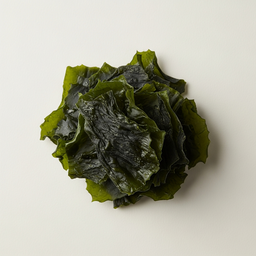 Seaweed
 The Thyroid Tandem: Iodine + Selenium
Technical: Seaweed is the richest natural source of iodine — essential for producing thyroid hormones T3 and T4. Brazil nuts provide selenium that activates the enzyme deiodinase, responsible for converting inactive T4 to active T3. Without iodine no hormone production, without selenium no hormone activation. Together they form the complete thyroid fuel.
What does this mean for you? Combine a small sheet of nori with 2 Brazil nuts as a snack. The seaweed provides the building blocks, the Brazil nuts the activation enzyme — together they keep your metabolism running.
Recipes with Brazil Nuts
Discover delicious recipes featuring brazil nuts:
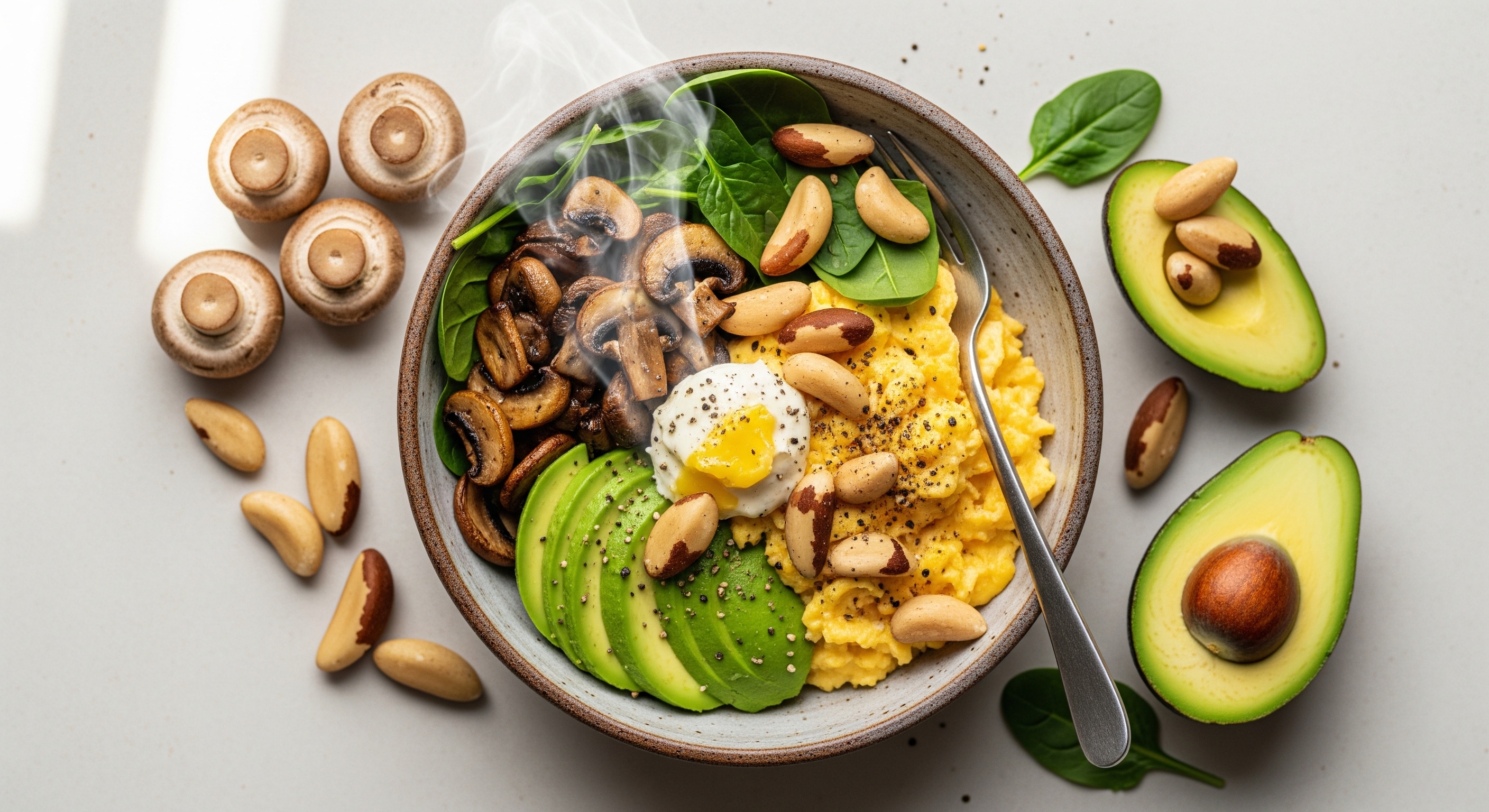 Mushroom Egg Bowl with Brazil Nuts 15 min Rich, earthy and nutty with fried egg
  395 kcal
  18g protein 2 synergies
  Salad with Eggs, Avocado, Mushrooms and Brazil Nuts 20 min Creamy, earthy and generous 474 kcal 19g protein 3 synergies
  In the Kitchen
Storage
Location:Refrigerator
Shelf life:6 maanden (koelkast), 1 jaar (vriezer)
Store cool and dry. Avoid prolonged exposure to air - fats go rancid.
Preparation
TREAT AS SUPPLEMENT: Max 2-3 nuts/day. More is toxic (selenium). Eat raw for maximum nutritional value.
Conversions
Substitutes
Smart preparation
1Eat Brazil nuts raw — roasting does not reduce selenium but changes texture.
2Store Brazil nuts in the freezer in an airtight bag.
Why?
The high fat content makes them extra susceptible to going rancid.
3Roughly chop Brazil nuts as topping for salads and pastries.
Caution / Warnings
Brazil Nuts is very safe, but there are scientific considerations:
Selenium Toxicity (CRUCIAL) Severe
This is the only nut you should NOT eat by the handful as a snack. Eating 6-8 nuts can already put you at the toxicity limit
Advice:
Think of it as a supplement. Eat maximum 2-3 nuts per day. Overdose symptoms are hair loss, brittle nails and garlic-smelling breath
Traditional use
Indigenous
Brazil Nuts Among Amazonian Peoples
Brazil nuts have been gathered by indigenous peoples of the Amazon for thousands of years and are an essential part of their diet and trade.
Summary
Don't see the Brazil nut as a snack (like peanuts), but as a natural selenium supplement. It's the most effective way to support an underactive thyroid and protect your cells. The rule is simple and strict: eat two every day (for example at breakfast) and no more. This way you get all the benefits without the risk of toxicity.