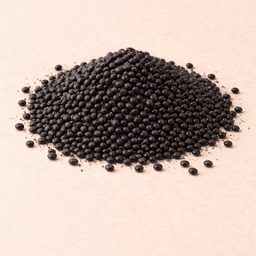
Black lentils
Small beluga lentils with a firm bite
What is this ingredient?
Black lentils are small, glossy lentils from Lens culinaris and are often called beluga lentils because they resemble caviar. They belong to a long legume tradition across Central Asia, the Middle East, and South Asia, while also fitting well into modern salads, bowls, and stews.
## Dark skin and firm texture
Their dark color comes from natural pigments in the polyphenol group, including anthocyanins. These pigments are mainly found in the skin. Because black lentils hold their shape better than red lentils, they add a firm bite and striking color contrast to dishes.
## Nutritional profile
Dried black lentils provide plenty of plant protein, fiber, folate, iron, magnesium, potassium, phosphorus, and zinc. In meals with grains, vegetables, and a source of vitamin C, they make a practical base for a nourishing plant-forward plate. Pair them with rice, lemon, tomato, bell pepper, cumin, or fresh herbs.
## Preparation
Rinse the lentils well. Soaking is optional, but it can shorten cooking time and make preparation gentler for some people. Simmer until tender while they still hold their shape. This makes them suitable for salads, pilaf-style dishes, curries, dal-style dishes, and meal prep.
How does it taste?
Earthy, firm and slightly nutty with a full bite.
Pairs well with:
Pairs well with garliccuminspinachyogurtlemon and garam masala.
Did you know...?
- Black beluga lentils resemble caviar because of their small size and glossy dark skin.
- Because they hold their shape well, black lentils are often used in salads and festive side dishes.
Nutritional Value & Energy
Per 100g
Black lentils provides energy thanks to natural nutrients , buffered by fiber.
Per 100g
Minerals
Vitamins
Omega-3 fatty acids
More nutrients
B-Vitamins
Trace Minerals
What's in a serving?
1 serving (dry)
Black lentils naturally contain iron (6.5 mg per 100 g).
Black lentils naturally contain potassium (677 mg per 100 g).
Black lentils naturally contain magnesium (108 mg per 100 g).
Black lentils naturally contain zinc (3.27 mg per 100 g).
Black lentils naturally contain folate (479 mcg per 100 g).
Black lentils naturally contain phosphorus (451 mg per 100 g).
Black lentils naturally contain manganese (1.39 mg per 100 g).
% of daily reference intake (DRI)
EU-approved nutrition claims
This ingredient contains nutrients for which EFSA-authorized health claims exist (at nutrient level, not ingredient-specific).
Approved health claims (EU)
Magnesium EU 432/2012
Magnesium contributes to normal muscle function
Contains 108mg/100g (threshold: ≥56.25mg/100g)
Magnesium EU 432/2012
Magnesium contributes to the reduction of tiredness and fatigue
Contains 108mg/100g (threshold: ≥56.25mg/100g)
Magnesium EU 432/2012
Magnesium contributes to normal functioning of the nervous system
Contains 108mg/100g (threshold: ≥56.25mg/100g)
Zinc EU 432/2012
Zinc contributes to the normal function of the immune system
Contains 3.27mg/100g (threshold: ≥1.5mg/100g)
Zinc EU 432/2012
Zinc contributes to the maintenance of normal skin
Contains 3.27mg/100g (threshold: ≥1.5mg/100g)
Iron EU 432/2012
Iron contributes to normal energy-yielding metabolism
Contains 6.5mg/100g (threshold: ≥2.1mg/100g)
Iron EU 432/2012
Iron contributes to the reduction of tiredness and fatigue
Contains 6.5mg/100g (threshold: ≥2.1mg/100g)
Potassium EU 432/2012
Potassium contributes to the maintenance of normal blood pressure
Contains 677mg/100g (threshold: ≥300mg/100g)
Folate EU 432/2012
Folate contributes to normal blood formation
Contains 479mcg/100g (threshold: ≥30mcg/100g)
Folate EU 432/2012
Folate contributes to normal amino acid synthesis
Contains 479mcg/100g (threshold: ≥30mcg/100g)
Folate EU 432/2012
Folate contributes to normal homocysteine metabolism
Contains 479mcg/100g (threshold: ≥30mcg/100g)
Folate EU 432/2012
Folate contributes to normal psychological function
Contains 479mcg/100g (threshold: ≥30mcg/100g)
Folate EU 432/2012
Folate contributes to the normal function of the immune system
Contains 479mcg/100g (threshold: ≥30mcg/100g)
Folate EU 432/2012
Folate has a role in the process of cell division
Contains 479mcg/100g (threshold: ≥30mcg/100g)
Folate EU 432/2012
Folate contributes to maternal tissue growth during pregnancy
Contains 479mcg/100g (threshold: ≥30mcg/100g)
Phosphorus EU 432/2012
Phosphorus contributes to normal energy-yielding metabolism
Contains 451mg/100g (threshold: ≥105mg/100g)
Phosphorus EU 432/2012
Phosphorus contributes to the normal function of cell membranes
Contains 451mg/100g (threshold: ≥105mg/100g)
Phosphorus EU 432/2012
Phosphorus contributes to the maintenance of normal bones
Contains 451mg/100g (threshold: ≥105mg/100g)
Phosphorus EU 432/2012
Phosphorus contributes to the maintenance of normal teeth
Contains 451mg/100g (threshold: ≥105mg/100g)
Magnesium EU 432/2012
Magnesium contributes to normal energy-yielding metabolism
Contains 108mg/100g (threshold: ≥56.25mg/100g)
Magnesium EU 432/2012
Magnesium contributes to electrolyte balance
Contains 108mg/100g (threshold: ≥56.25mg/100g)
Magnesium EU 432/2012
Magnesium contributes to normal protein synthesis
Contains 108mg/100g (threshold: ≥56.25mg/100g)
Magnesium EU 432/2012
Magnesium contributes to normal psychological function
Contains 108mg/100g (threshold: ≥56.25mg/100g)
Magnesium EU 432/2012
Magnesium contributes to the maintenance of normal bones
Contains 108mg/100g (threshold: ≥56.25mg/100g)
Magnesium EU 432/2012
Magnesium contributes to the maintenance of normal teeth
Contains 108mg/100g (threshold: ≥56.25mg/100g)
Magnesium EU 432/2012
Magnesium has a role in the process of cell division
Contains 108mg/100g (threshold: ≥56.25mg/100g)
Iron EU 432/2012
Iron contributes to normal cognitive function
Contains 6.5mg/100g (threshold: ≥2.1mg/100g)
Iron EU 432/2012
Iron contributes to normal formation of red blood cells and haemoglobin
Contains 6.5mg/100g (threshold: ≥2.1mg/100g)
Iron EU 432/2012
Iron contributes to normal oxygen transport in the body
Contains 6.5mg/100g (threshold: ≥2.1mg/100g)
Iron EU 432/2012
Iron contributes to the normal function of the immune system
Contains 6.5mg/100g (threshold: ≥2.1mg/100g)
Iron EU 432/2012
Iron has a role in the process of cell division
Contains 6.5mg/100g (threshold: ≥2.1mg/100g)
Zinc EU 432/2012
Zinc contributes to normal acid-base metabolism
Contains 3.27mg/100g (threshold: ≥1.5mg/100g)
Zinc EU 432/2012
Zinc contributes to normal carbohydrate metabolism
Contains 3.27mg/100g (threshold: ≥1.5mg/100g)
Zinc EU 432/2012
Zinc contributes to normal cognitive function
Contains 3.27mg/100g (threshold: ≥1.5mg/100g)
Zinc EU 432/2012
Zinc contributes to normal DNA synthesis
Contains 3.27mg/100g (threshold: ≥1.5mg/100g)
Zinc EU 432/2012
Zinc contributes to normal fertility and reproduction
Contains 3.27mg/100g (threshold: ≥1.5mg/100g)
Zinc EU 432/2012
Zinc contributes to normal macronutrient metabolism
Contains 3.27mg/100g (threshold: ≥1.5mg/100g)
Zinc EU 432/2012
Zinc contributes to normal metabolism of fatty acids
Contains 3.27mg/100g (threshold: ≥1.5mg/100g)
Zinc EU 432/2012
Zinc contributes to normal metabolism of vitamin A
Contains 3.27mg/100g (threshold: ≥1.5mg/100g)
Zinc EU 432/2012
Zinc contributes to normal protein synthesis
Contains 3.27mg/100g (threshold: ≥1.5mg/100g)
Zinc EU 432/2012
Zinc contributes to the maintenance of normal bones
Contains 3.27mg/100g (threshold: ≥1.5mg/100g)
Zinc EU 432/2012
Zinc contributes to the maintenance of normal hair
Contains 3.27mg/100g (threshold: ≥1.5mg/100g)
Zinc EU 432/2012
Zinc contributes to the maintenance of normal nails
Contains 3.27mg/100g (threshold: ≥1.5mg/100g)
Zinc EU 432/2012
Zinc contributes to the maintenance of normal testosterone levels in the blood
Contains 3.27mg/100g (threshold: ≥1.5mg/100g)
Zinc EU 432/2012
Zinc contributes to the maintenance of normal vision
Contains 3.27mg/100g (threshold: ≥1.5mg/100g)
Zinc EU 432/2012
Zinc contributes to the protection of cells from oxidative stress
Contains 3.27mg/100g (threshold: ≥1.5mg/100g)
Zinc EU 432/2012
Zinc has a role in the process of cell division
Contains 3.27mg/100g (threshold: ≥1.5mg/100g)
Manganese EU 432/2012
Manganese contributes to normal energy-yielding metabolism
Contains 1.39mg/100g (threshold: ≥0.3mg/100g)
Manganese EU 432/2012
Manganese contributes to the maintenance of normal bones
Contains 1.39mg/100g (threshold: ≥0.3mg/100g)
Manganese EU 432/2012
Manganese contributes to the normal formation of connective tissue
Contains 1.39mg/100g (threshold: ≥0.3mg/100g)
Manganese EU 432/2012
Manganese contributes to the protection of cells from oxidative stress
Contains 1.39mg/100g (threshold: ≥0.3mg/100g)
Potassium EU 432/2012
Potassium contributes to normal functioning of the nervous system
Contains 677mg/100g (threshold: ≥300mg/100g)
Potassium EU 432/2012
Potassium contributes to normal muscle function
Contains 677mg/100g (threshold: ≥300mg/100g)
Comparison
vsspinazie
Black lentils contain about 2× as much iron per 100 g as spinach.
vsbanaan
Black lentils contain about 2× as much potassium per 100 g as banana.
vsspinazie
Black lentils contain about 2× as much folate per 100 g as spinach.
What's being researched?
Black lentils and polyphenol pigments
The dark skin of black lentils is studied for its phenolic compounds and anthocyanins. Comparative laboratory studies mainly look at differences between lentil varieties and what happens to these compounds during processing and cooking.
Supported by: [4] Grzelczyk J (2023) , [1] Stanisavljević N (2022) , [2] Alexander R (2024)
Recipes with Black lentils
Discover delicious recipes featuring black lentils:
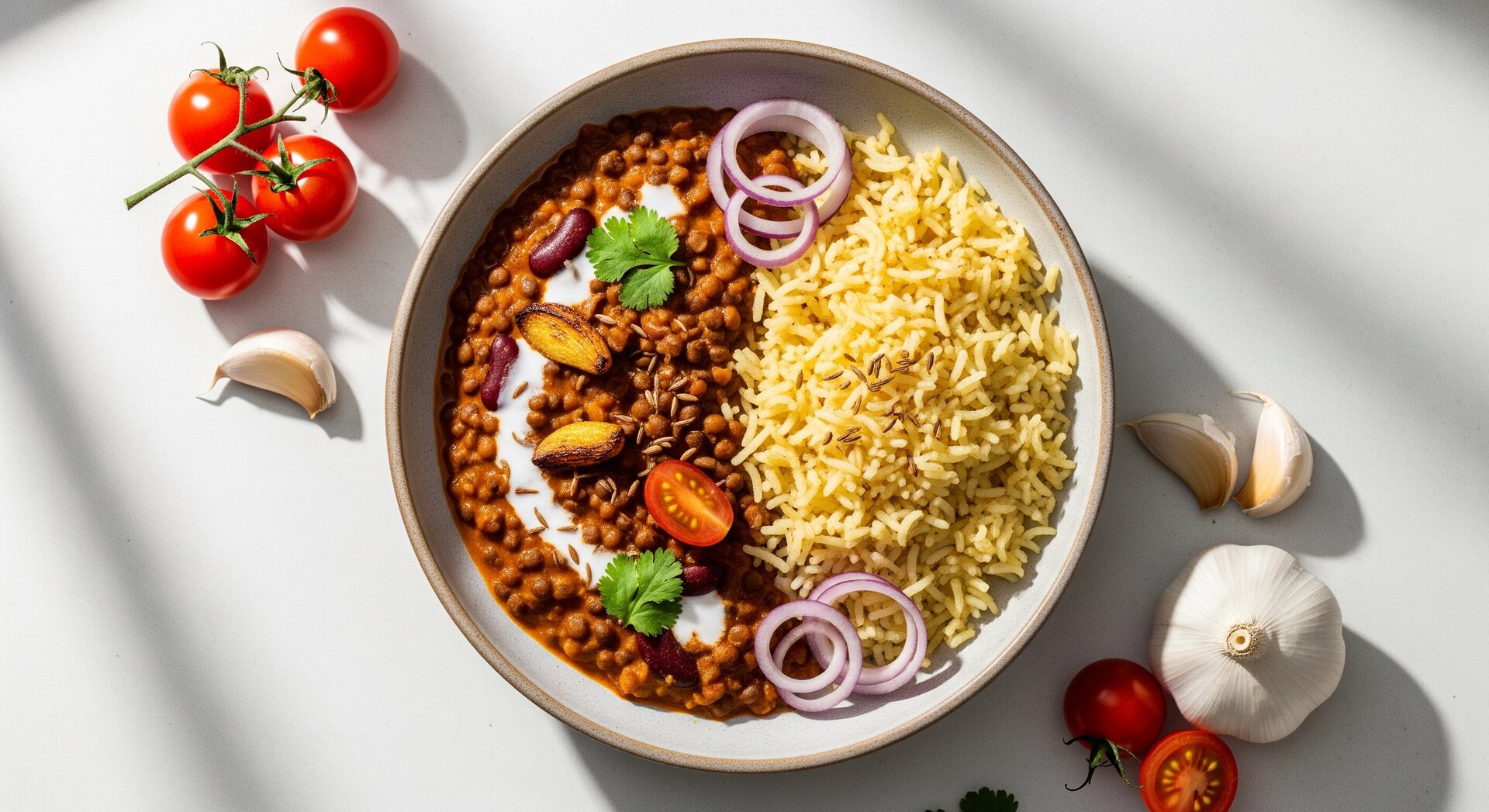 Indian Dal Makhani with Ghee Rice 75 min Creamy black lentil stew with kidney beans and ghee rice
  756 kcal
  28g protein 2 synergies
  In the Kitchen
Storage
Location:Pantry
Shelf life:2-3 jaar in afgesloten container
Store in a cool, dry place in an airtight container. Avoid moisture and direct light.
Preparation
Rinse well. Soaking for 8-12 hours is optional and can shorten cooking time. Cook in about 3 parts water until the lentils are tender but still firm. Ideal for salads, bowls, and side dishes.
Conversions
Substitutes
Smart preparation
1Rinse black lentils well until the water runs clear.
2Optionally soak them for 4-8 hours to shorten cooking time.
3Simmer gently until tender while they still hold their shape.
Why?
This keeps them attractive in salads, bowls and side dishes.
Caution / Warnings
Black lentils is very safe, but there are scientific considerations:
Gout and purine intake Moderate
Lentils contain moderate amounts of purines. For people sensitive to high uric acid levels, portion size may matter.
Advice:
Eat moderate portions, drink enough water, and follow personal medical advice if you have gout or elevated uric acid.
Phytic acid and mineral absorption Mild
Phytic acid in lentils can partly reduce absorption of iron, zinc, and calcium, especially in a less varied diet.
Advice:
Soak or rinse the lentils well and pair them with vitamin C-rich ingredients such as lemon, tomato, or bell pepper.
Gas and digestive discomfort Mild
Oligosaccharides in lentils may cause gas or bloating in sensitive individuals.
Advice:
Start with small portions, increase gradually, and cook the lentils until fully tender. Discarding soaking water may help.
Legume allergy Severe
People with a known allergy to legumes may also react to lentils.
Advice:
Avoid black lentils if you have a known legume allergy and seek medical advice if unsure.
Traditional use
Ayurveda
Beluga lentils in legume traditions
Black lentils fit into broad legume traditions from Asia and the Middle East. Because of their firm bite, they are now often used in salads, rice dishes, stews and modern plant-based bowls.
Summary
Black lentils are small beluga lentils with a firm bite, earthy flavor, and a dark skin containing natural polyphenol pigments. They provide plant protein, fiber, folate, iron, and minerals, and they stay nicely intact in salads, bowls, curries, and side dishes. Rinse well and soak optionally to shorten cooking time.