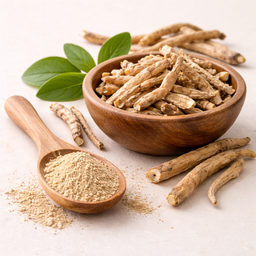
Ashwagandha
Earthy South Asian root for warm drinks and spiced routines
What is this ingredient?
Ashwagandha (Withania somnifera), also known as ‘Indian ginseng’ or ‘winter cherry’, is a South Asian root with a long place in Ayurvedic texts and household herb traditions. The name means ‘smell of horse’ in Sanskrit, referring to the distinctive odor of the dried root. In cooking and warm-drink routines, it is usually used as a fine powder with an earthy, bitter and slightly peppery taste.
The root naturally contains withanolides: steroidal lactones that researchers use to describe differences between extracts, dosages and analytical methods. Standardized extracts often list the percentage of withanolides on the label, for example 2.5–5%, because this helps compare products with one another.
Clinical research on ashwagandha usually uses standardized root extracts and measures outcomes with questionnaires, sleep logs, concentration tasks or blood values. These studies are useful scientific context, but they do not constitute an EFSA-authorized health claim for this ingredient. That is why Tayb describes ashwagandha mainly in botanical, culinary and cultural terms, without promising personal results.
For drinks, ashwagandha pairs well with warm milk or plant milk, honey, cacao, cinnamon, cardamom and nutmeg. Because of its bitter base, it works better with rounded, sweet and spiced flavors than with fresh or acidic preparations.
Important: ashwagandha is concentrated as an extract and pronounced in flavor as a powder. Use it according to the product label and take extra care during pregnancy, breastfeeding, thyroid conditions or medication use.
How does it taste?
Earthy and slightly bitter with a musky, peppery aftertaste.
Pairs well with:
Pairs well with cinnamoncardamomhoneycacao and warm milk.
Did you know...?
- The name ashwagandha comes from Sanskrit and means ‘smell of a horse’.
- Ashwagandha belongs to the nightshade family, just like tomatoes and potatoes.
Nutritional Value & Energy
Per 100g
Ashwagandha provides energy thanks to natural nutrients , buffered by fiber.
Per 100g
Minerals
Vitamins
EU-approved nutrition claims
There are currently no EFSA-authorized health claims specific for Ashwagandha. Various applications for herbs and spices have been submitted but not yet assessed (botanical 'on hold' list).
What's being researched?
Ashwagandha extracts in clinical research
Withanolides in ashwagandha are studied through standardized extracts. Studies compare questionnaires, rest-related measurements and biomarkers, among other outcomes; findings depend on extract, dosage, duration and study design.
Supported by: [1] Chandrasekhar (2012) , [7] Speers (2024) , [3] Lopresti (2019) , [2] Langade (2019)
Ashwagandha and thyroid hormones
Research is exploring whether ashwagandha extracts may be relevant to measurements related to thyroid hormones. The data are limited; consulting a doctor remains important with thyroid conditions or thyroid medication.
Supported by: [8] Lopresti (2019)
Good Combinations (Synergy)
Combine ashwagandha smartly to enhance the effect:
Ashwagandha 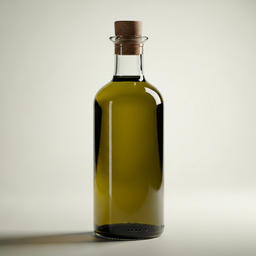 Olive Oil
 Fat improves absorption of fat-soluble withanolides
Withanolides are lipophilic steroidal lactones that are better absorbed with dietary fat
Technical: Withanolides are the active compounds in ashwagandha and are fat-soluble. Without fat, they are poorly absorbed in the gut.
What does this mean for you? Always take ashwagandha with a meal containing fat, or add a teaspoon of olive oil to your supplement.
Ashwagandha 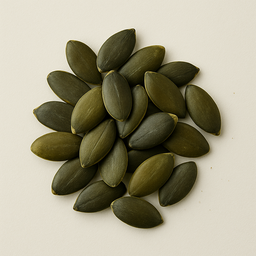 Pumpkin Seeds
 Magnesium from pumpkin seeds + withanolides from ashwagandha
Ashwagandha reduces cortisol (PMID: 23439798), magnesium from pumpkin seeds supports GABA function (PMID: 21199787)
Technical: Ashwagandha contains withanolides that are studied in relation to neuroendocrine signaling pathways. Pumpkin seeds are very rich in magnesium (550mg/100g), which activates GABA receptors and calms the nervous system. Together they work through different pathways for relaxation.
What does this mean for you? Combine ashwagandha with a handful of pumpkin seeds as evening snack. The magnesium supports your night rest, the ashwagandha works complementarily via a different pathway.
Ashwagandha 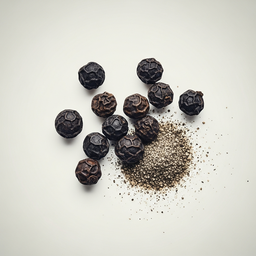 Black Pepper
 Piperine significantly increases withanolide absorption
Piperine increases bioavailability of many phytochemicals via CYP3A4 inhibition (PMID: 9619120)
Technical: Piperine from black pepper inhibits CYP3A4 and P-glycoprotein in the gut, reducing withanolide breakdown and improving absorption.
What does this mean for you? Add a pinch of black pepper to your ashwagandha, or choose a supplement that already contains piperine (often labeled as BioPerine®).
Ashwagandha 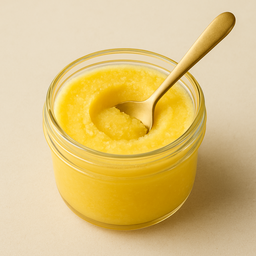 Ghee
Ghee Ayurvedic combination: fat increases withanolide absorption
Fat-soluble withanolides have improved bioavailability with dietary fat (Ayurvedic preparation principles)
Technical: Ashwagandha contains withanolides (steroidal lactones) that are fat-soluble. Ghee contains short- and medium-chain fatty acids that are quickly absorbed and serve as carriers for fat-soluble compounds. In the Ayurvedic tradition, ashwagandha has been prepared with ghee for centuries for improved absorption.
What does this mean for you? Take your ashwagandha with a teaspoon of ghee or with a meal containing ghee. The fat from ghee serves as carrier for the fat-soluble withanolides.
Recipes with Ashwagandha
Discover delicious recipes featuring ashwagandha:
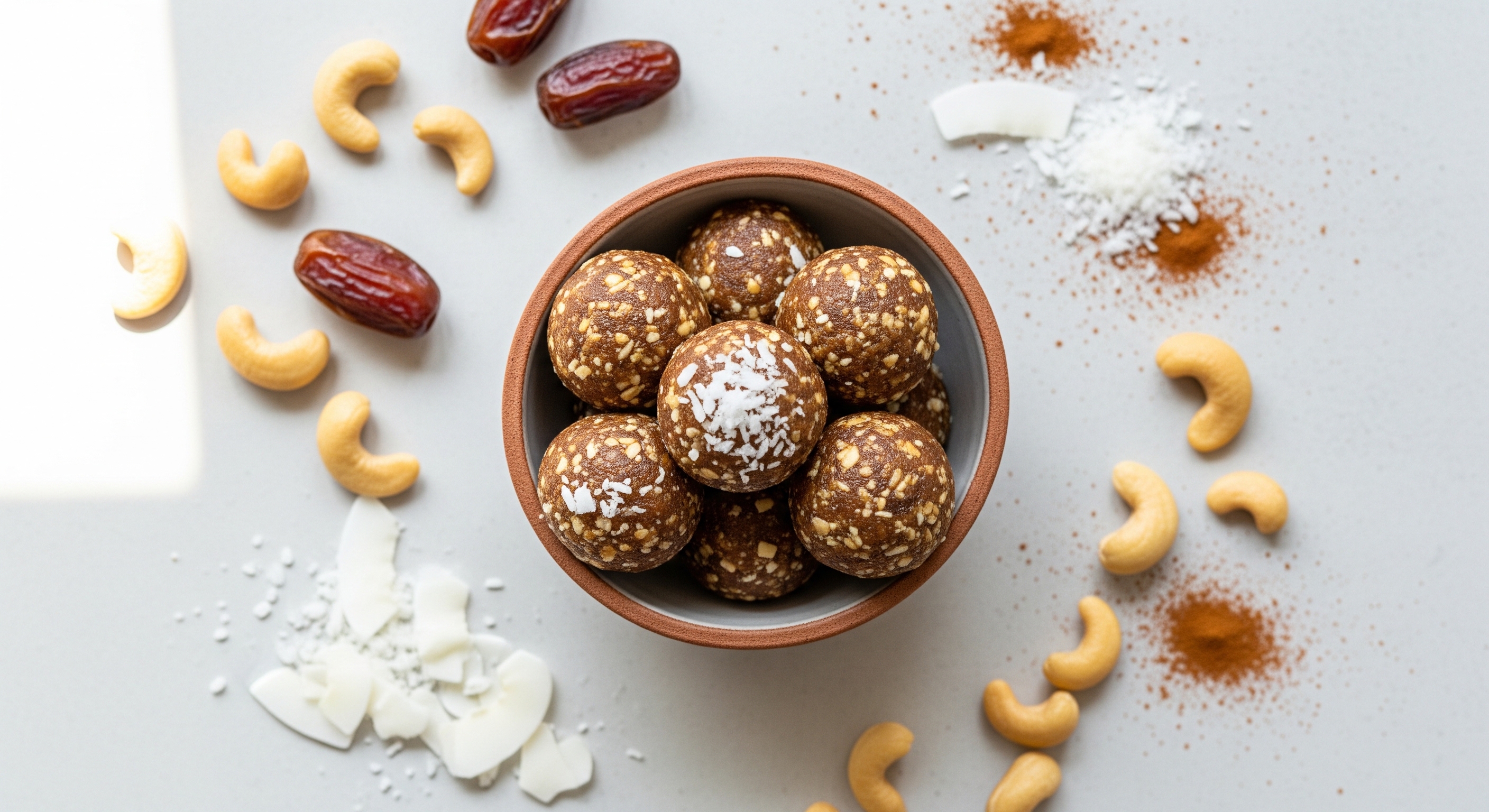 Date Cashew Balls with Ashwagandha and Cocoa 35 min Fudgy, cocoa-rich and softly spiced
  91 kcal
  2g protein 2 synergies
 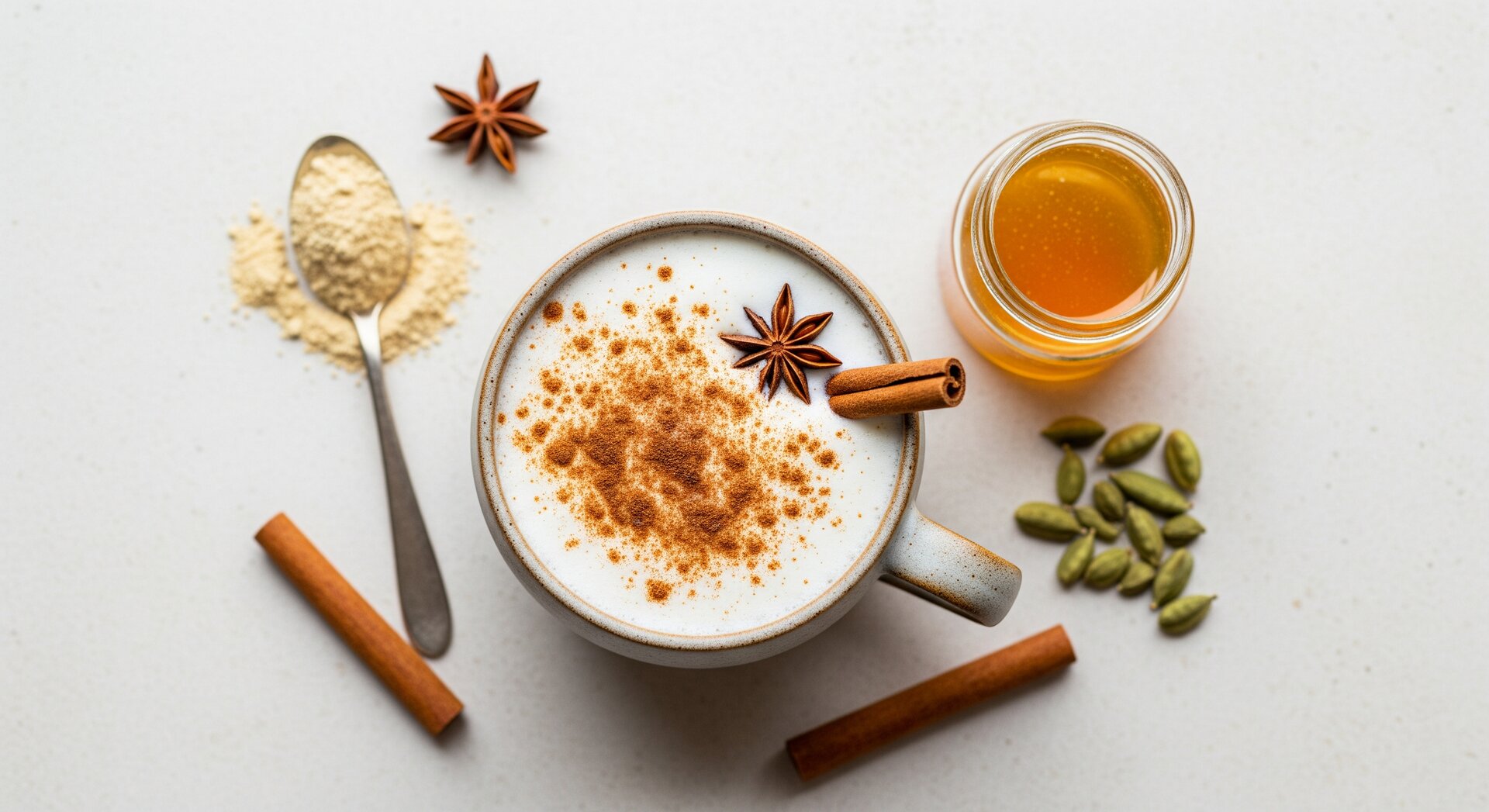 Shatavari Moon Milk 10 min Warm Ayurvedic moon milk with shatavari, ashwagandha and gentle spices 85 kcal 2g protein 1 synergies
 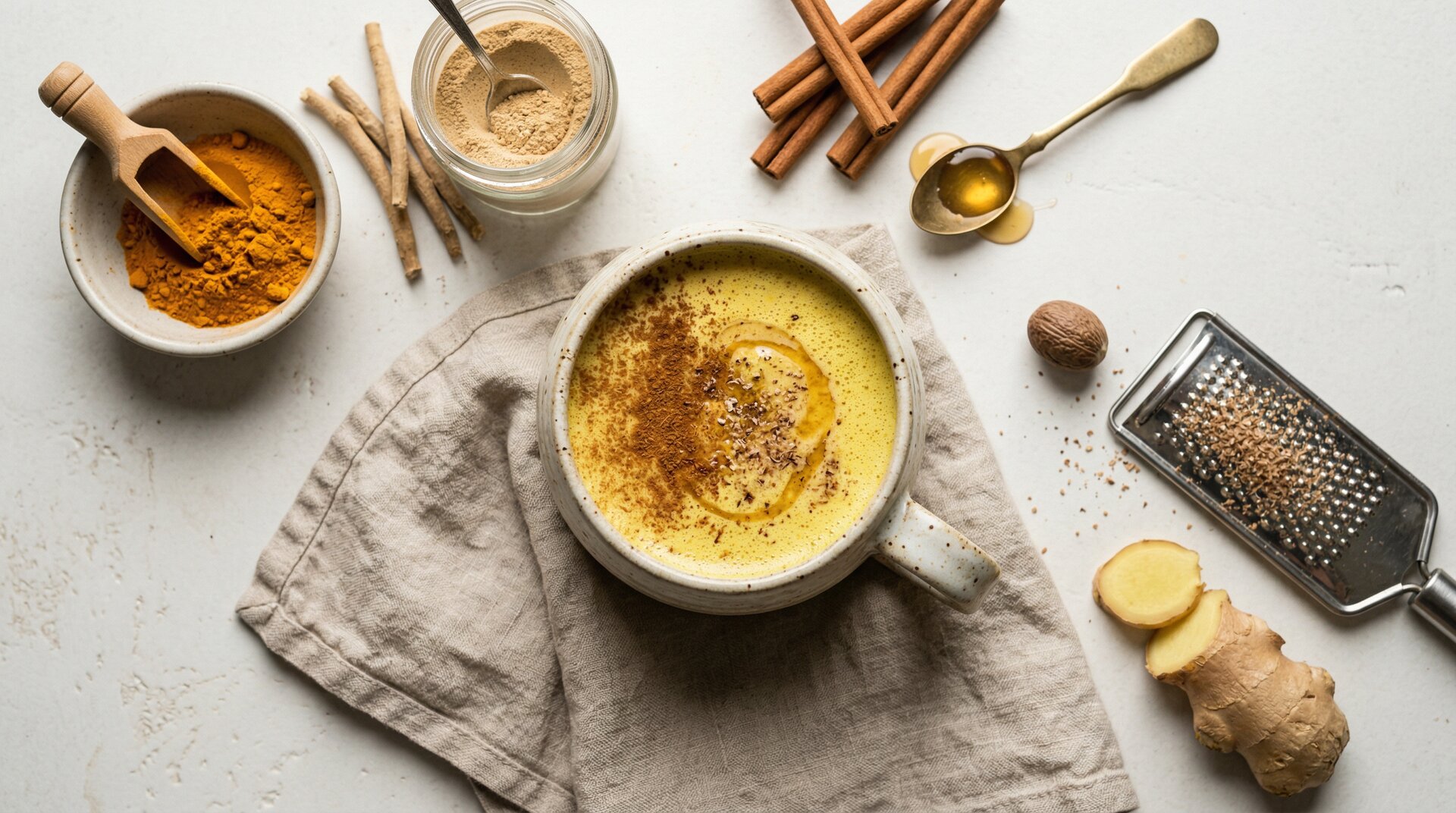 Warm Golden Milk with Ashwagandha and Ginger 10 min Creamy, spiced and evening-soft 174 kcal 8g protein 2 synergies
  In the Kitchen
Storage
Location:Pantry
Shelf life:18-24 maanden (poeder), 2-3 jaar (capsules)
Store airtight, cool and dark. Avoid moisture and use a dry spoon; powder can become more bitter or stale after opening.
Preparation
Mix 1/2–1 teaspoon into warm, not boiling, milk or plant milk with honey. For moon milk, combine with cinnamon, cardamom and nutmeg. Prefer adding it below 60°C to keep the flavor and aroma softer.
Conversions
Substitutes
Smart preparation
1Mix ashwagandha powder with warm milk, plant milk or a creamy smoothie.
Why?
The strong, earthy taste becomes rounder through fat, sweetness and soft aromas.
2Start with half a teaspoon and taste before increasing.
3Add a pinch of black pepper or cinnamon when using it in warm drinks.
Caution / Warnings
Ashwagandha is very safe, but there are scientific considerations:
Pregnancy and breastfeeding Severe
Do not use during pregnancy or breastfeeding; safety is not sufficiently established for these situations.
Thyroid conditions Moderate
Consult a doctor if you have a thyroid condition or use thyroid medication; supplements can affect monitoring and dosing.
Immunosuppressants Moderate
Consult a doctor if you use immunosuppressive medication; do not combine supplements without personal guidance.
Sedatives and benzodiazepines Mild
May cause extra drowsiness when combined with calming medication; consult a doctor or pharmacist.
Traditional use
Ayurveda
Rasayana in Ayurvedic traditions
Ashwagandha has been described for centuries in Ayurvedic texts as rasayana, a cultural category around food, rest, daily routine and lifestyle.
Summary
Ashwagandha is a South Asian root with an earthy, bitter taste and a long place in Ayurvedic texts. Research mainly uses standardized root extracts and measures various questionnaires, tasks and biomarkers; for Tayb this remains scientific context, not a personal promise. Use supplements according to the label and take care during pregnancy, breastfeeding, thyroid conditions or medication use.