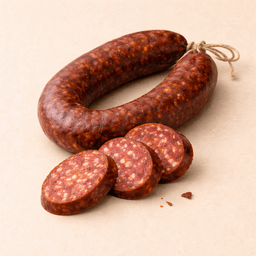
Sucuk
Turkish spiced beef sausage
What is this ingredient?
Sucuk is an iconic Turkish sausage that has been prepared for centuries using traditional drying and fermentation methods. The mixture of ground beef and fat is seasoned with an aromatic blend of cumin, garlic, red pepper, black pepper and allspice, giving it its characteristic deep red color and spicy flavor.
During maturation, complex aromas and a firm texture develop. The sausage is traditionally dried and can be used in thin slices, but it is often briefly pan-fried so the fat renders and the spices release their full aroma. Sucuk is popular not only in Turkey, but also in the Balkans and the Middle East, where it is often part of breakfast dishes, sandwiches and mezze.
Because sucuk is a processed meat product with a high fat and salt content, it is best used as a flavoring ingredient or small portion within a varied diet. It naturally contains protein, vitamin B12 and minerals such as iron and zinc. The spices, especially garlic and cumin, contribute to the typical aroma and traditional keeping quality of the product.
How does it taste?
Boldly spiced, garlicky and lightly smoky with cumin and chili.
Pairs well with:
Pairs well with eggstomatobreadpeppers and onion.
Did you know...?
- Sucuk (also sujuk) is a dry, spiced sausage known across large parts of the former Ottoman region.
- The characteristic garlic-cumin aroma of sucuk comes from a spice blend that can vary greatly by region.
Nutritional Value & Energy
Per 100g
Sucuk provides energy thanks to natural nutrients .
Per 100g
Minerals
Vitamins
More nutrients
Trace Minerals
What's in a serving?
1 serving
Sucuk naturally contains zinc (2.8 mg per 100 g).
Sucuk naturally contains vitamin B12 (2 mcg per 100 g).
Sucuk naturally contains selenium (15 mcg per 100 g).
% of daily reference intake (DRI)
EU-approved nutrition claims
This ingredient contains nutrients for which EFSA-authorized health claims exist (at nutrient level, not ingredient-specific).
Approved health claims (EU)
Vitamin_b12 EU 432/2012
Vitamin B12 contributes to the normal function of the immune system
Contains 2mcg/100g (threshold: ≥0.375mcg/100g)
Vitamin_b12 EU 432/2012
Vitamin B12 contributes to the reduction of tiredness and fatigue
Contains 2mcg/100g (threshold: ≥0.375mcg/100g)
Vitamin_b12 EU 432/2012
Vitamin B12 contributes to the normal functioning of the nervous system
Contains 2mcg/100g (threshold: ≥0.375mcg/100g)
Zinc EU 432/2012
Zinc contributes to the normal function of the immune system
Contains 2.8mg/100g (threshold: ≥1.5mg/100g)
Zinc EU 432/2012
Zinc contributes to the maintenance of normal skin
Contains 2.8mg/100g (threshold: ≥1.5mg/100g)
Vitamin_b12 EU 432/2012
Vitamin B12 contributes to normal energy-yielding metabolism
Contains 2mcg/100g (threshold: ≥0.375mcg/100g)
Vitamin_b12 EU 432/2012
Vitamin B12 contributes to normal homocysteine metabolism
Contains 2mcg/100g (threshold: ≥0.375mcg/100g)
Vitamin_b12 EU 432/2012
Vitamin B12 contributes to normal psychological function
Contains 2mcg/100g (threshold: ≥0.375mcg/100g)
Vitamin_b12 EU 432/2012
Vitamin B12 contributes to normal red blood cell formation
Contains 2mcg/100g (threshold: ≥0.375mcg/100g)
Vitamin_b12 EU 432/2012
Vitamin B12 has a role in the process of cell division
Contains 2mcg/100g (threshold: ≥0.375mcg/100g)
Zinc EU 432/2012
Zinc contributes to normal acid-base metabolism
Contains 2.8mg/100g (threshold: ≥1.5mg/100g)
Zinc EU 432/2012
Zinc contributes to normal carbohydrate metabolism
Contains 2.8mg/100g (threshold: ≥1.5mg/100g)
Zinc EU 432/2012
Zinc contributes to normal cognitive function
Contains 2.8mg/100g (threshold: ≥1.5mg/100g)
Zinc EU 432/2012
Zinc contributes to normal DNA synthesis
Contains 2.8mg/100g (threshold: ≥1.5mg/100g)
Zinc EU 432/2012
Zinc contributes to normal fertility and reproduction
Contains 2.8mg/100g (threshold: ≥1.5mg/100g)
Zinc EU 432/2012
Zinc contributes to normal macronutrient metabolism
Contains 2.8mg/100g (threshold: ≥1.5mg/100g)
Zinc EU 432/2012
Zinc contributes to normal metabolism of fatty acids
Contains 2.8mg/100g (threshold: ≥1.5mg/100g)
Zinc EU 432/2012
Zinc contributes to normal metabolism of vitamin A
Contains 2.8mg/100g (threshold: ≥1.5mg/100g)
Zinc EU 432/2012
Zinc contributes to normal protein synthesis
Contains 2.8mg/100g (threshold: ≥1.5mg/100g)
Zinc EU 432/2012
Zinc contributes to the maintenance of normal bones
Contains 2.8mg/100g (threshold: ≥1.5mg/100g)
Zinc EU 432/2012
Zinc contributes to the maintenance of normal hair
Contains 2.8mg/100g (threshold: ≥1.5mg/100g)
Zinc EU 432/2012
Zinc contributes to the maintenance of normal nails
Contains 2.8mg/100g (threshold: ≥1.5mg/100g)
Zinc EU 432/2012
Zinc contributes to the maintenance of normal testosterone levels in the blood
Contains 2.8mg/100g (threshold: ≥1.5mg/100g)
Zinc EU 432/2012
Zinc contributes to the maintenance of normal vision
Contains 2.8mg/100g (threshold: ≥1.5mg/100g)
Zinc EU 432/2012
Zinc contributes to the protection of cells from oxidative stress
Contains 2.8mg/100g (threshold: ≥1.5mg/100g)
Zinc EU 432/2012
Zinc has a role in the process of cell division
Contains 2.8mg/100g (threshold: ≥1.5mg/100g)
Selenium EU 432/2012
Selenium contributes to the maintenance of normal hair
Contains 15mcg/100g (threshold: ≥8.25mcg/100g)
Selenium EU 432/2012
Selenium contributes to the maintenance of normal nails
Contains 15mcg/100g (threshold: ≥8.25mcg/100g)
Selenium EU 432/2012
Selenium contributes to the normal function of the immune system
Contains 15mcg/100g (threshold: ≥8.25mcg/100g)
Selenium EU 432/2012
Selenium contributes to normal thyroid function
Contains 15mcg/100g (threshold: ≥8.25mcg/100g)
Selenium EU 432/2012
Selenium contributes to normal spermatogenesis
Contains 15mcg/100g (threshold: ≥8.25mcg/100g)
Selenium EU 432/2012
Selenium contributes to the protection of cells from oxidative stress
Contains 15mcg/100g (threshold: ≥8.25mcg/100g)
What's being researched?
Sucuk as a processed meat product
Sucuk is studied within research on fermented meat products and dietary patterns. The fermentation process affects flavor and texture, while the high sodium and fat content remain important considerations.
Supported by: [1] Zheng SS (2024) , [2] Rasmussen NF (2019)
Recipes with Sucuk
Discover delicious recipes featuring sucuk:
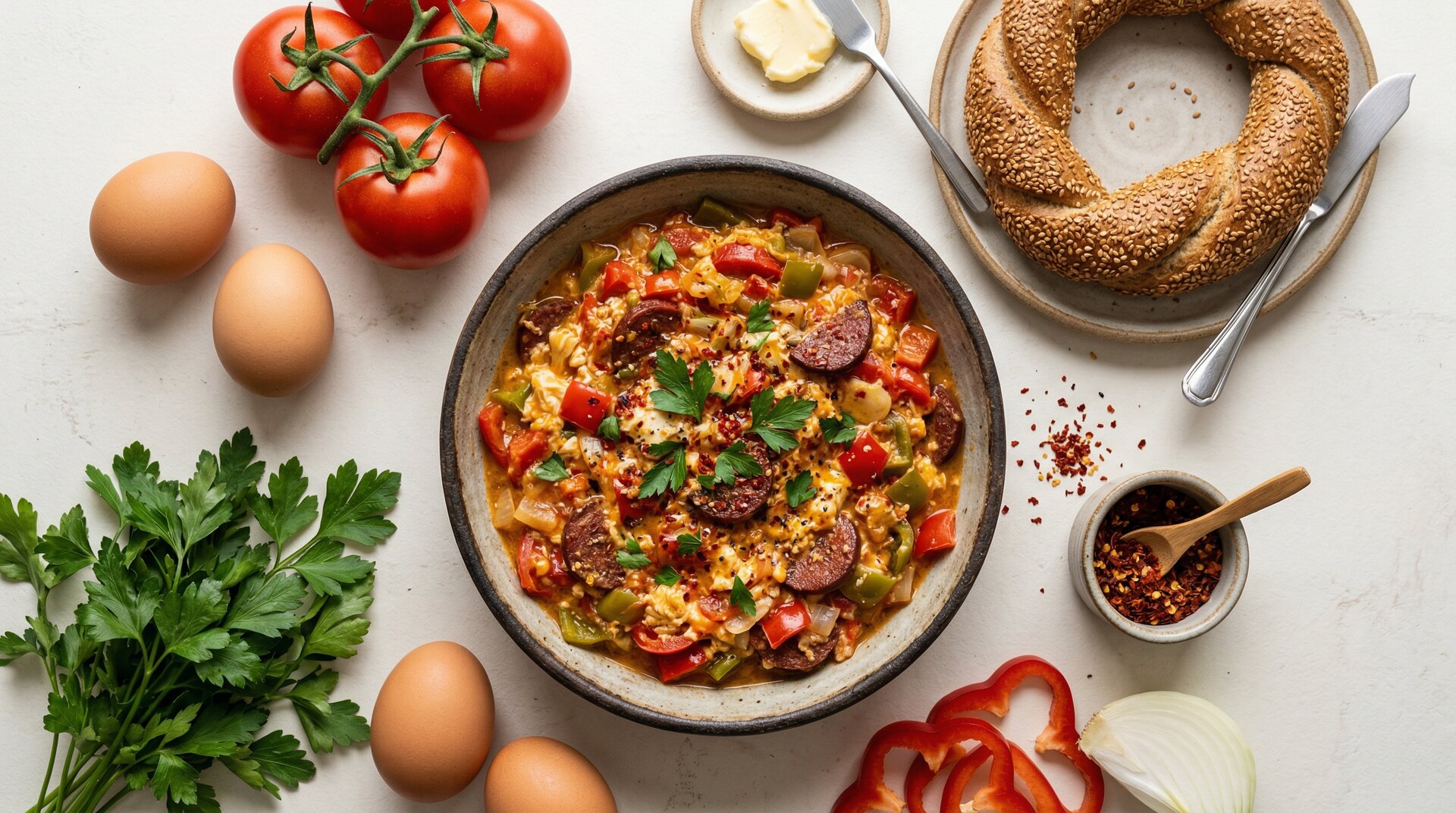 Turkish Menemen with Beef Sucuk & Whole Wheat Simit 30 min Hearty Turkish breakfast with spiced beef sausage and scrambled eggs in tomato sauce
  695 kcal
  34g protein 1 synergies
  In the Kitchen
Storage
Location:Refrigerator
Shelf life:2-3 weken ongeopend, 5-7 dagen geopend
Store in the refrigerator in the original packaging or in an airtight container. For longer storage, sucuk can also be frozen for about 3 months.
Preparation
Slice into 0.5-1 cm rounds and pan-fry briefly over medium-high heat until the fat renders and the edges become crisp, about 2-3 minutes per side. Sucuk can also be grilled or baked. Pair with eggs for breakfast, or use in sandwiches, wraps and vegetable dishes.
Conversions
Substitutes
Smart preparation
1Slice sucuk about 5 mm thick and fry in a dry pan.
Why?
Sucuk contains enough fat to fry without extra oil.
2Fry sucuk over medium-high heat until the edges are crisp and golden brown.
3Remove the casing from sucuk before slicing.
Caution / Warnings
Sucuk is very safe, but there are scientific considerations:
High blood pressure (hypertension) Severe
Sucuk contains a lot of sodium (1600 mg per 100 g, more than 65% of the daily reference intake). High sodium intake is a consideration for high blood pressure.
Advice:
Use sucuk sparingly if you have high blood pressure and consult a doctor or dietitian about suitable portion sizes.
Cardiovascular conditions Severe
Sucuk contains a lot of fat and sodium and is a processed meat product. This makes portion size and frequency especially important for cardiovascular conditions.
Advice:
Limit sucuk to occasional use with cardiovascular disease. Choose leaner protein sources more often as the basis of the meal.
Processed red meat consideration Moderate
Sucuk is a processed red meat product. Regular high consumption of processed meat is associated in nutrition research with unfavorable health outcomes.
Advice:
Use sucuk in moderation, in small portions, and combine with vegetables, legumes or whole grains for a more balanced meal.
Calorie-controlled diet Moderate
With 400 kcal and 36 g fat per 100 g, sucuk is calorie-dense. A small portion can therefore provide a lot of energy.
Advice:
Use sparingly, for example 30-50 g per portion, and combine with vegetables. Choose leaner protein sources more often.
Traditional use
Islamic tradition
Sucuk in Turkish and Middle Eastern tradition
Sucuk is a traditional dried sausage from Turkish and Ottoman cuisine, seasoned with cumin, garlic and red pepper.
Summary
Sucuk is a traditional Turkish beef sausage with an intense garlic-cumin flavor. It is a source of protein and vitamin B12, but because of its high fat and salt content it fits best in small portions within a varied diet.