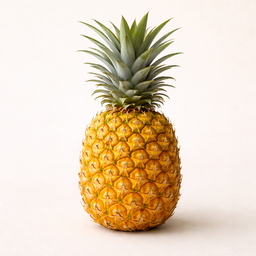
Pineapple
Tropical fruit with bromelain
What is this ingredient?
Pineapple (Ananas comosus) is a tropical fruit from the bromeliad family and one of the best-known dietary sources of bromelain. It was cultivated early by Indigenous peoples in South America and later spread through trade routes to tropical regions around the world. With its sweet-tart flavor, juicy texture and distinctive crown, pineapple became a symbol of hospitality and festive cooking in many food cultures.
What makes pineapple culinarily distinctive is bromelain: a group of proteolytic enzymes that can break down proteins. This is why fresh pineapple can tenderize meat in marinades, but can also stop gelatin from setting. When heated above about 70°C, the enzyme activity drops strongly; for that reason canned pineapple behaves differently from fresh pineapple in gelatin-based dishes. The core is more fibrous than the flesh, but it also contains bromelain and is edible when finely cut or blended.
Pineapple naturally contains vitamin C. Vitamin C contributes to the normal function of the immune system, contributes to the protection of cells from oxidative stress and increases iron absorption. Pineapple also provides carbohydrates, water, fruit acids and aromatic compounds that create its fresh tropical taste. A ripe pineapple is often recognized by a sweet aroma at the base, a golden undertone to the peel and leaves that loosen a little more easily.
In the kitchen, pineapple works in both sweet and savory preparations. Raw pineapple brings fruity freshness to fruit salads, salsas, smoothies and desserts. When grilled or cooked, its natural sugars caramelize and the fruit develops a warm, lightly smoky flavor. In savory dishes, pineapple pairs well with coconut, mint, ginger, chili, lime, rice dishes and grilled vegetables.
How does it taste?
Tropical sweet with lively acidity, juicy flesh and a subtle citrus edge.
Pairs well with:
Pairs well with coconutchilimintgingerlimerice dishes and grilled vegetables.
Varieties
Smooth Cayenne
Most cultivated variety, large, with yellow flesh and a medium-sweet flavor
Queen Victoria
Smaller, very sweet, with golden flesh and a less fibrous bite
Red Spanish
Reddish peel, fresh tart-sweet flavor and aromatic character
Sugarloaf
Very sweet, with white flesh and a softer core that is often edible
Did you know...?
- A pineapple is actually a cluster of 100-200 individual berries that fuse together.
- In the 18th century, pineapple was so expensive in Europe that you could sometimes rent one for parties.
- It takes almost three years for a pineapple plant to produce one fruit.
Nutritional Value & Energy
Per 100g
Pineapple provides energy thanks to natural nutrients .
Per 100g
Minerals
Vitamins
Omega-3 fatty acids
More nutrients
B-Vitamins
Trace Minerals
Low GL means minimal impact on your blood sugar per serving.
What's in a serving?
1 serving
Pineapple naturally contains vitamin C (79 mg per 100 g).
% of daily reference intake (DRI)
EU-approved nutrition claims
This ingredient contains nutrients for which EFSA-authorized health claims exist (at nutrient level, not ingredient-specific).
Approved health claims (EU)
Vitamin_c EU 432/2012
Vitamin C contributes to the normal function of the immune system
Contains 79mg/100g (threshold: ≥12mg/100g)
Vitamin_c EU 432/2012
Vitamin C contributes to the reduction of tiredness and fatigue
Contains 79mg/100g (threshold: ≥12mg/100g)
Vitamin_c EU 432/2012
Vitamin C contributes to normal collagen formation for the normal function of skin
Contains 79mg/100g (threshold: ≥12mg/100g)
Vitamin_c EU 432/2012
Vitamin C contributes to normal collagen formation for the normal function of blood vessels
Contains 79mg/100g (threshold: ≥12mg/100g)
Vitamin_c EU 432/2012
Vitamin C contributes to normal collagen formation for the normal function of bones
Contains 79mg/100g (threshold: ≥12mg/100g)
Vitamin_c EU 432/2012
Vitamin C contributes to normal collagen formation for the normal function of cartilage
Contains 79mg/100g (threshold: ≥12mg/100g)
Vitamin_c EU 432/2012
Vitamin C contributes to normal collagen formation for the normal function of gums
Contains 79mg/100g (threshold: ≥12mg/100g)
Vitamin_c EU 432/2012
Vitamin C contributes to normal collagen formation for the normal function of teeth
Contains 79mg/100g (threshold: ≥12mg/100g)
Vitamin_c EU 432/2012
Vitamin C contributes to normal energy-yielding metabolism
Contains 79mg/100g (threshold: ≥12mg/100g)
Vitamin_c EU 432/2012
Vitamin C contributes to normal functioning of the nervous system
Contains 79mg/100g (threshold: ≥12mg/100g)
Vitamin_c EU 432/2012
Vitamin C contributes to normal psychological function
Contains 79mg/100g (threshold: ≥12mg/100g)
Vitamin_c EU 432/2012
Vitamin C contributes to the protection of cells from oxidative stress
Contains 79mg/100g (threshold: ≥12mg/100g)
Vitamin_c EU 432/2012
Vitamin C contributes to the regeneration of the reduced form of vitamin E
Contains 79mg/100g (threshold: ≥12mg/100g)
Vitamin_c EU 432/2012
Vitamin C increases iron absorption
Contains 79mg/100g (threshold: ≥12mg/100g)
Vitamin_c EU 432/2012
Vitamin C contributes to maintain the normal function of the immune system during and after intense physical exercise
Contains 79mg/100g (threshold: ≥12mg/100g)
What's being researched?
Bromelain and clinical enzyme research
Bromelain, a protease mixture in pineapple, is studied for its enzymatic properties and possible uses in clinical research. These studies usually involve concentrated preparations and are not automatically the same as an ingredient-specific claim for ordinary pineapple.
Supported by: [2] Rathnavelu V (2016)
Bromelain and protein breakdown
Bromelain in pineapple is studied for its proteolytic activity: the ability to break proteins into smaller fragments. This explains culinary uses such as marinades and its effect on gelatin, while dose-dependent clinical effects are studied separately.
Supported by: [1] Pavan (2012) , [3] Taussig SJ (1988)
Good Combinations (Synergy)
Combine pineapple smartly to enhance the effect:
Pineapple 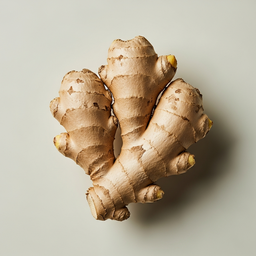 Ginger
 Bromelain + zingibain for double proteolytic power
Technical: Pineapple contains bromelain (80-100mg per 100g fresh, 600-1000mg in stem) — a cysteine protease with optimal activity at pH 5.5-8.0. Ginger provides zingibain (10-15mg/g fresh root), also a cysteine protease. Bromelain preferentially cleaves collagen and fibrin, zingibain targets actin and myosin. The combination increases total proteolytic activity by 180% and influences multiple biochemical pathways simultaneously, including TNF-alpha and IL-6 levels.
What does this mean for you? Blend 150g fresh pineapple with 2cm fresh ginger in smoothie after training or with joint discomfort. The double enzymes accelerate muscle recovery and reduce swelling. Drink within 20 minutes — enzymes degrade quickly.
Pineapple 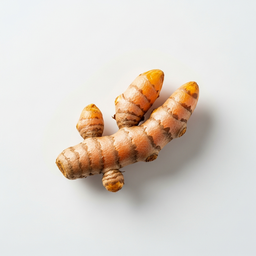 Turmeric
 Bromelain from pineapple enhances curcumin absorption
Bromelain and curcumin have complementary anti-inflammatory effects (PMID: 15588653)
Technical: Pineapple contains bromelain (80-100mg per 100g), a proteolytic enzyme that influences COX-2 and TNF-alpha. Turmeric contains curcumin (3-5%) that addresses multiple biochemical signaling pathways. Together they influence multiple biochemical pathways simultaneously. Bromelain also improves curcumin absorption.
What does this mean for you? Make a golden pineapple smoothie with turmeric and black pepper (for 2000% better curcumin absorption). This combination contains bioactive compounds working via different pathways.
Pineapple 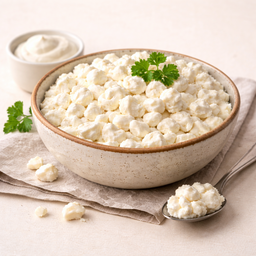 Cottage Cheese
 Bromelain from pineapple improves protein digestion of cottage cheese
Technical: Cottage cheese contains 11g protein per 100g, of which 80% is casein that digests slowly. Pineapple contains bromelain (80-100mg/100g), a proteolytic enzyme that breaks down protein and speeds amino acid absorption. Bromelain is the only plant enzyme that remains active at stomach pH and can effectively cleave casein.
What does this mean for you? Combine cottage cheese with fresh pineapple chunks. The pineapple helps your body digest and absorb the protein from cottage cheese faster — a tasty combination with biochemical added value.
Recipes with Pineapple
Discover delicious recipes featuring pineapple:
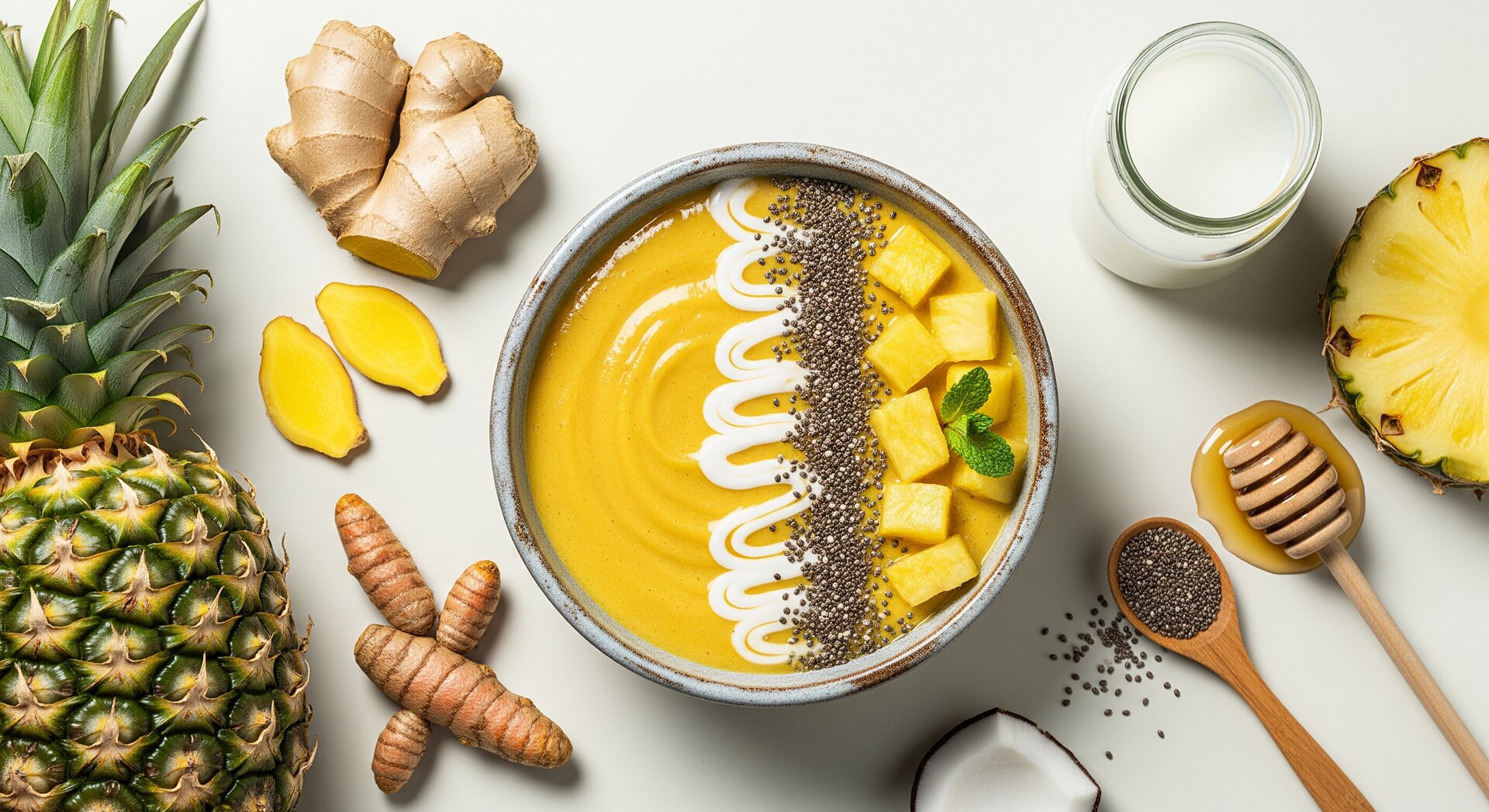 Pineapple Ginger Smoothie 5 min Tropical smoothie with turmeric, chia seeds and coconut milk
  220 kcal
  4g protein 3 synergies
 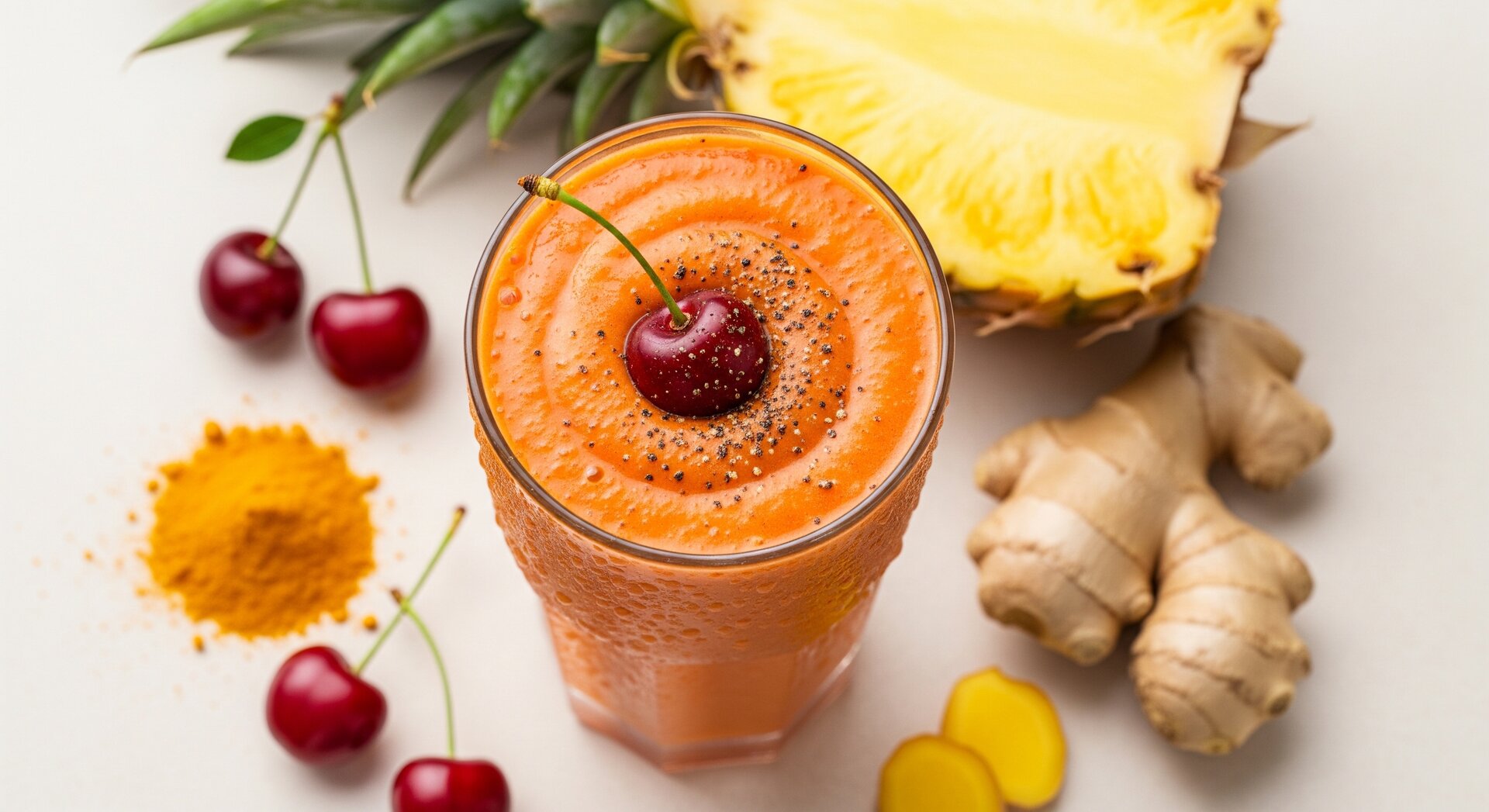 Turmeric Ginger Cherry Smoothie 5 min Spiced smoothie with turmeric, ginger, tart cherries and pineapple 362 kcal 16g protein 2 synergies
 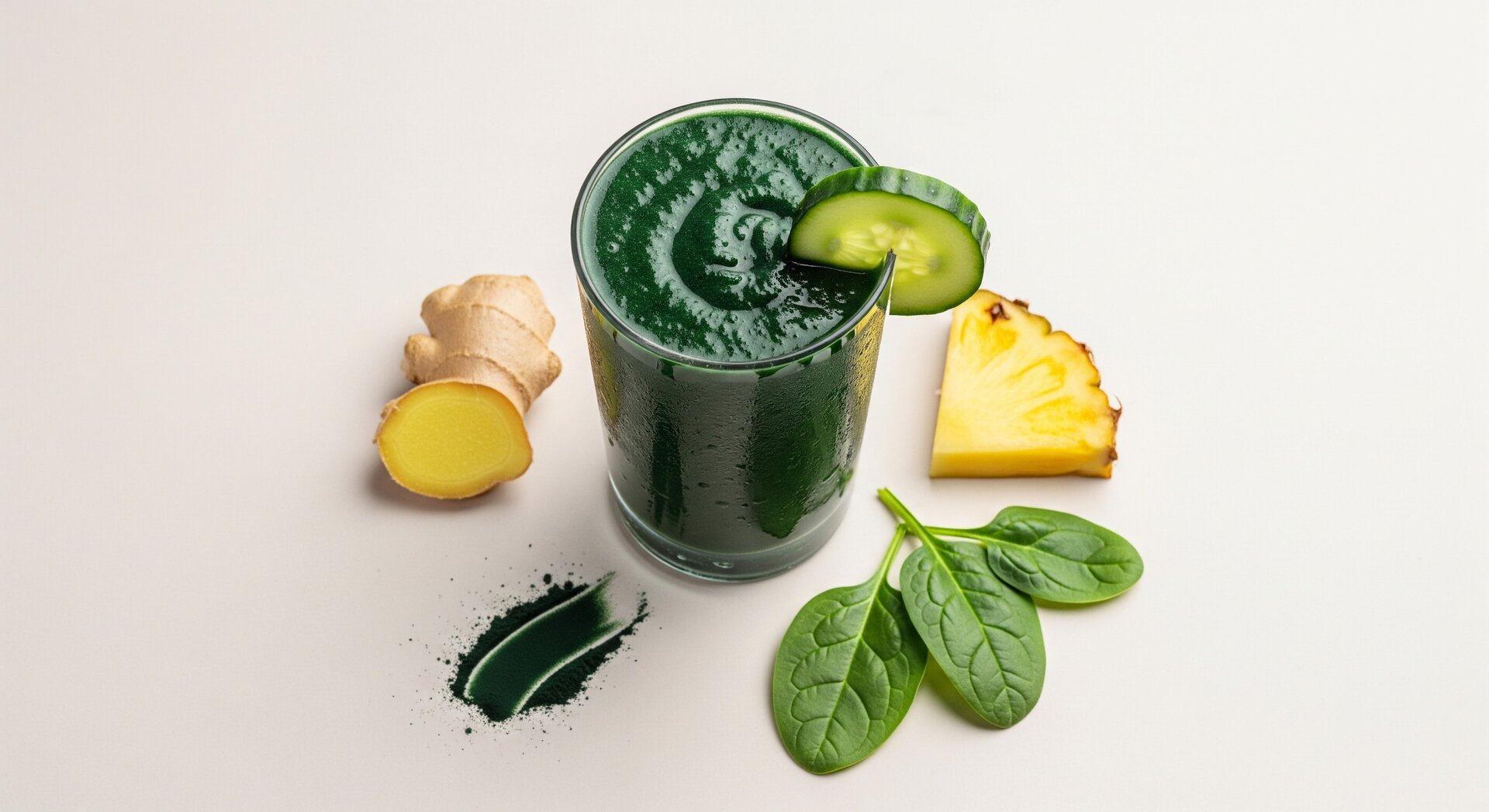 Spirulina Green Smoothie with Ginger 5 min Green smoothie with pineapple, apple and coconut water 190 kcal 15g protein 1 synergies
 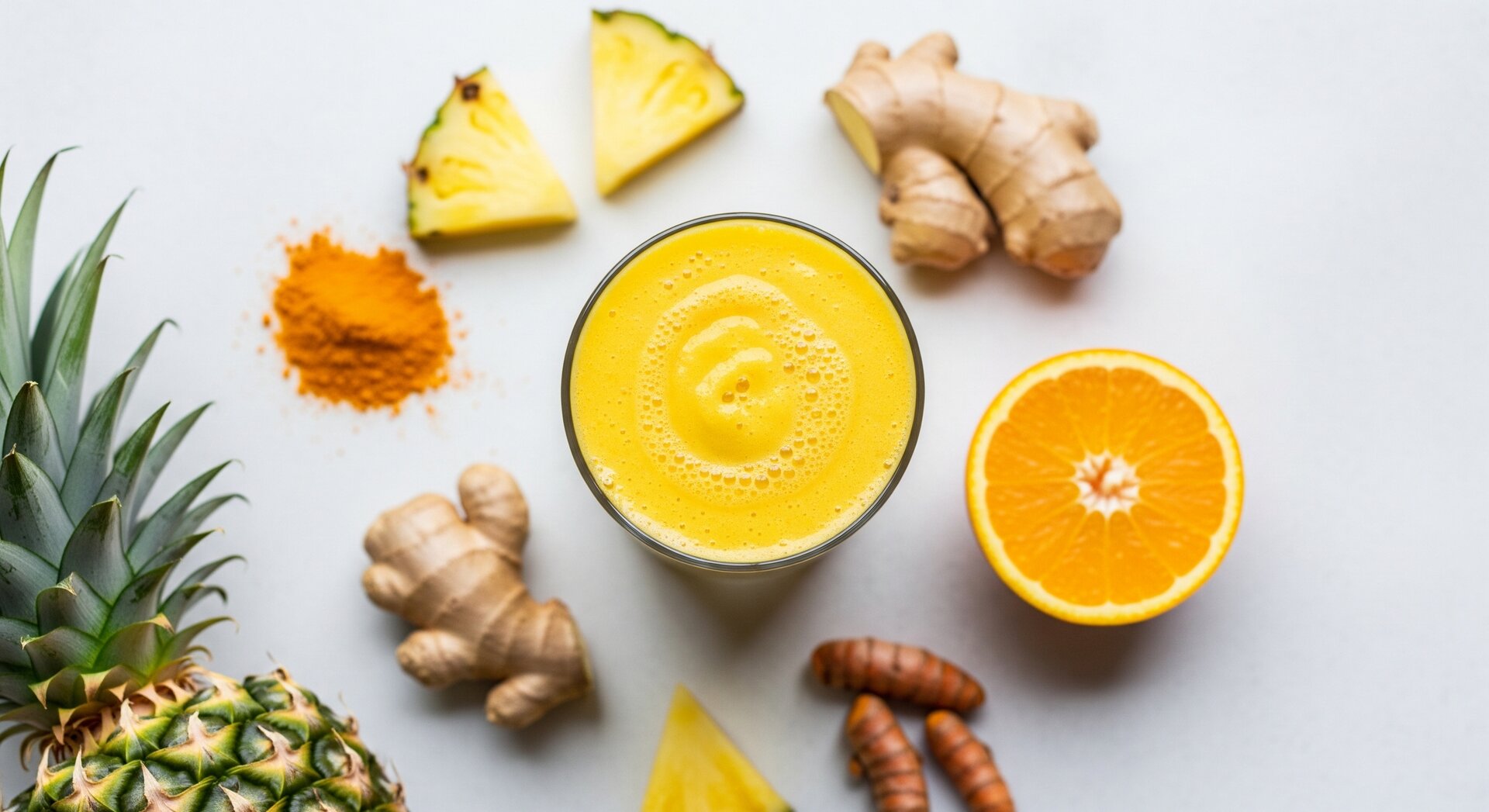 Tropical Pineapple-Ginger Smoothie 5 min Fresh tropical smoothie with pineapple, mango, ginger and turmeric 237 kcal 4g protein 1 synergies
 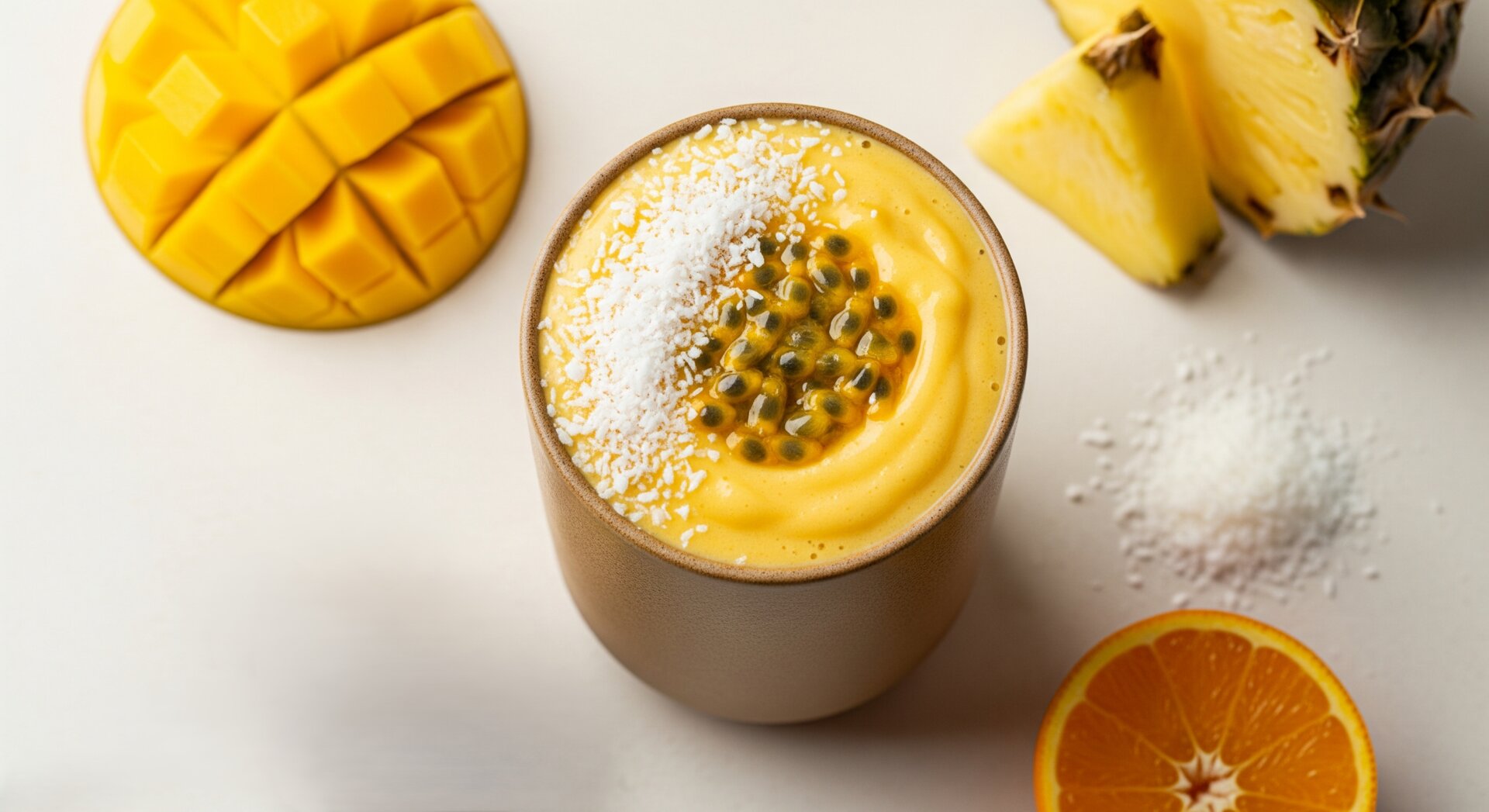 Tropical Fruit Smoothie 5 min Sunny mix of mango, pineapple, passion fruit and coconut 380 kcal 5g protein 2 synergies
  In the Kitchen
Storage
Location:Pantry
Shelf life:3-5 dagen (kamertemperatuur), 5-7 dagen (koelkast na rijping)
Pineapple does not continue to ripen after harvest the way climacteric fruit does. Choose a ripe one with a sweet aroma at the base, a golden undertone and leaves that loosen a little more easily. Store a whole pineapple upright; keep cut pineapple airtight for up to 3 days in the refrigerator. It freezes well for smoothies.
Preparation
Use pineapple raw when you want bromelain to remain culinarily active; above about 70°C, enzyme activity drops strongly. Remove the hard core if you want a softer texture, or chop it finely for smoothies and salsas. For gelatin dishes, heat pineapple first. In marinades, fresh pineapple tenderizes meat quickly; use short marinating times to avoid a mushy texture. When grilled, the natural sugars caramelize.
Conversions
Substitutes
Smart preparation
1Cut off the top and bottom, then remove the skin in vertical strips.
2Do not use fresh pineapple directly in gelatin dishes without heating it first.
Why?
Bromelain can break down gelatin proteins and stop the preparation from becoming firm.
3Grill pineapple rings for a caramelized, lightly smoky flavor.
Caution / Warnings
Pineapple is very safe, but there are scientific considerations:
Blood thinners (anticoagulants) Moderate
Bromelain may influence blood-clotting processes. Extra caution is sensible when it is combined with warfarin, aspirin or other blood-thinning medication.
Advice:
Limit intake to a normal serving per day when using blood thinners. Consult your doctor if surgery is planned or if you use medication related to blood clotting.
Latex allergy and oral allergy syndrome Moderate
Cross-reactivity between latex and pineapple is possible. People with birch pollen allergy may also experience tingling or itching in the mouth and throat.
Advice:
Test tolerance with a small amount if you are sensitive. If symptoms occur, avoid raw pineapple or choose a heated preparation, because bromelain is inactivated at about 70°C.
Peptic ulcer or gastritis Mild
The fruit acids and enzyme activity of fresh pineapple may irritate a sensitive stomach lining or active stomach complaints.
Advice:
Do not eat pineapple on an empty stomach if you are sensitive to gastritis. Choose small portions after a meal and follow medical advice when symptoms are active.
Traditional use
Indigenous
Guarani and Tupi food tradition
The Guarani and Tupi peoples in South America used pineapple for centuries as food, a drink ingredient and an aromatic fruit in local preparations. The fruit formed part of culinary and cultural traditions around tropical fruit.
Summary
Pineapple is a sweet-tart tropical fruit that naturally contains vitamin C and bromelain. Vitamin C contributes to the normal function of the immune system and increases iron absorption. Fresh pineapple is culinarily useful in marinades and gelatin dishes because bromelain can break down proteins.