Oyster Mushrooms
The velvety mushroom with a meaty bite
What is this ingredient?
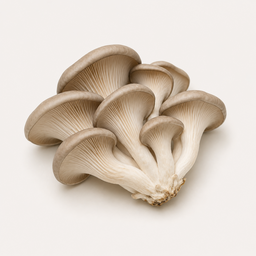
The oyster mushroom owes its name not to its taste, but to its shape: the caps grow overlapping each other like tiles, like shells on a rock. In nature you find them from autumn to spring on dead beeches and poplars — fan-shaped caps in shades of grey, brown and sometimes pink or yellow.
What distinguishes the oyster mushroom from other mushrooms is its texture. Where button mushrooms are spongy and shiitake is firm-chewy, the oyster mushroom is velvety soft with a meaty bite that makes it a favourite among vegetarians. Torn (not cut) and seared hard in a hot pan with a splash of soy sauce, the oyster mushroom unfolds a deep umami aroma reminiscent of grilled meat.
In Asian cuisine the oyster mushroom is indispensable: stir-fried with ginger and spring onion, steamed on dim sum, or dried and ground as a base for umami powder. In European cuisine it appears increasingly as a main course: a whole oyster mushroom, pressed and fried as a ‘steak’, with a crispy exterior and juicy interior.
As a bonus, the oyster mushroom is one of the few foods that naturally contain ergosterol — a precursor of vitamin D2 that is converted when exposed to sunlight or UV light.
How does it taste?
Mild umami with a soft, velvety texture and a slight earthy note. Less intense than shiitake or porcini, but with a meaty bite unique among mushrooms.
Pairs well with:
Soy saucegarlicgingerspring onionthymebutterwhite winerisottopastapolenta. Avoid too much moisture when frying.
Did you know...?
- Oyster mushrooms are one of the few mushrooms that actively hunt: they produce a substance that paralyses and digests nematodes (roundworms). It is one of the few carnivorous organisms in the mushroom kingdom.
Nutritional Value & Energy
Per 100g
Oyster Mushrooms is low in calories thanks to natural nutrients , buffered by fiber.
Per 100g
Minerals
Vitamins
Omega-3 fatty acids
More nutrients
Trace Minerals
What's in a serving?
100 g fresh (approx. 5-6 medium mushrooms)
% of daily reference intake (DRI)
EU-approved nutrition claims
This ingredient contains nutrients for which EFSA-authorized health claims exist (at nutrient level, not ingredient-specific).
Approved health claims (EU)
Potassium EU 432/2012
Potassium contributes to the maintenance of normal blood pressure
Contains 420mg/100g (threshold: ≥300mg/100g)
Folate EU 432/2012
Folate contributes to normal blood formation
Contains 38mcg/100g (threshold: ≥30mcg/100g)
Folate EU 432/2012
Folate contributes to normal amino acid synthesis
Contains 38mcg/100g (threshold: ≥30mcg/100g)
Folate EU 432/2012
Folate contributes to normal homocysteine metabolism
Contains 38mcg/100g (threshold: ≥30mcg/100g)
Folate EU 432/2012
Folate contributes to normal psychological function
Contains 38mcg/100g (threshold: ≥30mcg/100g)
Folate EU 432/2012
Folate contributes to the normal function of the immune system
Contains 38mcg/100g (threshold: ≥30mcg/100g)
Folate EU 432/2012
Folate has a role in the process of cell division
Contains 38mcg/100g (threshold: ≥30mcg/100g)
Folate EU 432/2012
Folate contributes to maternal tissue growth during pregnancy
Contains 38mcg/100g (threshold: ≥30mcg/100g)
Phosphorus EU 432/2012
Phosphorus contributes to normal energy-yielding metabolism
Contains 120mg/100g (threshold: ≥105mg/100g)
Phosphorus EU 432/2012
Phosphorus contributes to the normal function of cell membranes
Contains 120mg/100g (threshold: ≥105mg/100g)
Phosphorus EU 432/2012
Phosphorus contributes to the maintenance of normal bones
Contains 120mg/100g (threshold: ≥105mg/100g)
Phosphorus EU 432/2012
Phosphorus contributes to the maintenance of normal teeth
Contains 120mg/100g (threshold: ≥105mg/100g)
Copper EU 432/2012
Copper contributes to the maintenance of normal connective tissues
Contains 0.2mg/100g (threshold: ≥0.15mg/100g)
Copper EU 432/2012
Copper contributes to normal energy-yielding metabolism
Contains 0.2mg/100g (threshold: ≥0.15mg/100g)
Copper EU 432/2012
Copper contributes to normal functioning of the nervous system
Contains 0.2mg/100g (threshold: ≥0.15mg/100g)
Copper EU 432/2012
Copper contributes to normal hair pigmentation
Contains 0.2mg/100g (threshold: ≥0.15mg/100g)
Copper EU 432/2012
Copper contributes to normal iron transport in the body
Contains 0.2mg/100g (threshold: ≥0.15mg/100g)
Copper EU 432/2012
Copper contributes to normal skin pigmentation
Contains 0.2mg/100g (threshold: ≥0.15mg/100g)
Copper EU 432/2012
Copper contributes to the normal function of the immune system
Contains 0.2mg/100g (threshold: ≥0.15mg/100g)
Copper EU 432/2012
Copper contributes to the protection of cells from oxidative stress
Contains 0.2mg/100g (threshold: ≥0.15mg/100g)
Potassium EU 432/2012
Potassium contributes to normal functioning of the nervous system
Contains 420mg/100g (threshold: ≥300mg/100g)
Potassium EU 432/2012
Potassium contributes to normal muscle function
Contains 420mg/100g (threshold: ≥300mg/100g)
Comparison
vsshiitake
Oyster mushrooms are softer and milder than shiitake, with less pronounced umami but a velvety texture that makes them suitable as a meat substitute. Shiitake has more flavour depth but is chewier.
Recipes with Oyster Mushrooms
Discover delicious recipes featuring oyster mushrooms:
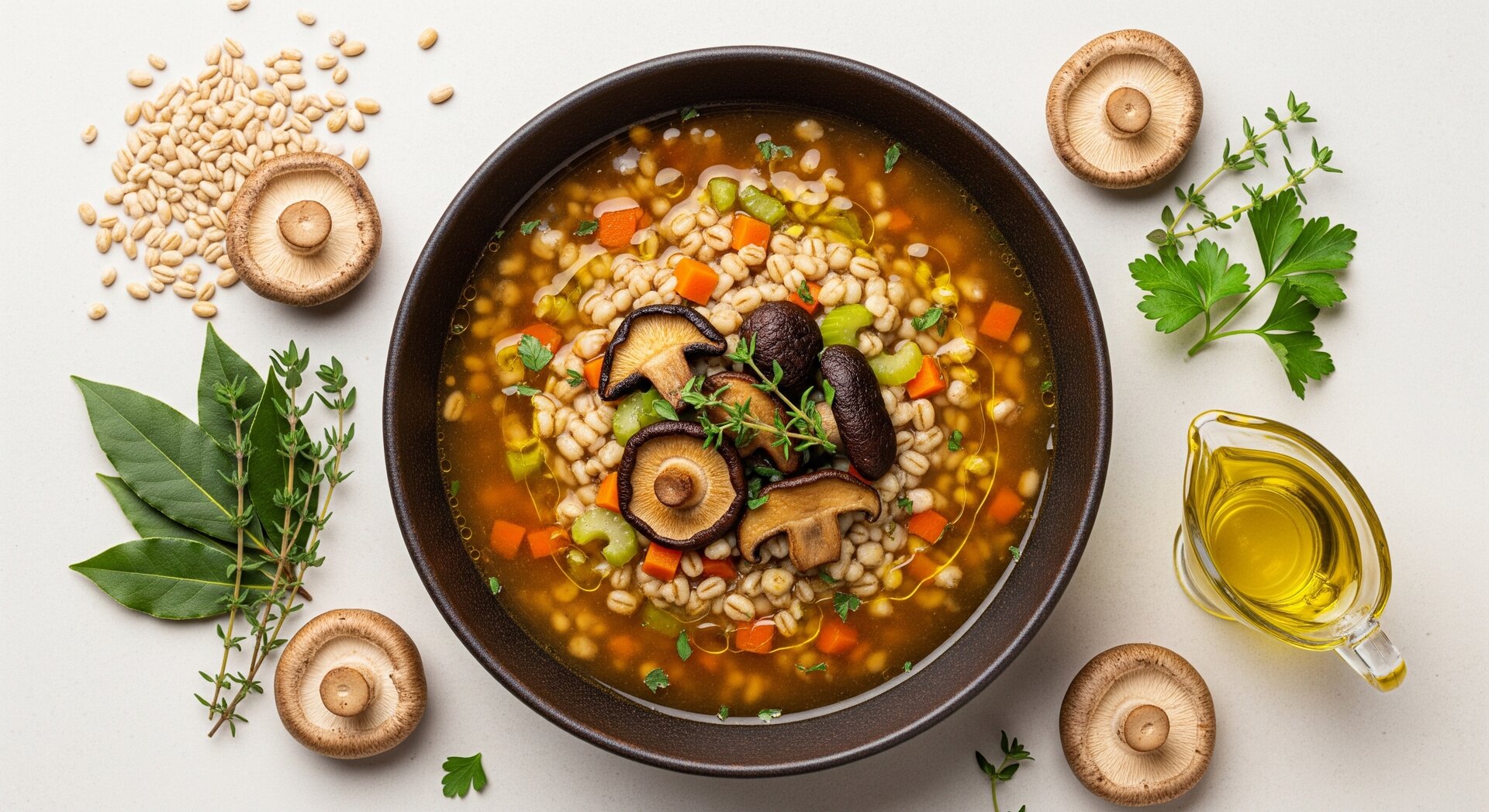 Mushroom Barley Soup with Thyme 80 min Hearty soup with mixed mushrooms, pearl barley, carrot, celery and fresh thyme
  316 kcal
  10g protein 2 synergies
  In the Kitchen
Storage
Location:Refrigerator
Shelf life:3-5 dagen in de koelkast
Store oyster mushrooms in a paper bag in the fridge — never in plastic, as they condense and become slimy. Don't wash under water; wipe dirt away with a damp cloth. Use as fresh as possible.
Preparation
Tear oyster mushrooms by hand into strips (don't cut — that crushes the fibres). Sear on high heat in a dry pan or with minimal fat, without moving, until golden brown and crispy (3-4 minutes per side). Only then add: soy sauce, garlic, butter. Don't overcrowd the pan — they should sear, not steam.
Conversions
Substitutes
Smart preparation
1Tear oyster mushrooms by hand — don't use a knife
Why?
A knife compresses the fibre structure and creates a smooth surface. Tearing creates irregular edges that become crispier when frying and absorb sauce better.
Caution / Warnings
Oyster Mushrooms is very safe, but there are scientific considerations:
Mushroom allergy Moderate
People with a known mushroom allergy may also react to oyster mushrooms. Spore allergy (inhalation) is more common than food allergy.
Advice:
With known mushroom allergy, avoid oyster mushrooms or test carefully with a small piece
Summary
Oyster mushrooms are soft, velvety mushrooms with a mild umami flavour. They are low in calories (33 kcal/100 g), contain beta-glucans as plant cell-wall fibres and provide ergosterol, a natural precursor of vitamin D2. Sear them hard in a hot pan for maximum flavour — don't steam or poach, as they become watery. Tear them by hand into strips for the best texture.