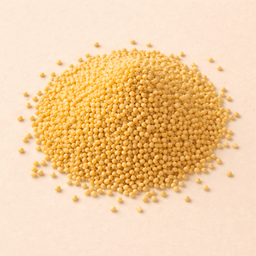
Millet
Ancient naturally gluten-free grain with a gentle, nutty flavor
What is this ingredient?
## Prehistoric origin and global significance
Millet (Panicum miliaceum) is among the oldest cultivated grains in the world, with archaeological findings pointing to cultivation in China thousands of years ago. Today, millet remains important in semi-arid regions of Africa, India, and China, where drought-resistant crops play a major role in local food cultures. The term 'millet' includes several small-seeded grain species, including pearl millet (Pennisetum glaucum) and proso millet (Panicum miliaceum), each with its own texture and culinary use.
## Naturally gluten-free with broad nutritional value
Millet stands out as a naturally gluten-free grain, making it useful as a varied option for people who avoid wheat, barley, or rye. With 11 g protein per 100 g, millet provides plant-based protein, although lysine is the limiting amino acid. Combined with legumes such as lentils, beans, or chickpeas, it creates a more balanced amino acid profile within the same meal.
Millet's magnesium content is notable: at 114 mg per 100 g, it makes a meaningful contribution to magnesium intake. Magnesium contributes to normal energy-yielding metabolism, normal muscle function, normal functioning of the nervous system, and the reduction of tiredness and fatigue. Millet also contains iron, zinc, folate, and fiber, giving it more nutritional value than many refined grain products.
## Carbohydrates, fiber, and glycemic response
Research on millet often compares its glycemic response with that of white rice and refined wheat. Systematic reviews describe that millet, partly because of its fiber, starch structure, and polyphenols, is associated in nutrition research with a more moderate glycemic response than some refined grain products. This wording refers to studied dietary patterns and does not state that millet replaces a varied and balanced diet.
## Phenolic compounds and plant pigments
Millet contains ferulic acid, a hydroxycinnamic acid also found in other grains. It also contains polyphenols such as catechin and quercetin, which contribute to the natural composition of the grain. The yellow or golden tone of some millet varieties comes from carotenoids, plant pigments found in a range of grains and vegetables.
## Sustainability and climate resilience
In agriculture and food security, millet is interesting because of its short growing cycle, drought tolerance, and ability to grow in poorer soils. It generally requires less water than rice and therefore fits well in regions where rainfall is irregular. International organizations have recently given millet more attention as a robust local crop alongside other staple grains.
## Culinary versatility
Millet has a mild, slightly nutty flavor that combines well with both sweet and savory dishes. It can be used as a rice substitute in fluffy pilaf, as creamy breakfast porridge, in salads like couscous, or ground into flour for gluten-free baking. In India, millet, including bajra, is used for flatbreads such as roti; in parts of Africa, it appears in porridge, fermented drinks, and hearty grain dishes. Its texture depends on preparation: dry and grainy with less water, or soft and creamy with extra liquid and regular stirring.
How does it taste?
Mild and slightly sweet with a subtle corn-like flavor.
Pairs well with:
Pairs well with coconut milkcinnamonraisinspumpkinand turmeric.
Did you know...?
- Millet was an important grain in China before rice became more dominant in many regions, over 7,000 years ago.
- The Chinese characters for 'harvest' and 'prosperity' historically include references to millet.
Nutritional Value & Energy
Per 100g
Millet provides energy thanks to natural nutrients , buffered by fiber.
Per 100g
Minerals
Vitamins
More nutrients
B-Vitamins
Trace Minerals
What's in a serving?
1 serving (dry)
Millet naturally contains iron (3 mg per 100 g).
Millet naturally contains zinc (1.7 mg per 100 g).
Millet naturally contains magnesium (114 mg per 100 g).
Millet naturally contains folate (85 mcg per 100 g).
% of daily reference intake (DRI)
EU-approved nutrition claims
This ingredient contains nutrients for which EFSA-authorized health claims exist (at nutrient level, not ingredient-specific).
Approved health claims (EU)
Magnesium EU 432/2012
Magnesium contributes to normal muscle function
Contains 114mg/100g (threshold: ≥56.25mg/100g)
Magnesium EU 432/2012
Magnesium contributes to the reduction of tiredness and fatigue
Contains 114mg/100g (threshold: ≥56.25mg/100g)
Magnesium EU 432/2012
Magnesium contributes to normal functioning of the nervous system
Contains 114mg/100g (threshold: ≥56.25mg/100g)
Zinc EU 432/2012
Zinc contributes to the normal function of the immune system
Contains 1.7mg/100g (threshold: ≥1.5mg/100g)
Zinc EU 432/2012
Zinc contributes to the maintenance of normal skin
Contains 1.7mg/100g (threshold: ≥1.5mg/100g)
Iron EU 432/2012
Iron contributes to normal energy-yielding metabolism
Contains 3mg/100g (threshold: ≥2.1mg/100g)
Iron EU 432/2012
Iron contributes to the reduction of tiredness and fatigue
Contains 3mg/100g (threshold: ≥2.1mg/100g)
Folate EU 432/2012
Folate contributes to normal blood formation
Contains 85mcg/100g (threshold: ≥30mcg/100g)
Folate EU 432/2012
Folate contributes to normal amino acid synthesis
Contains 85mcg/100g (threshold: ≥30mcg/100g)
Folate EU 432/2012
Folate contributes to normal homocysteine metabolism
Contains 85mcg/100g (threshold: ≥30mcg/100g)
Folate EU 432/2012
Folate contributes to normal psychological function
Contains 85mcg/100g (threshold: ≥30mcg/100g)
Folate EU 432/2012
Folate contributes to the normal function of the immune system
Contains 85mcg/100g (threshold: ≥30mcg/100g)
Folate EU 432/2012
Folate has a role in the process of cell division
Contains 85mcg/100g (threshold: ≥30mcg/100g)
Folate EU 432/2012
Folate contributes to maternal tissue growth during pregnancy
Contains 85mcg/100g (threshold: ≥30mcg/100g)
Magnesium EU 432/2012
Magnesium contributes to normal energy-yielding metabolism
Contains 114mg/100g (threshold: ≥56.25mg/100g)
Magnesium EU 432/2012
Magnesium contributes to electrolyte balance
Contains 114mg/100g (threshold: ≥56.25mg/100g)
Magnesium EU 432/2012
Magnesium contributes to normal protein synthesis
Contains 114mg/100g (threshold: ≥56.25mg/100g)
Magnesium EU 432/2012
Magnesium contributes to normal psychological function
Contains 114mg/100g (threshold: ≥56.25mg/100g)
Magnesium EU 432/2012
Magnesium contributes to the maintenance of normal bones
Contains 114mg/100g (threshold: ≥56.25mg/100g)
Magnesium EU 432/2012
Magnesium contributes to the maintenance of normal teeth
Contains 114mg/100g (threshold: ≥56.25mg/100g)
Magnesium EU 432/2012
Magnesium has a role in the process of cell division
Contains 114mg/100g (threshold: ≥56.25mg/100g)
Iron EU 432/2012
Iron contributes to normal cognitive function
Contains 3mg/100g (threshold: ≥2.1mg/100g)
Iron EU 432/2012
Iron contributes to normal formation of red blood cells and haemoglobin
Contains 3mg/100g (threshold: ≥2.1mg/100g)
Iron EU 432/2012
Iron contributes to normal oxygen transport in the body
Contains 3mg/100g (threshold: ≥2.1mg/100g)
Iron EU 432/2012
Iron contributes to the normal function of the immune system
Contains 3mg/100g (threshold: ≥2.1mg/100g)
Iron EU 432/2012
Iron has a role in the process of cell division
Contains 3mg/100g (threshold: ≥2.1mg/100g)
Zinc EU 432/2012
Zinc contributes to normal acid-base metabolism
Contains 1.7mg/100g (threshold: ≥1.5mg/100g)
Zinc EU 432/2012
Zinc contributes to normal carbohydrate metabolism
Contains 1.7mg/100g (threshold: ≥1.5mg/100g)
Zinc EU 432/2012
Zinc contributes to normal cognitive function
Contains 1.7mg/100g (threshold: ≥1.5mg/100g)
Zinc EU 432/2012
Zinc contributes to normal DNA synthesis
Contains 1.7mg/100g (threshold: ≥1.5mg/100g)
Zinc EU 432/2012
Zinc contributes to normal fertility and reproduction
Contains 1.7mg/100g (threshold: ≥1.5mg/100g)
Zinc EU 432/2012
Zinc contributes to normal macronutrient metabolism
Contains 1.7mg/100g (threshold: ≥1.5mg/100g)
Zinc EU 432/2012
Zinc contributes to normal metabolism of fatty acids
Contains 1.7mg/100g (threshold: ≥1.5mg/100g)
Zinc EU 432/2012
Zinc contributes to normal metabolism of vitamin A
Contains 1.7mg/100g (threshold: ≥1.5mg/100g)
Zinc EU 432/2012
Zinc contributes to normal protein synthesis
Contains 1.7mg/100g (threshold: ≥1.5mg/100g)
Zinc EU 432/2012
Zinc contributes to the maintenance of normal bones
Contains 1.7mg/100g (threshold: ≥1.5mg/100g)
Zinc EU 432/2012
Zinc contributes to the maintenance of normal hair
Contains 1.7mg/100g (threshold: ≥1.5mg/100g)
Zinc EU 432/2012
Zinc contributes to the maintenance of normal nails
Contains 1.7mg/100g (threshold: ≥1.5mg/100g)
Zinc EU 432/2012
Zinc contributes to the maintenance of normal testosterone levels in the blood
Contains 1.7mg/100g (threshold: ≥1.5mg/100g)
Zinc EU 432/2012
Zinc contributes to the maintenance of normal vision
Contains 1.7mg/100g (threshold: ≥1.5mg/100g)
Zinc EU 432/2012
Zinc contributes to the protection of cells from oxidative stress
Contains 1.7mg/100g (threshold: ≥1.5mg/100g)
Zinc EU 432/2012
Zinc has a role in the process of cell division
Contains 1.7mg/100g (threshold: ≥1.5mg/100g)
What's being researched?
Millet and glycemic response
A systematic review and meta-analysis (2021) described that millet is associated in nutrition research with a more moderate glycemic response than some refined grain products. Ongoing research examines millet within broader metabolic dietary patterns.
Supported by: [3] Anitha S (2021) , [4] Abioye VF (2022) , [1] Jahnen-Dechent W (2012)
Good Combinations (Synergy)
Combine millet smartly to enhance the effect:
Millet 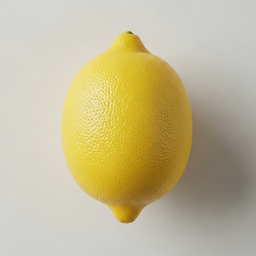 Lemon
Lemon Vitamin C increases iron and zinc absorption from millet
Ascorbic acid overcomes phytate inhibition of mineral absorption (PMID: 15743017)
Technical: Millet contains 3mg non-heme iron and 1.7mg zinc per 100g, but also phytates inhibiting mineral absorption. Vitamin C from lemon (53mg/100g) chelates iron and zinc, overcoming phytate binding. This increases iron absorption up to 3x and zinc up to 2x.
What does this mean for you? Drink lemon juice with millet porridge or couscous. This neutralizes the inhibitory effect of phytates and significantly increases mineral absorption.
Millet  Turmeric
 Synergistic bioactive action via ferulic acid and curcumin
Ferulic acid and curcumin inhibit NF-κB inflammatory pathway via complementary mechanisms
Technical: Millet contains ferulic acid (phenolic antioxidant) that influences NF-kB signaling and COX-2 activity. Curcumin from turmeric also modulates NF-kB but via different binding sites, plus LOX-5 influence. Together they offer broad-spectrum bioactive action via multiple molecular pathways.
What does this mean for you? Millet with turmeric (as in Indian khichdi) is a powerful bioactive combination. Both spices work via different molecular pathways — together broader than apart.
Millet 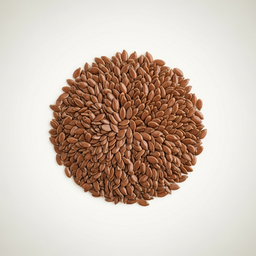 Flaxseed
 Magnesium for nervous system + omega-3 for eicosanoid metabolism
Magnesium modulates NMDA receptors and GABA signaling, omega-3 ALA reduces neuroinflammation (PMID: 28445426)
Technical: Millet contains 114mg magnesium per 100g — essential as cofactor for NMDA receptor regulation and GABA production in the nervous system. Flaxseed provides 22.8g omega-3 ALA per 100g that systemically modulates eicosanoid metabolism. Together they offer complementary support: neural (magnesium) and systemic (omega-3).
What does this mean for you? Millet porridge with ground flaxseed combines two nutritional powerhouses. The magnesium from the millet + the omega-3 from the flaxseed work complementarily at different levels.
Recipes with Millet
Discover delicious recipes featuring millet:
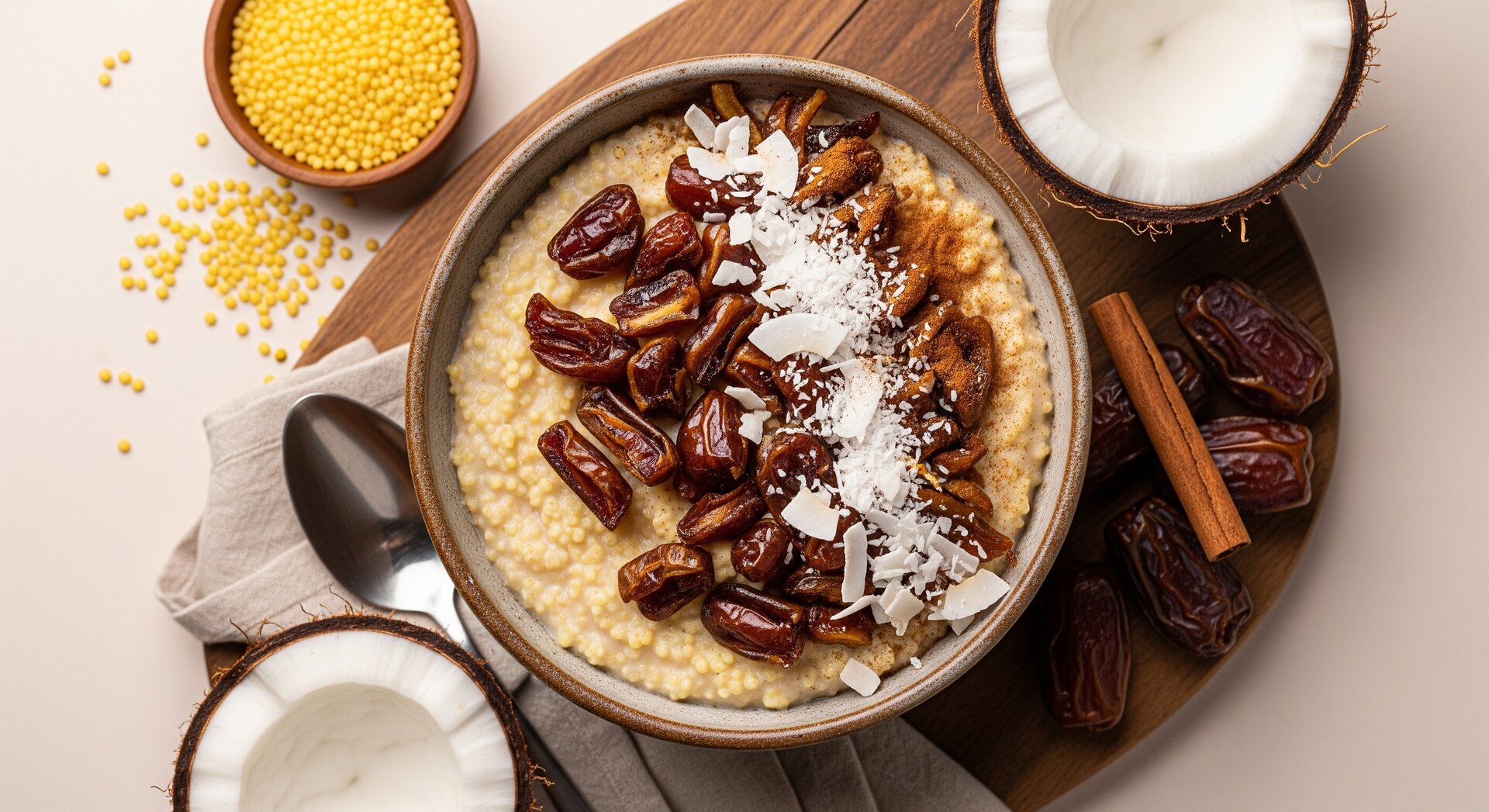 African Millet Porridge with Coconut and Dates 30 min Gluten-free porridge with coconut milk, Medjool dates and cinnamon
  828 kcal
  14g protein 1 synergies
  In the Kitchen
Storage
Location:Pantry
Shelf life:12 maanden (gedroogd, ongeopend)
Preparation
Rinse millet under cold water. Optional: soak for 6-8 hours and rinse again. Cook in 2.5× volume water for 15-20 minutes until the water is absorbed. Let rest for 5 minutes with the lid on for a fluffy texture.
Substitutes
Smart preparation
1Dry-toast millet in a pan until it smells lightly fragrant.
Why?
Toasting rounds out the flavor and reduces the slightly bitter note.
2Use a ratio of 1 part millet to 2 parts water and cook for about 20 minutes.
3Do not stir millet during cooking if you want loose, fluffy grains.
Caution / Warnings
Millet is very safe, but there are scientific considerations:
Thyroid disorders and goitrogenic compounds Mild
Millet contains goitrogenic compounds (C-glycosyl flavones). At very high long-term intakes, especially when dietary iodine is low, these compounds may be relevant for people with existing thyroid disorders.
Advice:
With existing hypothyroidism or iodine deficiency: keep to normal portions (50-100 g dry per day) and ensure adequate iodine from suitable food sources such as fish or iodized salt. Cooking may reduce the activity of goitrogenic compounds.
Phytic acid and mineral absorption Mild
Millet contains phytic acid, a natural compound in grains and seeds that can bind minerals such as iron, zinc, and calcium. This is mainly relevant with large amounts of unsoaked or insufficiently prepared grains.
Advice:
Soak millet for 6-8 hours in water with a little lemon or vinegar, then rinse well. Pair it in meals with vegetables or fruit that contain vitamin C, such as peppers or citrus, for a more balanced plate.
Traditional use
African
African ancient grain
Millet is one of the oldest grains in Africa and has been cultivated for over 7,000 years. In the Sahel, it remains an important staple food for millions of people, especially in porridge, flatbreads, and hearty grain dishes.
Traditional Chinese Medicine
Chinese Xiao Mi — gentle porridge tradition
In Chinese culinary traditions, millet (xiao mi) is often prepared as a soft, warm porridge. The dish is valued for its mild flavor, simple preparation, and place in home-style meals, especially when a light grain base is desired.
Ayurveda
Ayurvedic light grain
In Ayurvedic food culture, millet is described as a light and dry grain. It often appears in simple meals, fasting periods, and dishes where an airy grain base is desired, for example with vegetables, spices, and ghee or oil.
Summary
Millet is an ancient naturally gluten-free grain with 114 mg magnesium per 100 g, fiber, and a mild nutty flavor. It works well in porridge, pilaf, salads, and gluten-free baking.