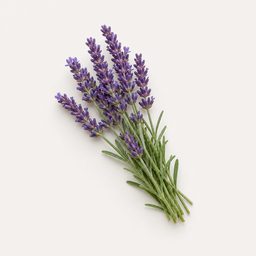
Lavender
The floral paradox: soap or spice?
What is this ingredient?
Say lavender and people think of purple fields in Provence, sachets in a linen closet, soap. Not food. And that is precisely the paradox of Lavandula angustifolia: one of Europe's oldest culinary herbs is associated by most people only with the bathroom.
The Romans already cooked with it. They steeped lavender flowers in honey, infused them in wine, and scattered them through porridge. In Provençal cuisine that tradition survived: crème brûlée with lavender, goat cheese with lavender honey, the herb blend herbes de Provence where dried lavender is an indispensable component.
The secret of culinary lavender is dosage. Half a teaspoon of dried buds steeped in warm yogurt or cream — that is enough for four servings. More and you taste soap, less and you taste nothing. That narrow margin makes lavender a herb for the attentive cook: master it, and you create desserts that no one can place. 'What is in this?' is the finest compliment.
Use only culinary lavender (Lavandula angustifolia, also called English or true lavender). Ornamental lavender and lavandin hybrids contain more camphor and taste bitter. Buy from a herb specialist, not from garden centre potpourri.
How does it taste?
Floral-sweet with a slightly herbal, almost peppery undertone. Hints of camphor and mint. When overdosed the camphor note becomes dominant and the taste shifts to soapy.
Pairs well with:
Honeycreamyogurtsoft berries (strawberriesraspberriesblueberries)lemonvanilladark chocolategoat cheese. Avoid strong spices that overshadow the subtle aroma.
Did you know...?
- The name 'lavender' comes from the Latin 'lavare' (to wash) — but the Romans used it as a kitchen herb before a bath product.
- True lavender (L. angustifolia) grows only above 800 metres altitude in Provence. Lower grows lavandin, a hybrid with more camphor and less suited for cooking.
- In a double-blind study, a lavender oil capsule (Silexan) performed as well as the sedative lorazepam for anxiety disorders — but without any addiction risk.
Nutritional Value & Energy
Per 100g
Lavender is low in calories thanks to natural nutrients , buffered by fiber.
Per 100g
Minerals
Vitamins
Omega-3 fatty acids
More nutrients
Trace Minerals
EU-approved nutrition claims
There are currently no EFSA-authorized health claims specific for Lavender. Various applications for herbs and spices have been submitted but not yet assessed (botanical 'on hold' list).
Comparison
vsrozemarijn
Lavender and rosemary belong to the same plant family (Lamiaceae) and share rosmarinic acid as a bioactive compound, but their flavour profiles are opposite: lavender is floral-sweet, rosemary is herbal-resinous.
What's being researched?
Lavender oil and anxiety disorders
Two double-blind RCTs (Woelk 2010, Kasper 2010) investigated the oral lavender oil preparation Silexan (80 mg/day) in adults with anxiety disorders. Silexan showed comparable effects to lorazepam (HAM-A reduction 45-59%) without sedation or addiction risk. These studies concern concentrated oil, not culinary use.
Supported by: [2] Woelk (2010) , [3] Kasper (2010)
Lavender inhalation and sleep
A meta-analysis of 34 studies (Cheong et al. 2021) concluded that aroma inhalation therapy is effective for sleep problems (effect size 0.65). Among all single aromas, lavender inhalation showed the greatest effect. The studies concern essential oil inhalation, not culinary consumption.
Supported by: [5] Cheong (2021)
Recipes with Lavender
Discover delicious recipes featuring lavender:
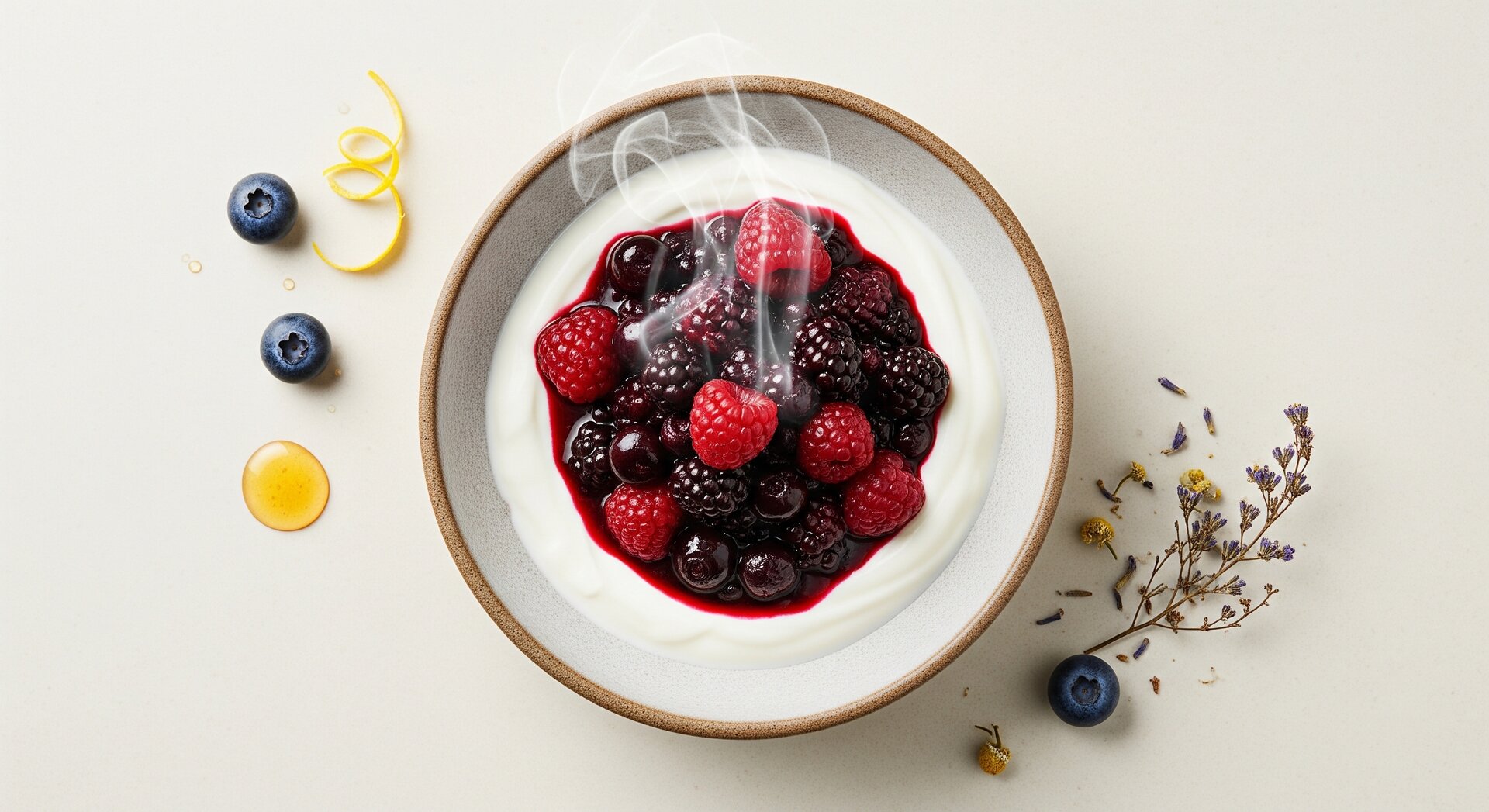 Warm Berry Compote with Lavender Yogurt 45 min Soft berry compote with fresh yogurt and a floral note
  139 kcal
  5g protein 2 synergies
  In the Kitchen
Storage
Location:Pantry
Shelf life:1-2 jaar gedroogd, in luchtdichte container
Store in an airtight glass jar, cool and dark. Dried lavender gradually loses aroma after a year. Store separately from strongly scented spices — lavender absorbs odours.
Preparation
Lavender is NEVER cooked directly at high heat — bitter camphor is released. Steep dried flowers in warm (not boiling) liquid: milk, cream, yogurt or honey. Steep 15-30 minutes, then strain. For baking: grind finely in a mortar and mix into the batter.
Conversions
Substitutes
Smart preparation
1Always steep lavender in warm (not boiling) liquid, then strain
Why?
Boiling water extracts camphor and tannins, making the infusion bitter and soapy. At 70-80°C mainly linalool and linalyl acetate are released.
2Use maximum ½ teaspoon dried flowers per 4 dessert servings
Why?
Lavender is an exceptionally intense aromatic herb in the kitchen. When overdosed, linalool becomes dominant and the taste shifts from floral to soapy.
3Buy only Lavandula angustifolia (true/English lavender) from a herb specialist
Why?
Ornamental lavender and lavandin hybrids (L. × intermedia) contain 2-3× more camphor and taste bitter. Garden centre lavender is often treated and not suitable for consumption.
Caution / Warnings
Lavender is very safe, but there are scientific considerations:
Pregnancy (first trimester) Moderate
Concentrated lavender oil may stimulate uterine contractions. Culinary amounts (1-2 teaspoons dried flowers) are safe
Advice:
Culinary use is safe. Avoid concentrated essential oil and supplements during pregnancy
Sedatives & Benzodiazepines Mild
Lavender may potentiate sedative medications through shared GABA-A modulation. With culinary use the risk is negligible
Advice:
Culinary amounts are safe. When using sleep or calming medication: avoid lavender supplements
Traditional use
Mediterranean
Provençal culinary herb since Roman times
The Romans used lavender in honey, wine and porridge. The name comes from the Latin 'lavare' (to wash), but the culinary tradition is older than the cosmetic one. In Provençal cuisine the use survived in herbes de Provence, lavender honey, goat cheese and desserts.
Islamic tradition
Khuzama in the Arabic medical tradition
In medieval Arabic medicine, lavender was known as 'khuzama' (خزامى). Ibn Sina (Avicenna) described it in his Canon of Medicine as an aromatic agent. Arab traders brought lavender cultivation to the Iberian Peninsula.
Summary
Culinary lavender (Lavandula angustifolia) is an aromatic herb used in very small amounts — half a teaspoon of dried flowers is enough for four dessert servings. The secret is dosage: too much and it tastes soapy, just right and you get a mysterious floral aroma that no one can identify. Use only culinary lavender, never ornamental. Combine with honey, cream or soft berries. Store dry in an airtight jar, away from light.