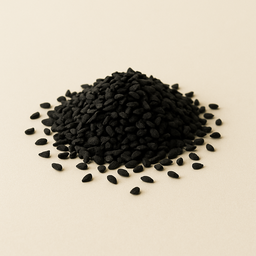
Black Seed
Habbatus sauda — aromatic seed with a rich tradition
What is this ingredient?
Black seed (Nigella sativa), also known as black cumin, nigella or habbatus sauda, has been used for more than 3,000 years in the cuisines and herbal traditions of ancient Egypt, Greece, Southwest Asia and the Middle East. The small black seeds have a slightly bitter, nutty flavor with notes of onion, oregano and black pepper.
The most discussed constituent is thymoquinone, an aromatic quinone compound found in the seed’s oil fraction. Black seed also contains fixed oils, volatile aromatics, protein, fiber and minerals such as calcium, iron, magnesium, potassium and zinc. This combination makes it both culinarily interesting and a frequent subject of food and plant-compound research.
In Islamic, Mediterranean and South Asian food culture, black seed is used on bread, in pickles, with lentils, potato dishes, yoghurt and honey mixtures. In modern literature, Nigella sativa is mainly studied in relation to respiratory markers, allergy-related markers, metabolic parameters and immune pathways. For consumers, the safest framing is simple: treat it as a strongly aromatic seed with a rich tradition and studied bioactive compounds, not as a replacement for medical care.
How does it taste?
Slightly bitter and nutty with notes of oregano, onion and black pepper.
Pairs well with:
Pairs well with naan breadpotatolentilshoney and feta.
Sunnah
In this well-known narration, black seed is described as especially valued, with death as the exception.
Hadith #Sahih al-Bukhari 5688, Sahih Muslim 2215
Did you know...?
- Black seed (nigella) was found in the tomb of Pharaoh Tutankhamun.
- In Arabic, black seed is known as 'habbatus sauda' and has been used for 3,000 years.
Nutritional Value & Energy
Per 100g
Black Seed provides energy thanks to natural nutrients , buffered by fiber.
Per 100g
Minerals
Vitamins
Omega-3 fatty acids
More nutrients
Trace Minerals
What's in a serving?
Black seed naturally contains iron (11.9 mg per 100 g dried seed). At typical spice usage (3–9 g), the contribution is limited.
Black seed naturally contains calcium (570 mg per 100 g dried seed). At typical spice usage (3–9 g), the contribution is limited.
Black seed naturally contains iron (11.9 mg per 100 g dried seed). At typical spice usage (3–9 g), the contribution is limited.
Black seed naturally contains magnesium (269 mg per 100 g dried seed). At typical spice usage (3–9 g), the contribution is limited.
Black seed naturally contains potassium (1440 mg per 100 g dried seed). At typical spice usage (3–9 g), the contribution is limited.
Black seed naturally contains zinc (4.8 mg per 100 g dried seed). At typical spice usage (3–9 g), the contribution is limited.
Black seed naturally contains folate (85 mcg per 100 g dried seed). At typical spice usage (3–9 g), the contribution is limited.
% of daily reference intake (DRI)
EU-approved nutrition claims
There are currently no EFSA-authorized health claims specific to black seed. Various applications for herbs and spices have been submitted but not yet assessed (botanical 'on hold' list).
Comparison
vsmelk
Black seed contains about 5× more calcium per 100 g than milk — but you use much less black seed per serving.
vsspinazie
Black seed contains about 4× more iron per 100 g than spinach — but you use much less black seed per serving.
vsbanaan
Black seed contains about 4× more potassium per 100 g than banana — but you use much less black seed per serving.
What's being researched?
Thymoquinone in black seed
Thymoquinone, a characteristic constituent of Nigella sativa, is intensively studied in relation to immune pathways and inflammatory markers. Clinical evidence is growing, but it has not translated into an EFSA-authorized ingredient-specific claim.
Supported by: [5] Salem (2005)
Black seed and metabolic parameters
Nigella sativa is studied in relation to glucose and lipid markers. Meta-analyses report modest changes, but this remains research language rather than medical advice.
Supported by: [2] Ahmad (2013) , [3] Chatterjee G (2025)
Good Combinations (Synergy)
Combine black seed smartly to enhance the effect:
Black Seed 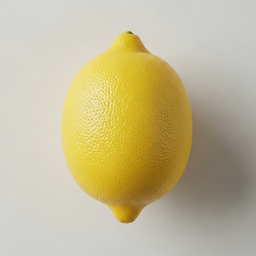 Lemon
Lemon Thymoquinone + vitamin C: bioactive combination
Technical: Black seed contains thymoquinone, a bioactive plant compound. Lemon provides vitamin C (53mg), which contributes to the normal function of the immune system (EFSA).
What does this mean for you? Add ground black seeds and lemon juice to warm water or tea. A spicy, fresh drink.
Black Seed 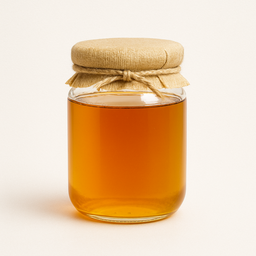 Honey
Honey Classic Prophetic combination with enhanced bioactive action
Technical: Black seed (nigella sativa) contains thymoquinone — a bioactive compound with immunomodulatory and antioxidant action, studied in relation to NF-κB signal transduction. Honey's glucose oxidase produces hydrogen peroxide (bioactive), and honey's flavonoids enhance thymoquinone's antioxidant action. Synergistic bioactive effect.
What does this mean for you? Mix black seed oil with raw honey as daily immune support. The two ingredients reinforce each other's bioactive and antioxidant effects.
Black Seed 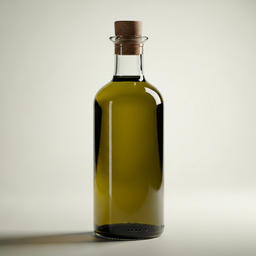 Olive Oil
 Thymoquinone more absorbable with olive oil fats
Technical: Black seed (Nigella sativa) contains thymoquinone (30-48% of volatile oil), a particularly potent antioxidant that modulates NF-κB, COX-2 and 5-LOX signal transduction. Thymoquinone is fat-soluble with only 10-15% oral bioavailability. Olive oil increases this to 35-50% through micelle formation. The combination of thymoquinone + oleocanthal from olive oil offers synergy in NF-κB signal transduction modulation. Prophet Muhammad (peace be upon him) advised black seed with oil — now scientifically supported.
What does this mean for you? Mix black seed oil or ground black seeds with olive oil as salad dressing. The olive oil triples thymoquinone absorption — the particularly potent active compound in black seed.
 In the Kitchen
Storage
Location:Pantry
Shelf life:2 jaar (zaden), 1 jaar (olie na openen)
Store seeds in an airtight container in a dark, cool and dry place. Black seed oil is best kept in the refrigerator after opening.
Preparation
Briefly toast whole seeds for a warmer, nuttier flavor and grind them just before use. Sprinkle over naan, pita, salads, potato dishes or lentils. Traditional pairing: black seed with honey, especially as an aromatic topping or stirred into yoghurt.
Conversions
Substitutes
Smart preparation
1Briefly toast black seed (nigella) in a dry pan until fragrant.
Why?
Toasting activates the nutty, slightly bitter aroma.
2Sprinkle black seed over naan, flatbreads, or salads as garnish.
3Use sparingly; 1 teaspoon is enough for a whole dish.
Caution / Warnings
Black Seed is very safe, but there are scientific considerations:
Pregnancy Severe
Concentrated black seed preparations are not recommended during pregnancy, because high intakes are associated with effects on uterine muscles.
Advice:
During pregnancy, use only normal culinary amounts and consult a doctor before supplements or oil capsules.
Blood Thinners Moderate
Black seed and black seed oil may be relevant for people taking medication that affects blood clotting.
Advice:
Consult a doctor if using anticoagulants such as warfarin or before planned surgery.
Blood Sugar Medication Moderate
Nigella sativa is studied in relation to glucose markers; supplement use may therefore be relevant when taking diabetes medication.
Advice:
Use supplements only in consultation with your doctor and follow your personal blood sugar guidance.
Low Blood Pressure Mild
People with low blood pressure or those taking blood pressure medication should be cautious with concentrated black seed preparations.
Advice:
Stick to normal culinary amounts and seek medical advice before supplement use.
Traditional use
Islamic tradition
Habbatus sauda in prophetic tradition
Black seed (Nigella sativa) is referred to in prophetic tradition as habbatus sauda, giving it a special place in Islamic herbal culture and food culture.
Mediterranean
Ancient Egyptian usage
Black seed was found in the tomb of Pharaoh Tutankhamun (ca. 1323 BCE) and appears in ancient Mediterranean herbal traditions and cuisines.
Ayurveda
Kalonji in Ayurveda
In Ayurveda, black seed is known as kalonji and has been used for centuries in Indian cuisine as a warming, aromatic seed.
Summary
Black seed is an aromatic seed with a deep place in Islamic, Mediterranean and South Asian food cultures. It contains thymoquinone and is widely studied in relation to immune pathways, respiratory markers and metabolic parameters. Use it sparingly in cooking: toasted on bread, stirred into yoghurt, with lentils or with honey as a traditional pairing.